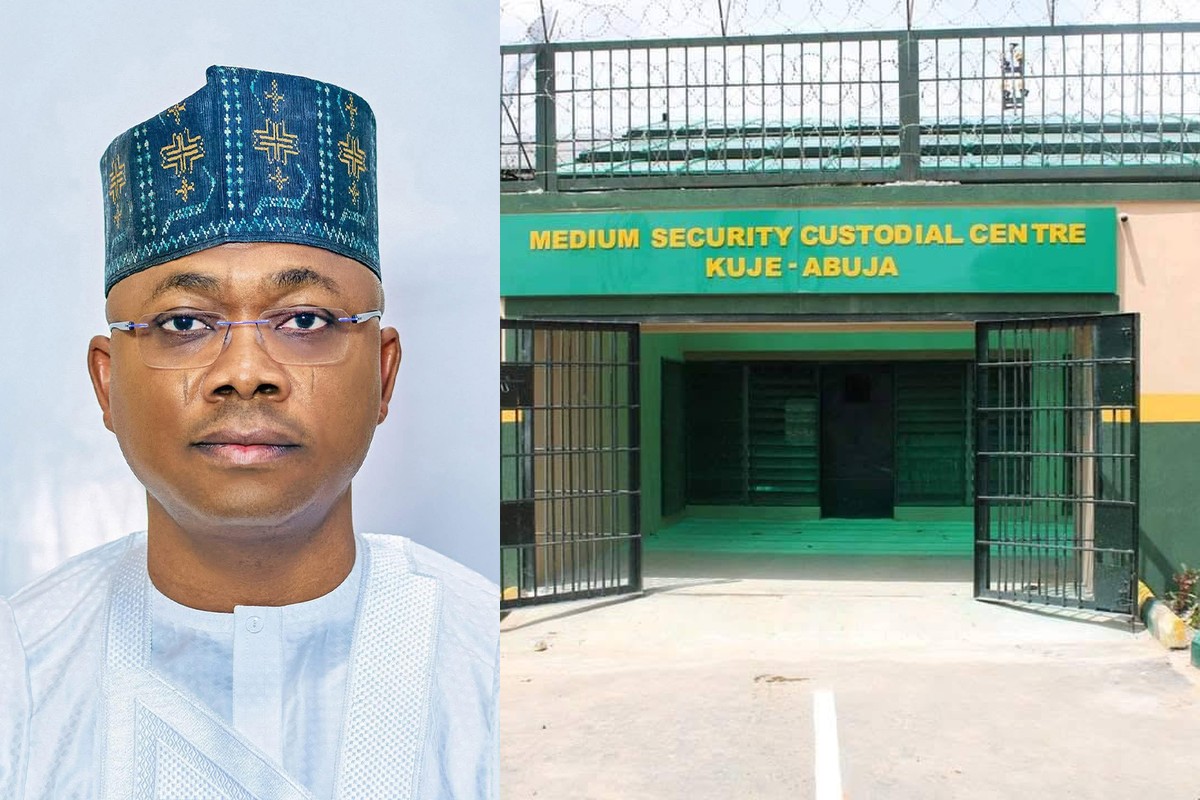
On 31 July 2026, the Deputy Controller of Corrections in charge of the Medium Security Custodial Centre at Kuje, R.A Ogundare, signed a covering letter, reference MSCCK:136/AMNE/VOL.IV/644, and sent it up the chain to the Controller of Corrections at the FCT Command Headquarters in Gwagwalada. Attached to it was a letter from the Kogi State inmates in his custody, addressed over his head and over the Controller’s head to the Governor of Kogi State, Ahmed Usman Ododo. The covering letter is one paragraph long. Ogundare wrote that he forwarded the attached letter of clemency and pardon from inmates seeking mercy and pardon, for the Controller’s information and further necessary action. Copies of both papers have reached NGBreakingnews.
The letter it carried is titled “Letter of Appeal for Executive Clemency and Pardon of Your Citizens at Nigeria Correctional Centres”. It was written for the Kogites, the Kogi indigenes serving prison terms in different states across the federation, and it names the spread of them: Kuje, Kaduna, Jos, Lagos, Kano, Abeokuta, Suleja, Minna and Enugu. Nine custodial centres, in nine different jurisdictions, holding men whose only route to mercy runs through one governor in Lokoja, because the prerogative that can free them belongs to the governor of their home state and to nobody else.
The inmates told the Governor that since the incident they have shown deep remorse and used the period to reflect on their actions. Some of them, the letter says, have used the opportunity to learn skills: tailoring, shoe-making, bag-making, the World Bank Solar Installation Program, and education at different levels. They say they have changed from their bad behaviours, that they have been rehabilitated completely, and that they will be law-abiding citizens if the plea is granted. They asked him to look into the plea for mercy with a fatherly heart and act with compassion.
The promise made inside Kuje
The heart of the letter is not the plea. It is a reminder, addressed through Governor Ododo to his predecessor. The inmates thanked former Governor Yahaya Adoza Bello, who, in their words, God used to grant state pardon to 31 inmates and commute the sentences of 13 others across the federation in 2019. Then they reminded him of a promise. During his visit to Kuje Correctional Centre, the letter says, Bello promised them that he would discuss the pardon of the Kogi indigenes serving various sentences in Kuje with his Governor, the successor who now sits in Lokoja. “We believed that you are a Man of your Words and (you talk am and you do am),” the inmates wrote.
The 2019 mercy they invoked is a matter of public record. On 1 October 2019, in his Independence Day address to the people of Kogi State, Bello announced that he had granted pardon to 31 inmates and commuted the sentences of 13 others in custodial centres in the state and across the country. He said the gesture was in exercise of the prerogative of mercy conferred on him pursuant to section 212 of the 1999 Constitution, as amended, and the Prerogative of Mercy Law 1995, that the Kogi State Advisory Council had visited several custodial centres in different parts of the federation, and that after careful scrutiny of applications, supporting documents and testimonies, the council compiled the list of those recommended to be given a second chance. Twenty-nine of the men pardoned in that exercise were serving their sentences in other states across the country. The mercy of a Kogi governor had reached Kogi inmates outside Kogi before. The letter quotes Bello’s 2019 address back at the government he left behind, word for word.
The letter thanks President Bola Ahmed Tinubu for pardoning several inmates across the federation under his Renewed Hope Agenda. It thanks Ibrahim Sani Muhammed SAN, the Attorney General of Kogi State under Bello, and the advisory council of that era. It thanks the current Attorney General, Mu’ez Yunus Abdallah, for his contributions and commitment to criminal justice reforms. It says the names of the inmates in Kuje Correctional Centre seeking the Governor’s mercy and pardon are attached. And it was not sent to the Governor alone. The copy list runs through the entire Kogi establishment: Deputy Governor Joel S. Oyibo, Chief of Staff Ali Bello, the Secretary to the State Government, Dr Folashade Arike Ayoade, former Governor Bello himself, Senator Abubakar Sadiku Ohere, the Commissioner for Local Government and Chieftaincy Affairs, Abdullahi Bello, the Accountant General, Dr Hajiya Habibat Oyiza Tijani Ohunene, the Special Adviser on Domestic Affairs, Alhaji Kashim Ahmed Ododo, the Commissioner for Information and Communications, Kingsley Femi Fanwo, the Attorney General, the Speaker of the State House of Assembly, Rt. Hon. Umar Yusuf Aliyu, and Hon. Abu Jibril Wisdom Bank of the Ajaokuta State Constituency. It is signed by Ogirima Ndabara Abdulgafar, General Coordinator of the Kogites inmates, and Sunday Enesi Jacob, General Secretary.
The mercy that stopped at the state line
Two months after the letter was forwarded, Governor Ododo moved on clemency. On 2 September 2026 he inaugurated the seven-member Kogi State Advisory Council on the Prerogative of Mercy, chaired by the Attorney General, Muizudeen Yunus Abdullahi. On 1 October 2026, in his Independence Day address marking Nigeria’s 66th anniversary, the Governor announced pardon and other forms of executive clemency for 101 inmates and convicts. Ninety-four were granted mercy on grounds that included old age, medical conditions, good conduct, rehabilitation, remorse and compassionate considerations. Seven received remission of their sentences. The beneficiaries named in the published accounts include a 91-year-old, Lamidi Mohammed Garuba, and a 72-year-old, Ajagbonna Olufemi David.
The council that produced those 101 names reviewed case records, considered representations made on behalf of inmates, examined correctional reports, and visited custodial facilities. The facilities it visited were Koton Karfe, Kabba, Dekina, Ankpa, Idah and Okene. Every one of them is inside Kogi State. Kuje is not on the list. Neither are Kaduna, Jos, Lagos, Kano, Abeokuta, Suleja, Minna or Enugu, the eight other centres the inmates’ letter named, the centres holding the Kogi indigenes whose appeal had been forwarded through the Correctional Service on 31 July, two months before the council was inaugurated. No published account of the Independence Day exercise names a single beneficiary drawn from any of the nine centres in the letter, and no published account of the exercise mentions the Kuje appeal at all.
Follow NGBreakingnews on WhatsApp: join the channel for every exclusive the moment it publishes.