With exactly 50 days before Nigerians return to the ballot, the Independent National Electoral Commission (INEC) is preparing for a nationwide test that could offer an important indication of whether the country is ready for another fiercely contested general election.
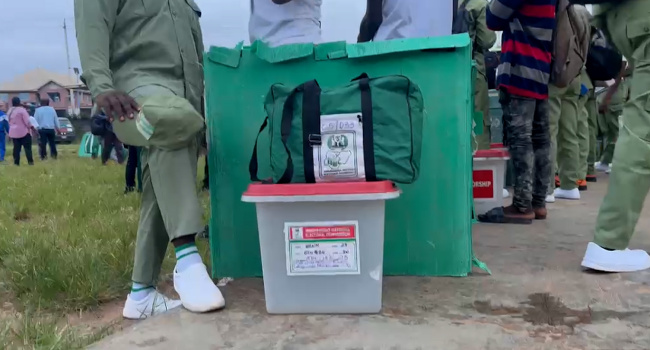
On Saturday, November 28, the electoral umpire will deploy its Bimodal Voter Accreditation System (BVAS) and electronic results upload technology across 17,676 selected polling units in a mock exercise designed to identify operational weaknesses, test equipment reliability and strengthen public confidence ahead of the 2027 elections.
The exercise, scheduled for 8:30 a.m. to 2:30 p.m., will cover two polling units in each of the country’s 8,838 registration areas, giving INEC an opportunity to assess the performance of its electoral technology across different locations before the presidential and National Assembly elections on January 16, 2027, and the governorship and State Houses of Assembly elections on February 6.
It comes against the backdrop of lingering controversies surrounding the 2023 general elections, particularly the failure to upload presidential election results to the INEC Result Viewing Portal (IReV) in real time, technical difficulties associated with BVAS and allegations of electoral irregularities.
Chairman of INEC, Joash Amupitan, described the mock exercise as an important part of preparations for the forthcoming elections, while urging Nigerians to participate.
The commission’s Director of Voter Education and Publicity, Victoria Meci, explained that the exercise would allow INEC to establish the effectiveness and reliability of its equipment before election day.
“We don’t want to wait till the elections before we test the ruggedness, readiness and functionality of the system,” she said during an appearance on Channels Television’s Sunrise Daily.
According to her, the commission has reduced the accreditation threshold to 850 voters per BVAS device, with additional machines to be provided at polling units with larger voter populations.
The exercise will also test the electronic upload of results to IReV, although Meci acknowledged that successful transmission would depend on network availability.
100 Million Voters, 176,846 Polling Units
The scale of the preparations reflects the size of Nigeria’s electorate.
INEC says it is now managing a verified national register of more than 100 million voters after removing over 1.6 million invalid, duplicated, and deceased records from the previous register of approximately 103 million.
Amupitan disclosed on Wednesday, during a meeting with resident electoral commissioners from the 36 states and the Federal Capital Territory, that the clean-up followed the application of an Automated Biometric Identification System and a statutory claims-and-objections audit.
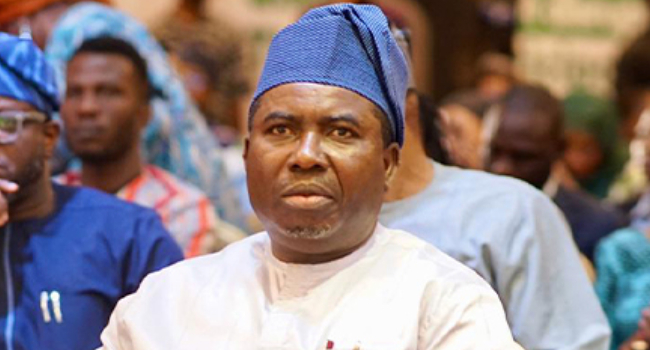
He said the three phases of Continuous Voter Registration (CVR) conducted since 2025 attracted more than 11 million registrations, with over 10.77 million new registrants retained.
The commission also received approximately 311,000 complaints during the claims-and-objections exercise, of which about 232,000 were found to be genuine and addressed.
“By the time we are putting the verified and cleaned-up register together, the national voters’ register is reduced from 103 million to 100 million,” Amupitan said.
The chairman added that 232,658 persons with disabilities were captured in the register, requiring accessible polling arrangements and appropriate assistive materials.
Before the latest clean-up, Lagos had the highest number of registered voters, with 7,488,633, followed by Kano with 6,570,276 and Kaduna with 4,662,640.
Other states among the top 10 were Katsina (3,876,051), Rivers (3,736,434), Oyo (3,588,111), Delta (3,525,988), Benue (3,057,225), Ogun (3,037,981) and Bauchi (3,012,547).
Nigeria currently has 176,846 polling units across 8,809 wards, with electoral activities expected to involve more than 1.41 million ad hoc personnel. INEC also says it has deployed 57,000 newly procured BVAS devices nationwide.
2023 Controversies, 2027 Confidence Questions
However, the commission’s preparations are unfolding amid concerns about the credibility of the electoral process.
The 2023 presidential election, which produced four major contenders, remains an important reference point for the coming contest.
President Bola Tinubu of the All Progressives Congress (APC) secured 8,794,726 votes to defeat former Vice President Atiku Abubakar, then of the Peoples Democratic Party (PDP), who polled 6,984,520.
Peter Obi, who was of the Labour Party, finished third with 6,101,533 votes, while Rabiu Kwankwaso, then of the New Nigeria Peoples Party (NNPP), secured 1,496,687 votes.
The four politicians remain prominent figures in the political calculations surrounding 2027.
Beyond the political contest, the credibility of INEC’s technology and the transparency of its operations remain major concerns.
A former resident electoral commissioner, Mike Igini, argued that the failure to transmit results from the 2023 presidential election eroded public confidence in the commission.
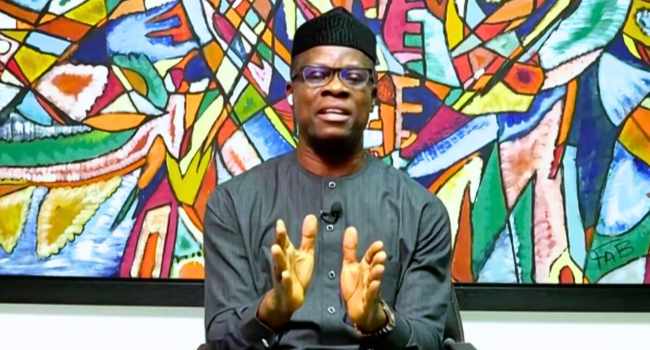
He said that despite serving as a REC, he could not clearly explain the technical glitch INEC attributed to the failure, insisting that the experience undermined trust in the electoral umpire.
“Now, in 2023, what worked and what broke public confidence? The BVAS worked. But what broke confidence, which has created a liability and a cloud of distrust that the current leadership is suffering, was the fact that there were three elections, same day; only one could not be transmitted, which was the presidential,” Igini said on Channels Television’s Politics Today.
“That was what evaporated public trust and confidence. Even people like us, who put out our integrity to explain to people, to give a clarion call to the Nigerian people, up till date I don’t have a clear explanation of what constituted that glitch.”
A September 2026 survey by Yiaga Africa also highlighted the challenge. Its findings showed that only 34 per cent of respondents were confident that INEC would conduct credible elections, down from 45 per cent in previous surveys.
Although 84 per cent indicated that they were likely or very likely to vote, 61 per cent said fear of electoral violence could discourage them from participating.
The survey also found that 49 per cent trusted BVAS and IReV, highlighting the need for greater transparency in the deployment of electoral technology.
Logistics, Security
Beyond technology, INEC’s ability to recruit and deploy sufficient personnel presents another challenge.
The commission recently disclosed that political violence was discouraging prospective ad hoc staff, particularly members of the National Youth Service Corps, from applying for election duties.

Its Director of Voter Education and Publicity, Victoria Eta-Mesi, said the commission had not received the number of applications required to commence training, prompting a two-week extension of the recruitment deadline to December 3, 2026.
“We didn’t have the numbers that we require to train for the election,” she said.
INEC has identified insecurity, logistics and results management as major priorities, while acknowledging that the commission is still awaiting the outstanding portion of its 2027 election budget.
It also disclosed that it had introduced additional technical safeguards to prevent inaccurate results and figures reflecting over-voting from being uploaded to IReV.
The November 28 exercise therefore offers more than an opportunity to test machines. It will provide an indication of whether INEC can translate its procurement, planning and technical preparations into an electoral process that works reliably for voters, officials and observers.
In the end, the success of the 2027 general elections will not be determined by the number of devices procured or the scale of INEC’s preparations alone, but by whether eligible Nigerians can vote freely, have their votes accurately recorded, and see the results transparently accounted for.
Saturday’s exercise is an opportunity for the commission to demonstrate that it has learnt from the past, but the bigger test will come when the nation votes.