A Nigerian environmentalist says COP31’s collapse exposes how oil-producing nations continue to frustrate global efforts to tackle climate change. Meanwhile, vulnerable countries struggle to secure funding for climate-related disasters.
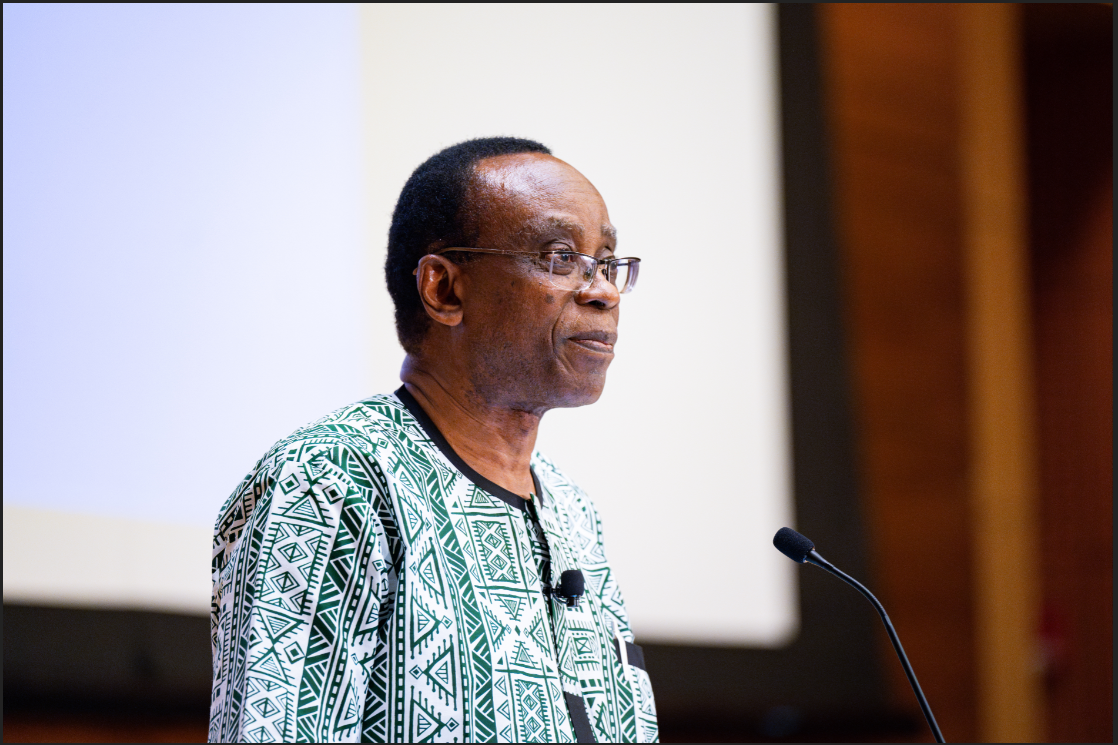
Nigerian environmentalist Nnimmo Bassey has condemned the failure of the 31st United Nations Climate Change Conference (COP31) to reach a consensus on a final agreement, accusing oil-producing countries of frustrating efforts to secure meaningful global action against climate change.
Mr Bassey, in an opinion article titled “COP31 Failed the World,” said the conference’s failure to address fossil fuels in its proposed final decision explicitly exposed the influence of countries whose economies depend heavily on oil and gas.
COP31 ended on Sunday in Antalya, Türkiye, without adopting its proposed overarching agreement, following disagreements among participating countries over fossil fuels, climate finance and the role of carbon capture technologies.
The breakdown came after negotiations extended beyond the scheduled closing date, with countries divided over whether the final document should include a commitment to transition away from fossil fuels.
Mr Bassey, an environmental activist, said excluding fossil fuels from the proposed decision represented a major setback for global climate negotiations, particularly after previous conferences had committed to reducing dependence on coal, oil and gas.
He recalled that COP28 in Dubai, United Arab Emirates, had agreed on a transition away from fossil fuels, while COP30 in Belém, Brazil, had offered road maps for achieving the transition.
He accused Saudi Arabia, Russia and other oil-producing countries of resisting attempts to include fossil fuels in the proposed COP31 agreement.
“It is indeed a shame that although COP21 at Glasgow agreed to phase down, not phase out, coal; COP28 in Dubai agreed to a vague transition away from fossil fuels, and COP30 in Belém offered road maps for transitioning away from fossil fuels, COP31 in Antalya blatantly excludes a mention of fossil fuels even in passing,” he wrote.
The conference’s failure to reach consensus was also condemned by United Nations Secretary-General António Guterres, who warned that the worsening climate crisis required urgent action despite the diplomatic setback.
“There may be no consensus in the negotiating room. There is no ambiguity in the science,” Mr Guterres said in his reaction to the conference’s outcome.
Mr Bassey said the failure reflected major polluting countries’ unwillingness to accept responsibility for the climate crisis and provide adequate financial support to developing countries bearing the consequences of global warming.
The Nigerian environmentalist also criticised the limited resources available to the Fund for responding to Loss and Damage, established to support vulnerable countries experiencing climate-related disasters.
He said the financial commitments made by wealthy countries remained grossly inadequate compared with the needs of developing nations.
According to a report presented to COP31, $822.71 million had been pledged to the fund as of 31 July 2026, but only $485.77 million had been received. Meanwhile, developing countries had submitted funding requests totalling $2.8 billion.
Mr Bassey argued that the funding gap reflected wealthy polluting countries’ unwillingness to take responsibility for the damage caused by their historical emissions.
He also criticised the disparity between the resources available for climate action and global military expenditure, arguing that governments continued to prioritise warfare and military spending over the survival of vulnerable communities.
Mr Bassey warned that Africa would bear a disproportionate share of the consequences of the failure to achieve meaningful reductions in global emissions.
He cited projections indicating that the world was heading towards a temperature increase of 2.6 degrees Celsius, above pre-industrial levels, despite countries’ emissions-reduction commitments.
For Africa, he said, the consequences could be even more severe, with warming potentially reaching 3.9 degrees Celsius.
The Paris Agreement seeks to limit global warming to well below two degrees Celsius, while pursuing efforts to restrict the increase to 1.5 degrees Celsius above pre-industrial levels.
Mr Bassey said the proposed COP31 decision also raised concerns about promoting carbon dioxide removal technologies, which he argued could excuse continued fossil fuel production rather than address the principal causes of global warming.
He warned that reliance on unproven technological interventions and carbon removal schemes could expose vulnerable countries to further environmental risks.
With the negotiations ending without an overarching agreement, Mr Bassey called for a fundamental rethink of the global climate negotiation process.
He advocated a people’s conference on climate change, drawing inspiration from the 2010 Cochabamba People’s Summit on Climate Change and the Rights of Mother Earth in Bolivia.
According to him, climate negotiations must prioritise affected communities, climate justice and the principle of Common but Differentiated Responsibilities and Respective Capabilities, which recognises that countries have different historical contributions to climate change and capacities to address it.
“It is time to go beyond the COPs to force real actions and real solutions based on the principle of Common but Differentiated Responsibilities and Respective Capabilities,” he said.
He added that meaningful climate action would require changing the global economic and political systems that continue to prioritise fossil fuel profits over environmental protection.
COP31’s failure to secure an overarching agreement marks a major setback for international climate diplomacy. Negotiations on unresolved issues are expected to continue before COP32, scheduled to take place in Addis Ababa, Ethiopia.