The proposed opposition alliance faces a critical test over the selection of a common presidential candidate, as competing party ambitions and internal leadership disputes threaten efforts to build a united front against Tinubu.
Nigeria’s opposition parties are again attempting to build a common political front to challenge President Bola Tinubu’s re-election bid in the 2027 presidential election. But while negotiations are progressing towards a formal cooperation agreement, the competing ambitions of the parties’ presidential candidates are exposing the difficulty of translating calls for unity into a workable electoral arrangement.
The Coalition for Democracy, comprising six opposition parties and factions, has scheduled 30 November for its second summit in Abuja, where participating parties are expected to sign a formal agreement on political cooperation, democratic renewal and electoral integrity.
The meeting, initially scheduled for 23 November, was postponed after participating parties requested more time to accommodate their campaign schedules. The parties subsequently agreed to suspend their campaign activities on 30 November to attend the summit, where they are expected to sign a “Covenant for Democratic Renewal.”
Coordinated by Salihu Lukman, an African Democratic Congress (ADC) chieftain, the coalition brings together the ADC, Allied Peoples Movement (APM), Nigeria Democratic Congress (NDC), a faction of the Peoples Democratic Party (PDP), the Peoples Redemption Party (PRP) and the Social Democratic Party (SDP).
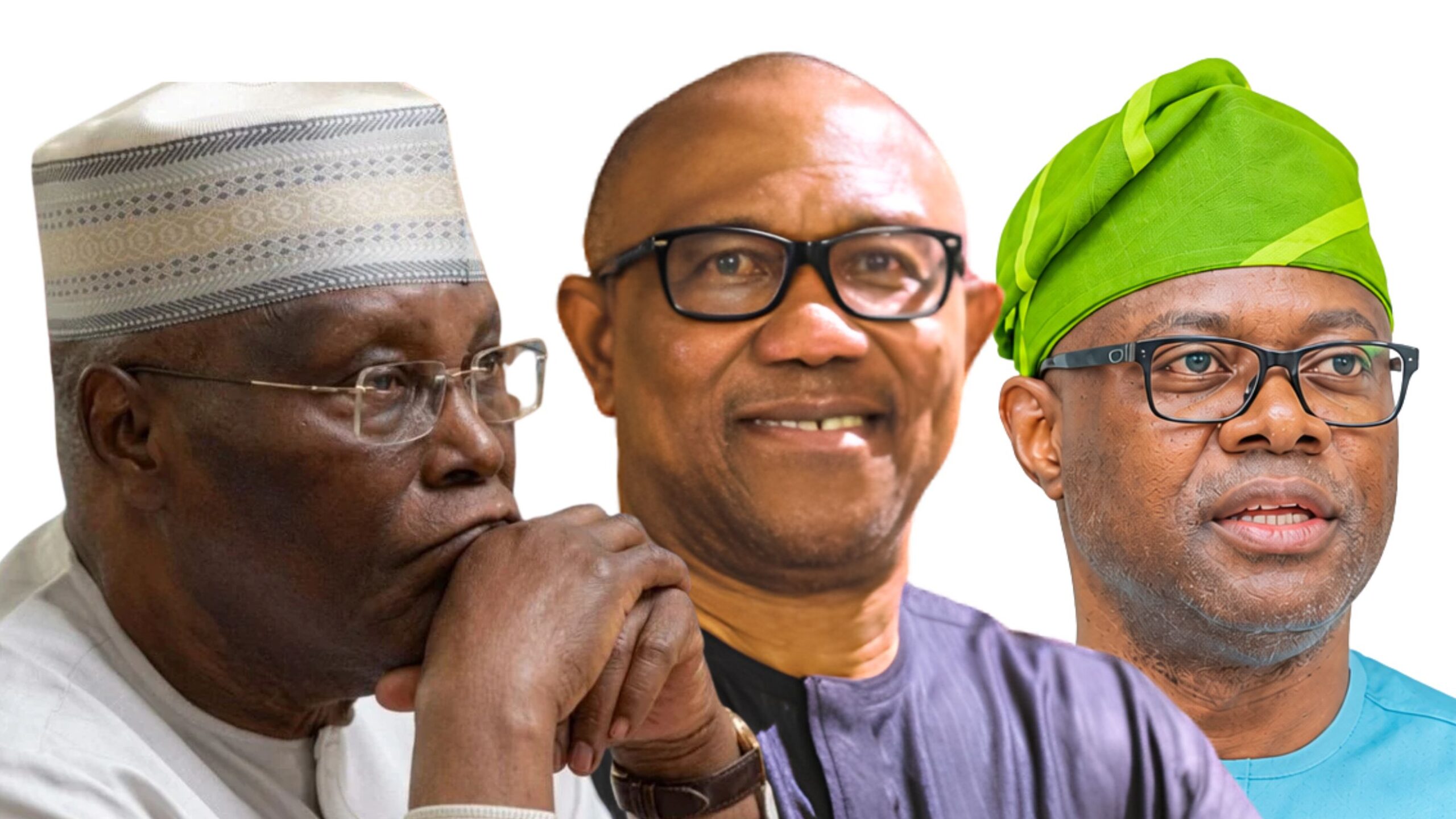
However, the parties are approaching the negotiations with separate presidential tickets already on the Independent National Electoral Commission’s (INEC) list of candidates. The list names Atiku Abubakar and Rotimi Amaechi for the ADC; Seyi Makinde and Lawal Daura for the APM; Peter Obi and Rabiu Kwankwaso for the NDC; and Sandy Onor and Umaru Babangida for the PDP.
The proposed agreement is intended to establish a framework for cooperation without requiring participating parties to dissolve their structures or surrender their individual political identities.
But a major question has widely emerged on whether the opposition parties can go beyond electoral cooperation and agree on a common presidential candidate to challenge the ruling All Progressives Congress (APC).
The difficulty is becoming increasingly apparent as Atiku, former Anambra State Governor Peter Obi and Oyo State Governor Seyi Makinde continue to navigate their respective presidential ambitions, while negotiations over a common opposition platform remain inconclusive.
The latest developments surrounding Atiku have further exposed the competing interests within the opposition’s proposed arrangement.
On 21 November, a coalition of support groups that previously backed the former vice-president announced its endorsement of the Obi-Kwankwaso presidential ticket of the NDC, citing the need for opposition cooperation and considerations around regional power rotation.
Atiku subsequently dismissed reports that he had withdrawn from the presidential race, insisting that he remained in the contest and was determined to challenge Mr Tinubu.
In a statement issued through his Director of Strategic Communication, Phrank Shaibu, the former vice-president rejected suggestions that he would abandon his ambition in favour of another opposition candidate.
“I do not need anyone to step down for me, and I am stepping down for no one,” he said.
The ADC’s spokesperson, Bolaji Abdullahi, also distanced the party from the statements, saying they were not authorised and should be disregarded.
Speaking via a phone call with PREMIUM TIMES on Friday, Mr Abdullahi said official communication concerning the party would always be issued only through authorised channels.
“The statements did not come from us. Whatever development involving our party will be communicated through official and authorised channels. Anybody can impersonate you and issue unauthorised statements capable of misleading the public or complicating issues,” he said.
The development illustrates one of the coalition’s central difficulties. While opposition politicians may agree on the need to cooperate against the APC, that agreement does not necessarily translate into a willingness to surrender their individual presidential ambitions.
For Atiku, who has contested the presidency several times and emerged as the ADC’s candidate in May as his fourth attempt, withdrawing in favour of another contender would require considerable political concessions. His emergence as the party’s flagbearer also means that any proposed arrangement must address the interests of the ADC and the political structure mobilised around his candidacy.
The latest development follows a leadership dispute within the ADC over the legitimacy of the party’s leadership under which Atiku emerged as its presidential candidate.
In a judgement delivered on 5 November, Justice Peter Lifu invalidated the David Mark-led ADC leadership and decisions taken under it, raising questions about the validity of the processes through which Atiku emerged as the party’s presidential candidate.
Last week’s edition of the PT State of the Race examined the 68-page published judgement, which, under Order 4, invalidated official acts performed by Mr Mark, Rauf Aregbesola and other national officers covered by the case from 29 July 2025.
Orders 7 and 8 also restrained INEC from recognising them as national officers and barred them from continuing to act in those capacities.
Although the judgement did not specifically direct INEC to remove all ADC nominees, including Atiku, Order 5 directed the electoral commission to recognise Nafiu Gombe as the sole elected member of the National Working Committee entitled to supervise the party’s affairs.
The interpretation and implications of the ruling for Atiku’s candidacy remain contested. The ADC’s lawyer, Kalu Kalu, argued on Channels Television that the judgement did not invalidate the former vice-president’s candidacy. The central dispute is whether the court’s orders invalidating decisions taken under the Mark-led leadership also affect the validity of nominations made during that period. The fact that Atiku was not expressly named in the orders does not, in itself, resolve that question.
The dispute later escalated when officials aligned with Mr Gombe, a former ADC deputy national chairman, called on Atiku to suspend his campaign. In a communiqué, they cited the judgement and claimed to have the backing of the party’s six zonal leaders.
Mr Gombe, however, offered a conditional path to reconciliation with Atiku in a Saturday interview with BBC Hausa, reported by PREMIUM TIMES on Sunday.
He said reconciliation would depend on compliance with what he described as the party’s membership and leadership requirements.
His remarks left open the possibility of internal political negotiations, although no settlement with Mr Mark was announced.
However, Mr Shaibu told PREMIUM TIMES on Thursday that Atiku had filed a 17-ground appeal at the Court of Appeal to overturn the November 4 judgement of the Federal High Court that nullified his nomination.
He added that the issue involving its leadership remains internal and could be resolved by the party’s concerned leaders.