Toyyibat Qasim
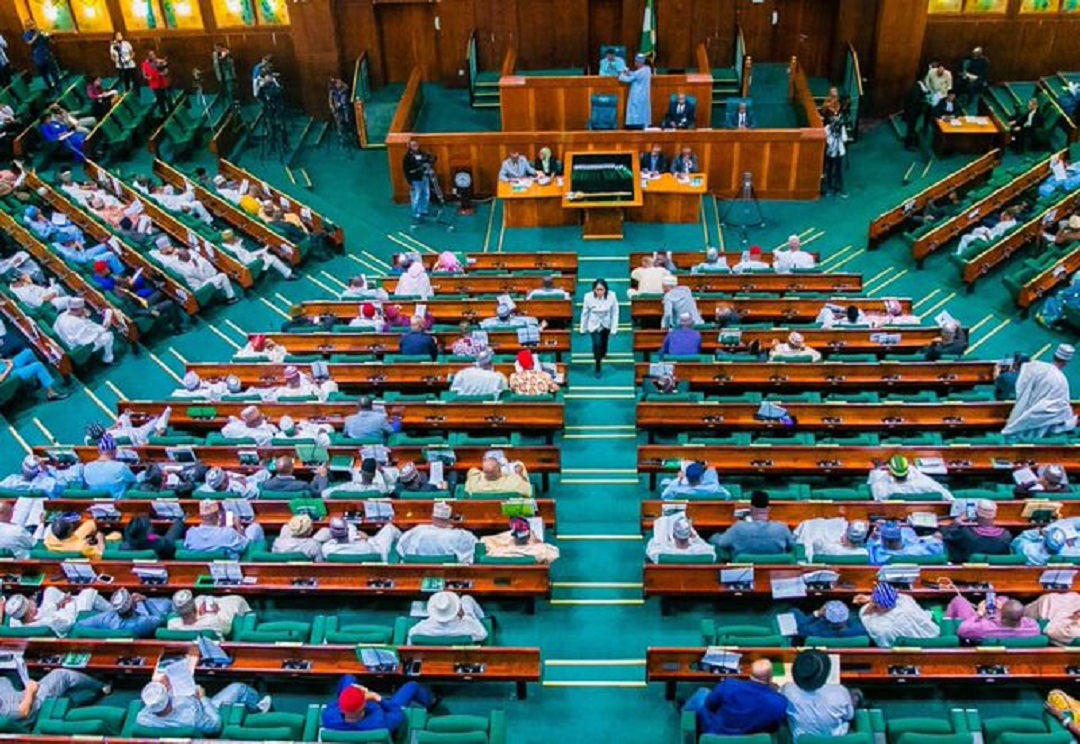
The House of Representatives Committee on University Education has launched an investigation into alleged financial irregularities in nine federal universities and other tertiary institutions, demanding explanations from their managements over discrepancies in budgetary records and the management of public funds.
The committee also directed the Vice-Chancellor of the University of Lagos (UNILAG), Prof. Folasade Ogunsola, to submit comprehensive details of the institution’s 2024, 2025 and 2026 budgets and appear before lawmakers next week over an alleged N7.1bn discrepancy in its financial records.
The Chairman of the committee, Abubakar Fulata, disclosed this in a statement on Saturday following an oversight visit to universities and inter-university centres across the South-West geopolitical zone.
Fulata said the exercise exposed inconsistencies in financial submissions, inadequate transparency and possible violations of approved budgetary provisions by some institutions.
He expressed concern over conflicting figures presented by university managements, particularly discrepancies between internally generated revenue and reported expenditure.
According to him, some universities submitted financial records indicating that their expenditure exceeded their internally generated revenue without explaining the sources of the additional funds, while others failed to account for substantial balances in their financial statements.
In some cases, the documents submitted contradict each other. You claimed to have generated N9bn and spent N10bn—where did you get the N1bn from?
“In another instance, you will see N12bn generated as income and only N8bn spent, without any information regarding the whereabouts of the balance of N4bn,” he said.
The committee chairman warned that such financial practices could further undermine the university system, stressing that institutions receiving public funds must demonstrate transparency and accountability in their financial operations.
He maintained that vice-chancellors and their management teams had a responsibility to account for both government allocations and internally generated revenue, insisting that public resources must be utilised strictly for approved purposes.
On the UNILAG investigation, Fulata said the institution’s representatives who received the committee during its visit could not satisfactorily explain the alleged N7.1bn excess reflected in its 2024 and 2025 financial records.
He added that the officials were also unable to provide additional information requested by the lawmakers.
The committee subsequently directed the university to provide detailed financial records and appear before it to clarify the discrepancies.
Other institutions directed to update their financial records and submit comprehensive reports on their 2024, 2025 and 2026 budget implementation include Obafemi Awolowo University, Ile-Ife; Federal University Oye-Ekiti; Federal University of Technology, Akure; and Federal University of Health Sciences, Ila-Orangun.
The committee’s oversight exercise also covered the University of Ibadan; Adeyemi Federal University of Education, Ondo; Federal University of Agriculture and Development Studies, Iragbiji; Federal University of Technology and Environmental Studies, Iyin-Ekiti; and the Nigeria French Language Village, Badagry.
Fulata further urged university authorities to adhere to the federal character principle in staff recruitment and student admissions to promote fairness, inclusiveness and equitable representation.
He said the National Assembly would not allow political activities ahead of the 2027 general elections to distract it from its constitutional responsibility of monitoring public expenditure and ensuring accountability in government institutions.
According to him, the oversight exercise was designed to prevent any sector of the economy, particularly education, from suffering neglect because of political engagements.
The committee reiterated that effective financial management remained essential to improving the quality of tertiary education, adding that universities must ensure that public funds were deployed towards their approved objectives.