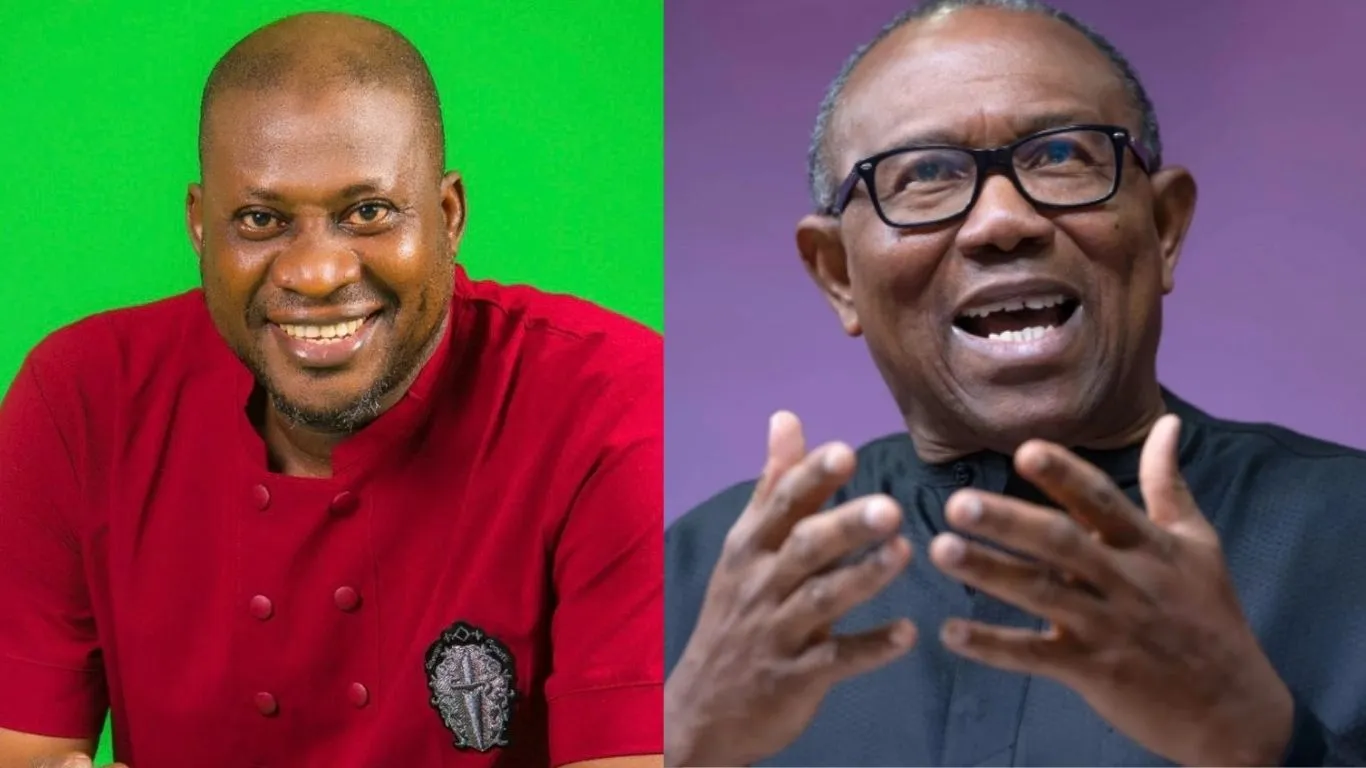
Mr Makinde said he and other aggrieved PDP governors, known as the G5, initially approached the Labour Party presidential candidate, Peter Obi.
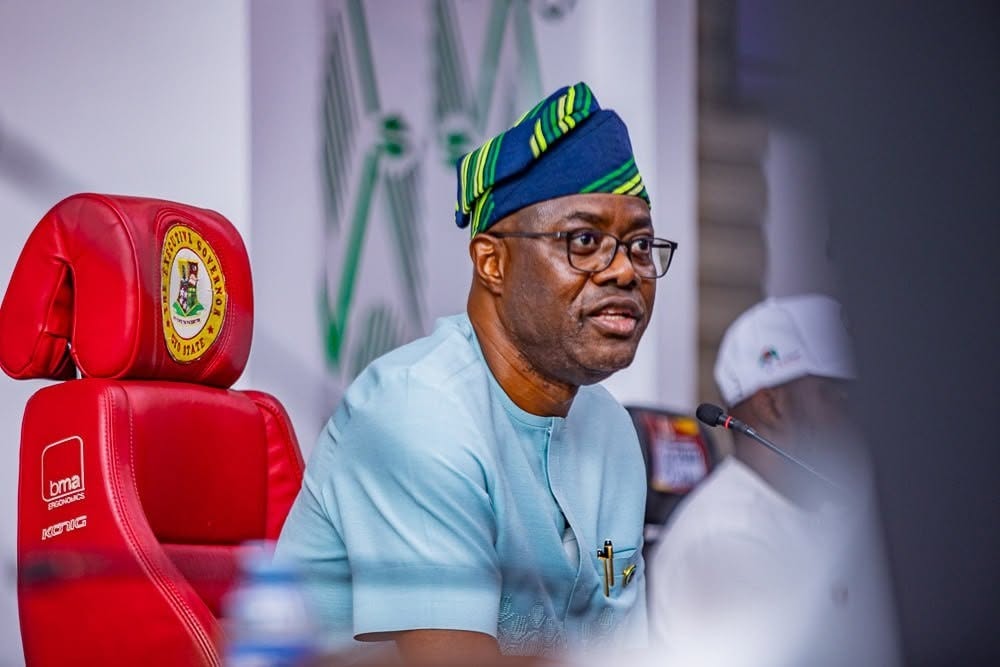
Oyo State Governor Seyi Makinde has explained why he supported President Bola Tinubu in the 2023 presidential election despite belonging to the opposition Peoples Democratic Party (PDP), saying the decision followed discussions over a proposed government of national unity.
Mr Makinde said he and other aggrieved PDP governors, known as the G5, initially approached the Labour Party presidential candidate, Peter Obi, and Mr Tinubu, who contested on the platform of the All Progressives Congress (APC), to discuss an inclusive government after the election.
He said the group eventually backed Mr Tinubu because they were more convinced by his response to their proposal.
The governor spoke in a podcast interview with Chude Jideonwo on Wednesday, where he also explained why he had withdrawn his support for the president ahead of the 2027 general election.
Mr Makinde said his disagreement with the PDP began after the party decided to leave its presidential ticket open, despite his efforts to secure the nomination for a southern candidate following eight years of President Muhammadu Buhari’s administration, which was led by a northerner.
“I was at the forefront of zoning the presidency to the South in the PDP, such that after eight years of President Buhari, who’s from the North, we can have a southern president,” he said.
However, the party eventually nominated former Vice-President Atiku Abubakar, from the North-East, as its presidential candidate.
Mr Makinde said the G5 governors, who opposed their own party’s (PDP) presidential candidate, subsequently approached Atiku with concerns about the concentration of key positions in the party and its presidential campaign in the hands of northern politicians.
He cited Atiku’s emergence as the presidential candidate, Iyorchia Ayu’s position as PDP national chairman and the appointment of Aminu Tambuwal, then governor of Sokoto State, as director-general of the presidential campaign.
The group emerged from the PDP crisis after Mr Atiku’s victory in the party’s May 2022 presidential primary. Its members demanded Mr Ayu’s resignation, arguing that the party’s presidential candidate and national chairman should not both come from the North. The disagreement contributed to the governors’ decision to withhold support from Mr Atiku during the 2023 election.
The G5 comprised Mr Makinde, former Rivers State Governor Nyesom Wike, former Benue State Governor Samuel Ortom, former Abia State Governor Okezie Ikpeazu and former Enugu State Governor Ifeanyi Ugwuanyi.
According to Mr Makinde, the arrangement left the governors concerned about how the South would be represented in the campaign and a possible PDP-led government.
“So, what do we have to use to campaign for our own people in the South? So, we couldn’t have an alignment,” he said.
Mr Makinde said the governors later considered other political options after futile efforts to resolve the PDP’s party’s campaign arrangements ahead of the 2023 election, arguing that their decision to break ranks with their party should be based on what would happen after the election, rather than merely on securing political advantage.
He said they approached Mr Obi and Mr Tinubu with a proposal for a government of national unity that would bring competent people from across the country into government, irrespective of their political affiliations.
“We approached Peter Obi. We approached the Asiwaju, and we said, ‘Look, beyond this election, it will be a government of national unity. First, nobody should be a slave in their own country, where you should have a Nigeria that will work for not just the privileged few, but everybody,’” he said.
Mr Makinde described the discussion with Mr Obi as good but said the group was not convinced that the Labour Party candidate would implement the proposal.
He said Mr Tinubu, on the other hand, accepted their recommendations, including the proposed government of national unity and national competence.
“So when we now approached the President an, and we brought this before him, he accepted the government of national unity, all of those things we have put together, national competence, and things like that,” he said.
The governor added that the decision to support Mr Tinubu was also a political risk because the G5 governors were breaking ranks with their party and needed to be confident that their choice would produce an outcome for the country.
Mr Makinde said his support for Mr Tinubu was based on the expectation that the president would establish an inclusive government capable of addressing Nigeria’s economic and security challenges.
He alleged that the president failed to implement the signed agreement reached before the election, which he said was the basis for the G5’s support, noting that agreement had not produced the expected outcome.
“The president accepted it, but he did not implement it, which wasisat has led to where we are now,” he said.
He stated that the proposed government of national unity was intended to bring competent Nigerians from different parts of the country into government to address the country’s economic difficulties and insecurity.
He added that the agreement was not merely a verbal understanding, saying he had a signed copy.
“We signed an agreement. I have it. I have the signed copy. It’s not like somebody said to somebody who said we sat,” he said.
Mr Makinde said he expected the president to demonstrate the same commitment to a written development plan that he said guided his administration in Oyo State.
He recalled that before his first election in 2019, he presented a roadmap for the state’s development to voters and later assessed its implementation when he sought re-election in 2023.
He said he expected a similar level of commitment from the president to the agreement reached before the 2023 election.
The governor said his decision to contest against Mr Tinubu was not simply about replacing the president but correcting what he described as a mistake made in 2023.