With Colombia set to head to the polls on May 31, a deteriorating security situation marked by deadly attacks and rising violence is emerging as a key concern for voters.
3 Min Read
 1 / 8
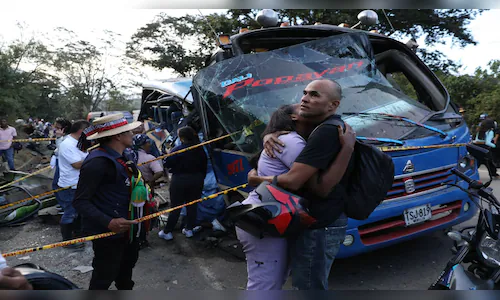
1 / 8A series of deadly attacks in southwest Colombia has raised fresh security concerns weeks before the country’s presidential election on May 31. According to reporting by the Associated Press, rebel groups have launched coordinated strikes on civilians and military targets, underlining the fragile security situation. (Image: AP)
 2 / 8
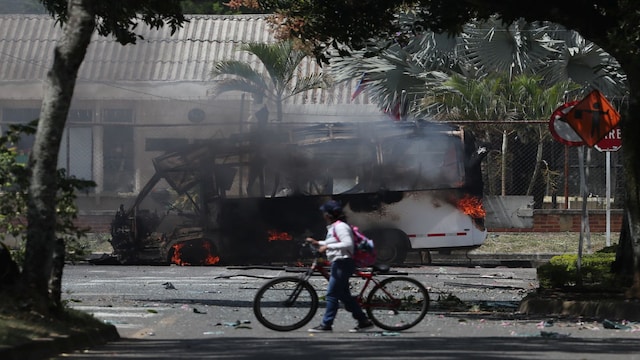
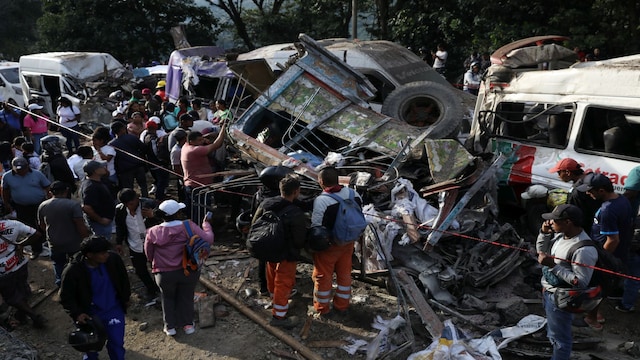
2 / 8Over two dozen attacks in just days: Rebel groups have carried out at least 26 attacks since Friday, using explosives and drones across multiple locations in the southwest, according to Colombia’s defence ministry, cited by AP. The scale of the violence was visible on the ground — a passenger bus was torn apart by an explosive device in Cajibío, while another blast hit outside an army base in Cali. (Image: AP)
 3 / 8
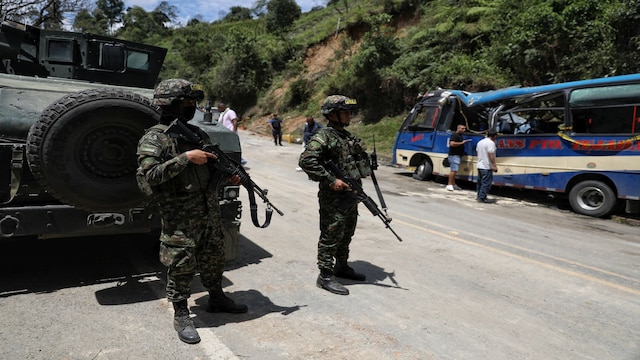
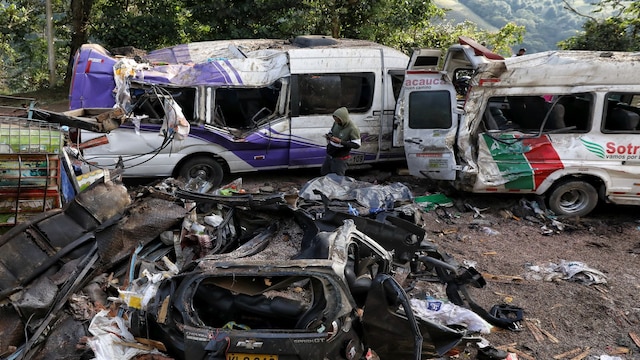
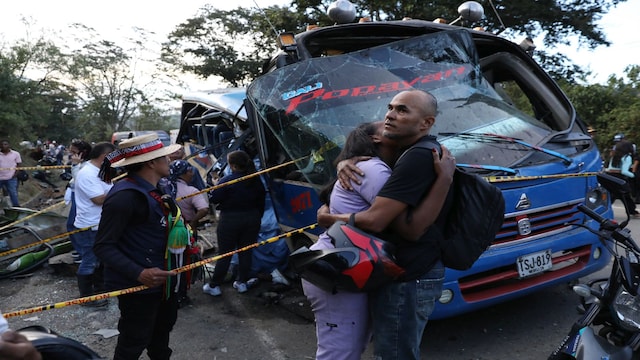
3 / 8Deadly highway blast kills at least 21: One of the worst incidents took place on the Pan-American Highway between Cali and Popayán. Authorities said the explosion near a tunnel killed at least 21 people. Images from the site showed burned vehicles and grieving relatives gathered near the wreckage. (Image: AP)
 4 / 8
4 / 8Dissident FARC group blamed: Authorities have blamed the attacks on the FARC-EMC, led by Néstor Vera. He is a former member of the Revolutionary Armed Forces of Colombia who refused to join the 2016 peace agreement and later broke away from talks with the government. (Image: AP)
 5 / 8
5 / 8Violence tied to control of illegal economies: Southwest Colombia has long been contested by armed groups due to illegal mining and drug trafficking. The cultivation of coca leaf — the raw material for cocaine — remains a key source of revenue. Experts say regions like Cauca and Valle del Cauca are strategic corridors for these activities, making them hotspots for conflict. (Image: AP)
 6 / 8
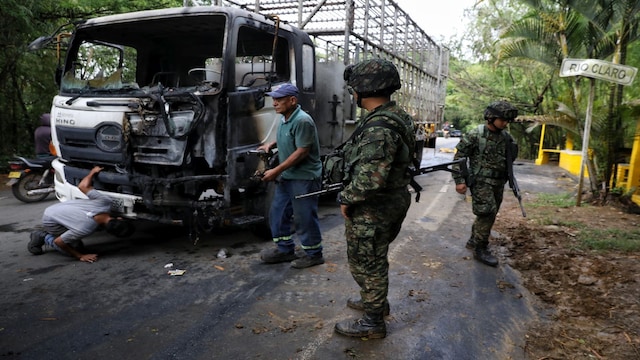
6 / 8Mixed tactics show evolving rebel strategy: The recent attacks show a range of tactics, from car bombs and drone strikes to arson. In one incident, a truck carrying chickens was set on fire in Jamundí, reflecting how armed groups are targeting both infrastructure and everyday economic activity to spread fear and disruption. (Image: AP)
 7 / 8
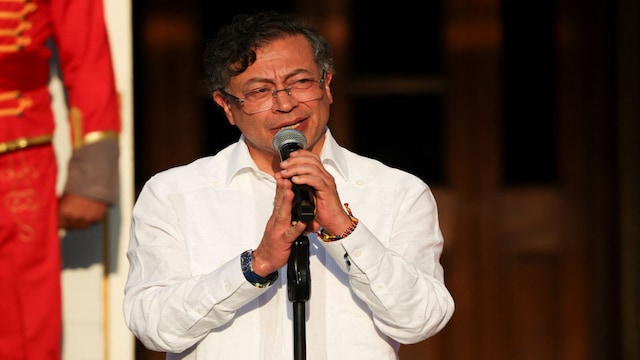
7 / 8‘Total peace’ strategy under scrutiny: President Gustavo Petro has promoted a “total peace” policy aimed at negotiating with armed groups through ceasefires. However, critics argue that the strategy has allowed these groups to regroup and strengthen. Political scientist Javier Garay told AP the approach has been “naïve,” while analysts say some groups used the pause to expand control. (Image: Reuters)
 8 / 8
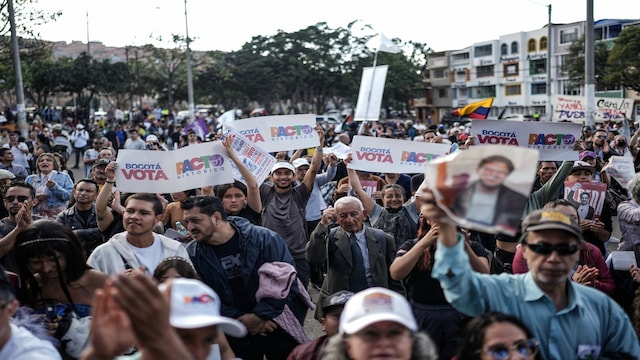
8 / 8Election campaign heats up amid security fears: The violence comes as Colombia prepares for a presidential election with 14 candidates. Crime and security are expected to be major voter concerns. Candidates include Iván Cepeda, who supports continuing peace talks, and conservatives Abelardo de la Espriella and Paloma Valencia, who favour a tougher military approach. President Petro has called for an investigation into whether the attacks were meant to interfere with the election, a concern echoed by Cepeda. (Image: Reuters)