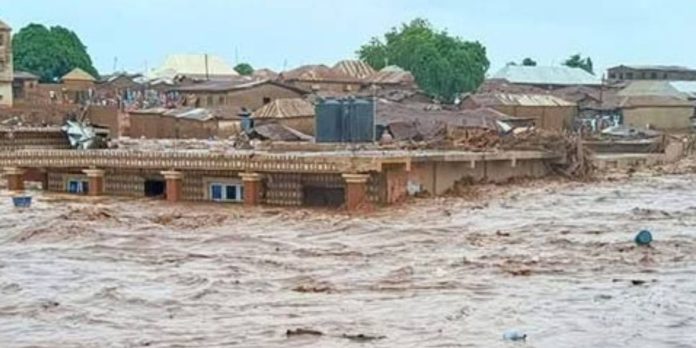
Despite the disbursement of over N109.5bn from Nigeria’s Ecological Fund within three years, concerns are mounting over the country’s preparedness for the 2026 rainy season, with experts warning that many states remain highly vulnerable to flooding.
Findings showed that between July 2023 and December 2025, a total of N109,516,046,114.35 was released to address ecological challenges, particularly flooding.
The figures, sourced from the Office of the Accountant-General of the Federation, indicated a steady increase in spending, rising from N21.1bn in the latter half of 2023 to N34.78bn in 2024, and peaking at N53.62bn in 2025.
However, the rising financial commitment has not translated into reduced anxiety among residents, farmers, and stakeholders, as fresh warnings signal an impending flood crisis.
A fish farmer based in Lagos, Mohammed Alagangan, attributed the growing fears to changing climate patterns, noting that irregular weather conditions have heightened the likelihood of intense rainfall within shorter periods.
He said, “Climate change is real. The seasons are no longer regular. What we are seeing now is a shortened rainfall period that could result in heavy downpours and flooding.”
Alagangan urged governments at all levels to intensify sensitisation campaigns and implement proactive measures, including improved drainage systems and stricter control of activities on flood plains.
The Minister of Water Resources and Sanitation, Joseph Utsev, had earlier warned that no fewer than 14,118 communities across 266 local government areas in 33 states and the Federal Capital Territory are at risk of flooding in 2026.
According to him, the flood risk window, which spans April to November, threatens agriculture, infrastructure, and livelihoods, with major cities such as Lagos, Abuja, Port Harcourt, Ibadan, and Kano expected to experience flash and urban flooding.
Similarly, the Council of Registered Builders of Nigeria cautioned that buildings and infrastructure across the country face heightened risks due to forecasted above-normal rainfall and prolonged wet seasons in several states.
The council’s Chairman, Samson Opaluwah, advised property owners to adopt preventive measures, including clearing drainage systems, reinforcing roofs, and ensuring structural integrity to mitigate potential damage.
Concerns over the effectiveness of the Ecological Fund have also intensified following reports of recurring flood disasters despite consistent disbursements.
A former Permanent Secretary of the Federal Ministry of Environment, Mahmud Kambari, disclosed that Nigeria recorded losses estimated at N11.5bn in agricultural produce due to flooding in 2025 alone.
He cited previous incidents, including the devastating 2024 flood in Borno State triggered by the collapse of the Alau Dam, which displaced over 419,000 persons and claimed more than 30 lives.
Urban planning experts have blamed the persistent flooding on poor infrastructure, weak development control, and failure to implement critical projects such as buffer dams along the River Benue.
A former President of the Nigerian Institute of Town Planners, Nathaniel Atebije, said the absence of proper urban planning and the obstruction of natural waterways have worsened flood incidents.
“Flooding in Nigeria is largely man-made. Poor planning, blocked drainage systems, and weak institutional response continue to expose communities to avoidable disasters,” he said.
Also weighing in, the International Society for Social Justice and Human Rights described the situation as a governance failure, calling for a forensic audit of Ecological Fund disbursements from 2023 to 2026.
The organisation’s Chancellor, Jackson Omenazu, said, “Environmental disasters in Nigeria are no longer natural occurrences; they are governance failures.”
He stressed the need for stronger accountability, improved inter-agency coordination, and strict enforcement of environmental and urban planning laws.