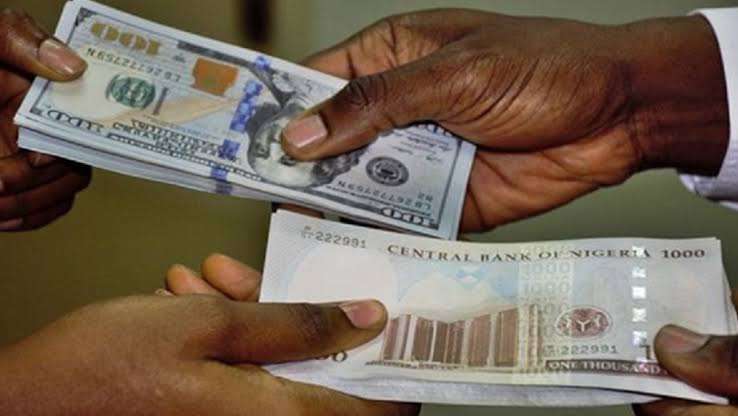
Nigeria’s external reserves fell by $850 million over three weeks, reversing a nine-month upward trend, as election-related government spending and foreign exchange (FX) pressures weighed on the economy.
This was confirmed by forex traders and analysts.
Data from the Central Bank of Nigeria (CBN) shows reserves dropped from $50.03 billion on March 11 to $49.18 billion on April 1, 2026.
Market operators cited sustained CBN intervention in the FX market, capital outflows, and debt repayments as the main drivers of the decline.
“The Central Bank of Nigeria’s efforts to stabilise the naira and manage exchange rates with foreign exchange intervention have contributed to the decline. Payments on foreign debts have also put pressure on the reserves,” said Aminu Gwadebe, President of the Association of Bureau De Change Operators of Nigeria (ABCON).
He added that “capital flow volatility can lead to sudden outflows, while election-year pressures from increased government spending and policy uncertainty can exacerbate reserve depletion.”
Alhaji Basir Kanjiwa, a Forex trader noted, “a major factor is the sustained intervention by the Central Bank of Nigeria to stabilise the naira each time the central bank injects dollars into the market, it draws down on reserves. While oil prices have improved, actual inflows have not been strong enough to offset demand, there is also the issue of capital outflows as investors remain cautious.”
Experts say Nigeria’s structural economic challenges, reliance on oil exports, and high import dependence continue to expose reserves to volatility. Recommendations include boosting non-oil exports, improving FX market transparency, and attracting foreign investment.
Muda Yusuf, CEO of the Centre for the Promotion of Public Enterprise (CPPE), described the decline as “less than two percent” and said Nigeria remains in a “fairly comfortable position” with reserves still above $49 billion.
The CBN had projected that Nigeria’s reserves would reach $51.04 billion in 2026, supported by stronger oil earnings, FX reforms, diaspora remittances, and expanded domestic refining capacity.
Governor Olayemi Cardoso said in February that gross reserves had reached $50.45 billion, marking the highest level in 13 years and providing an import cover of 9.68 months.
This drop highlights the ongoing challenges facing Nigeria’s external reserves in an election year despite improvements in oil prices and FX reforms.


