By Daniel Oluwatobiloba Popoola
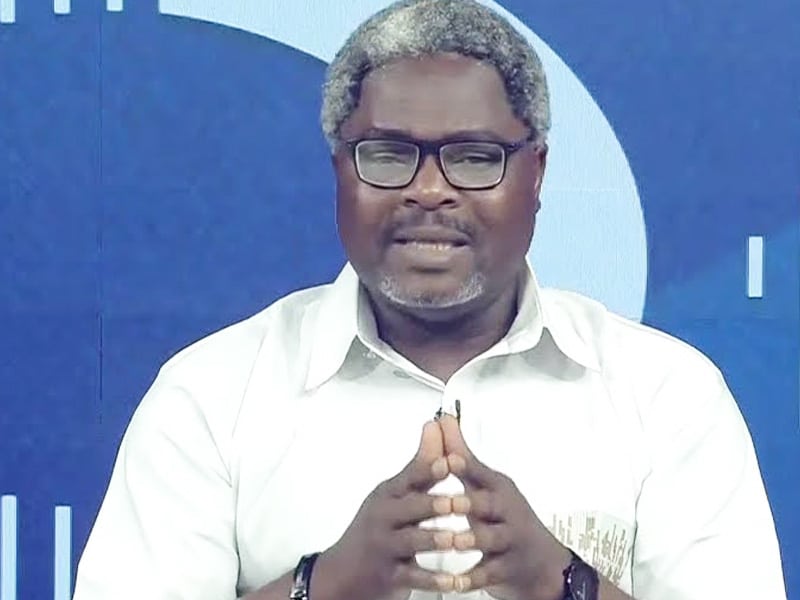
Borno South Senatorial District lawmaker, Senator Ali Ndume has said Nigeria’s lingering insecurity could be decisively curtailed within six months if the Federal Government demonstrates the required political will and commitment.
Ndume stated this on Monday, 13 April, 2026 during an interview on Channels Television’s Politics Today, amid renewed violence in the North-East and other parts of the country.
He stressed that the worsening situation demands urgent, decisive action, anchored on proper training, equipping and motivation of security forces.
“It is not about complaining. It is not about asking somebody like me as a senator to say why these things,” Ndume said. “I always believe that if the President and the Federal Government of Nigeria are serious about this, we can end this thing (insecurity) in six months.”
He added, “All we need is to train our soldiers, equip them, arm them very well, and then motivate them.”
However, Ndume expressed concern over the continued loss of military personnel, including senior officers, describing the trend as unacceptable and indicative of deeper operational gaps.
“After killing their commanders, they now come back to kill our commanders and they are still taking about five, six, or even seven. Even today, around Northern Borno, we lost a colonel, I understand, with some soldiers. This should not continue. This is now the problem,” he said.
Furthermore, the senator attributed the escalating insecurity to inconsistent implementation of strategies, noting that existing measures have not been fully executed.
“The escalating security situation has really been enhanced by the challenge and the threat, and the actions that have been taken that have never been completely done,” he said, adding that “we have to be very serious about this matter; we have to walk the talk.”
On foreign assistance, Ndume emphasised that Nigeria’s priority should be intelligence gathering, technology deployment and specialised expertise, rather than dependence on external forces.
“What we need is intelligence. What we need is air support. We also need the expertise of those that are specialists,” he said.
“We even have some that were trained outside, special forces. We have capable hands already on the ground; all they need is equipment, ammunition, and motivation.”
He further highlighted the role of technology, particularly drones, in addressing security challenges, drawing comparisons with developments in other countries.
“We do not have enough drones. Look at what Burkina Faso is doing, it is technology. We can use technology to finish or minimise these things within the shortest possible time. If you deploy drones and have trained people to operate them, with proper command centres, we can achieve results,” Ndume said.
He commended the efforts of Borno State Governor Babagana Zulum, noting that his interventions have helped prevent further deterioration of security in the state.
Ndume’s remarks come against the backdrop of renewed security concerns nationwide. Notably, a recent airstrike at Jilli Market along the Yobe–Borno border has sparked scrutiny over reported civilian casualties.
The Nigerian Air Force said the operation targeted suspected Boko Haram insurgents and confirmed that investigations into the reported civilian casualties were ongoing. While casualty figures remain unclear, several deaths and injuries were reported, with victims receiving treatment in nearby facilities.
Similarly, a deadly attack on a military formation in Benisheikh on Thursday, 9 April, 2026 saw troops repel insurgents, although casualties were recorded among security personnel.
Across the country, security challenges, including banditry, kidnappings and communal clashes, continue to persist, raising concerns over the effectiveness of existing measures.