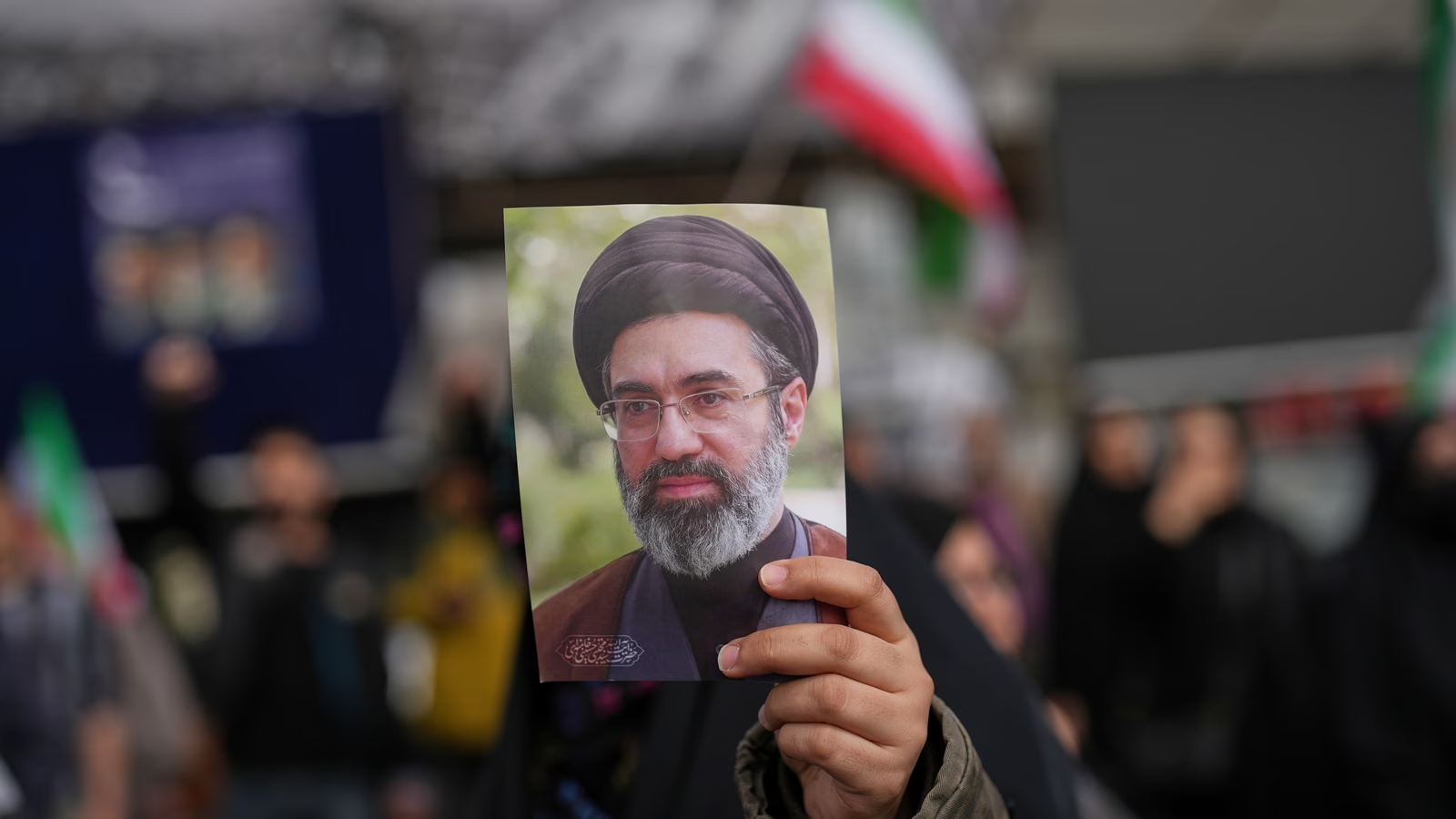
Iran’s new Supreme Leader Ayatollah Mojtaba Khamenei is recovering from severe facial and leg injuries sustained in an airstrike that killed his father, Ayatollah Ali Khamenei, at the beginning of the West Asia war, news agency Reuters reported quoting three who were close to his inner circle.
Mojtaba’s face continues to bear wounds from disfiguration and his legs suffer a significant injury from the attack that targeted his residential compound in central Tehran, all three people told the news agency.
Now comes the question of whether Mojataba’s health allows him to continue running state affairs as the high-stakes talks between United States and Iran in Islamabad to secure a peace deal ended without a breakthrough on Sunday.
“The bad news is that we have not reached an agreement,” Vance said in his speech following the talks that aimed to end the six-week war and reopen the Strait of Hormuz. “We’ve made very clear what our red lines are… and they have chosen not to accept our terms,” he added.
Soon after Vance’s comments, a source close to the Iranian delegation told the Fars news agency that the US was looking for an excuse to leave the negotiating table, while declaring that the country had no plans for the next round of talks even as the key issues remain unresolved.
Where is Iran’s new Supreme Leader?
Mojtaba’s whereabouts, and health condition have largely remained a secret to the public since the airstrike that killed his father on February 28. His death eventually led to Mojtaba’s appointment as the new Supreme Leader on March 8.
Iran, including its United Nations mission, has neither released an official statement on the leader’s condition, nor provided any reasons for his non-appearance in public.
Story continues below this ad
The 56-year-old has been recovering from his wounds and remains mentally sharp, Reuters reported quoting people, who chose to speak anonymously. He has also been actively participating in meetings with senior officials via audio conferencing, and is engaged in decision-making on crucial issues related to the war, the report stated quoting two sources.
A newspresenter on Iran’s state television had described him as a “janbaz” — a term derived from Persian meaning those ‘badly wounded or disabled in war’ in modern Iranian usage.
This account tallies with a statement made by US Secretary of Defense Pete Hegseth on March 13 when he claimed that Mojataba was “wounded and likely disfigured”.
Moreover, a source familiar with US intelligence assessments told Reuters that Mojtaba was believed to have lost a leg.
Story continues below this ad
The speculations come even as the CIA declined to comment on Mojtaba’s condition, while the Israeli prime minister’s office did not respond to questions from Reuters.
A person close to Mojtaba’s circle however said images of the supreme leader could be expected to be released within one or two months and that he might even appear in public then, the news agency quoted.
All three sources stressed he would only make an appearance in public when his health and security conditions allowed.
How is Mojtaba exercising power amid the war?
Mojtaba does not exercise absolute power when compared to his predecessors — Ayatollah Ali Khamenei since 1989, and Iran’s first supreme leader, Ayatollah Ruhollah Khomeini.
Story continues below this ad
While he recovers from his injuries, the Revolutionary Guards in Iran, a powerful military force, appear to have emerged as the dominant voice on strategic decisions during the war with US and Israel.
Mojtaba had previously spent years involved in decision-making at the top levels of the Iranian government, where he forged ties with senior Guards figures, which he continues to maintain till date, Reuters noted.
His first message only came after nearly 13 days of war on March 12, where he confirmed that the Strait of Hormuz — a key global energy route — would remain closed and warned countries to shut US bases.
His office, meanwhile, has issued brief written statements on his behalf since then.
Story continues below this ad
Next, he spoke on April 9, when he claimed Iran had achieved a “decisive victory” in the war, saying that Iran would now take management of the Strait of Hormuz into a “new phase”.
According to Iran government supporters, including a member of the Basij militia, which is a volunteer paramilitary group run by the Guards, it was important for Khamenei to keep a low profile, given the threat posed by waves of US and Israeli airstrikes that have already wiped out much of the country’s leadership, Reuters highlighted.