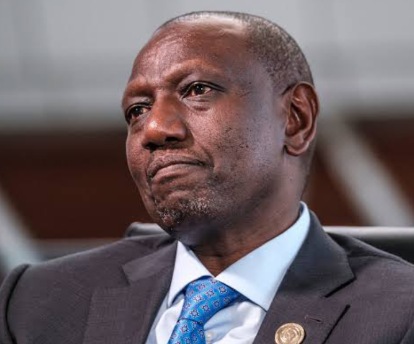
A remark by William Ruto, the Kenyan president, has ignited a cross-continental debate on language, identity, and colonial legacy, after the Kenyan president suggested that Nigerian English can be difficult to understand.
According to the BBC, Ruto commented while addressing Kenyans living in Italy, telling the audience that his country’s education system had produced some of the best English speakers in the world.
“Our education is good. Our English is good. We speak some of the best English in the world. If you listen to a Nigerian speaking, you don’t know what they are saying. You need a translator even when they are speaking English,” he said, drawing laughter from the crowd.
The remarks quickly spread online, triggering backlash from Nigerians and other Africans who accused the president of belittling a fellow nation. Critics argued that English, as a colonial language, should not be used as a benchmark for intelligence or national progress.
Hopewell Chin’ono, a Zimbabwean journalist, captured the sentiment in a widely shared response: “English is a colonial language, not a measure of intelligence, capability, or national progress.”
The debate soon widened, with prominent Nigerian voices pushing back against the characterisation of their country’s English. Former senator Shehu Sani pointed to Nigeria’s literary pedigree, invoking figures such as Wole Soyinka, Chinua Achebe, and Chimamanda Ngozi Adichie.
Tragedy As Vigilantes Beat Serving NYSC Member To Death
How Ex-Super Eagles Striker Michael Eneramo Slumped, Died
Armed Land Grabbers Defy Court, Destroy Farmlands In Ogun
“Ruto is mocking the English of the country with a Nobel Prize for literature winner. The nation of Achebe and Chimamanda,” Sani wrote on X.
Beyond the online exchanges, linguists note that both Kenya and Nigeria, as former British colonies, have developed distinct forms of English shaped by their local languages. Nigeria alone has more than 500 languages, influencing its rhythm, pronunciation, and vocabulary. Kenya’s linguistic mix, drawn from Bantu, Nilotic, and Cushitic groups, produces its own recognisable accent. For many observers, the controversy reflects a deeper tension over how Africans relate to colonial legacies that still shape education and communication.
While some Kenyans defended Ruto, saying his remarks were meant as humour, others across the continent viewed them as reinforcing outdated hierarchies tied to colonial history.
Nigeria remains the country with the largest number of English speakers in Africa, and its variant of the language continues to evolve and spread globally. Expressions such as “next tomorrow” are increasingly recognised beyond their borders, highlighting how African usage is reshaping modern English.
As the online exchanges continue, the episode underscores a familiar pattern. Rivalry between African countries often plays out in digital spaces, where humour, pride, and politics collide, sometimes blurring the line between jest and judgement.