Iran’s leadership structure is undergoing a quiet but consequential shift, with real authority increasingly concentrated in the hands of military commanders rather than the country’s newly installed supreme leader, according to a report by The New York Times.
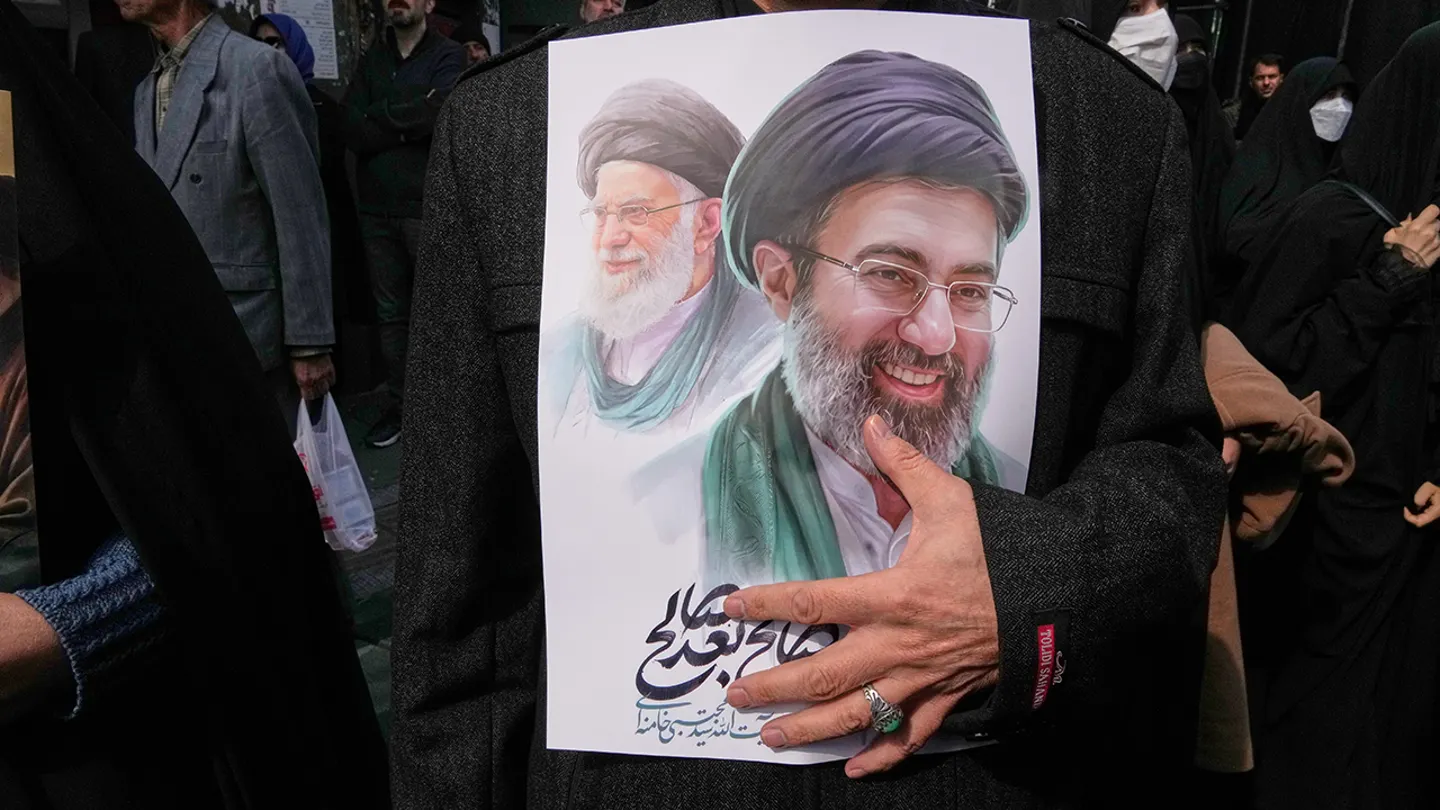
Ayatollah Mojtaba Khamenei, who assumed power in March following the death of his father, Ali Khamenei, is reportedly not exercising the same centralized control that defined his father’s rule. Instead, decision-making authority has shifted toward senior figures within the Islamic Revolutionary Guard Corps (IRGC), particularly on matters of war strategy and diplomacy.
Access to the younger Khamenei has become “extremely difficult and limited,” according to the report, which cites interviews with current and former Iranian officials, IRGC members and individuals familiar with the country’s leadership dynamics. He is said to be recovering from serious injuries sustained during the opening phase of the war, when U.S. and Israeli strikes killed his father and left him with severe burns that have impaired his ability to speak.
“He is managing the country as though he is the director of the board,” said Abdolreza Davari, a former adviser to ex-president Mahmoud Ahmadinejad. “He relies heavily on the advice and guidance of the board members… The generals are the board members.”
Others describe an even more constrained role. “Mojtaba is not yet in full command or control,” said Sanam Vakil of Chatham House, noting that key decisions are often presented to him as a “fait accompli.”
Khamenei has not appeared publicly since taking office and is believed to be in hiding due to ongoing security concerns. Communication with him is reportedly conducted through handwritten messages delivered by couriers, a workaround that underscores both his physical limitations and the tightly controlled environment around him. Officials cited in the report say he has avoided issuing video or audio statements, wary of projecting weakness.
The result is a governing structure that diverges sharply from the centralized model under his father, who maintained final authority over nearly all major decisions. “Mojtaba is subservient to the Revolutionary Guards,” said Ali Vaez of the International Crisis Group, describing him as “a leader only in name.”
According to the report, IRGC commanders have driven critical wartime decisions, including operations against Israel, the closure of the Strait of Hormuz, and the direction of ceasefire and diplomatic talks with the United States. Internal disagreements persist—particularly over whether to engage with Washington—but military leaders have largely prevailed, including in a recent decision to halt negotiations amid tensions tied to a maritime blockade.
(YWN World Headquarters – NYC)