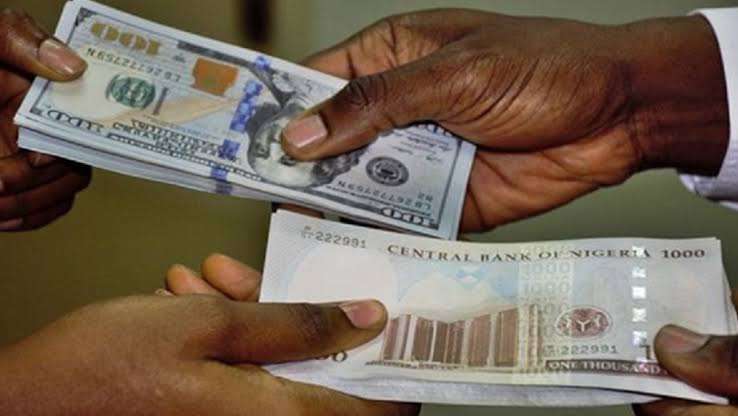
Nigeria’s currency weakened further on Thursday, slipping to N1,355 against the US dollar amid sustained pressure in the foreign exchange market and a marginal decline in external reserves.
Data from the Central Bank of Nigeria showed the naira depreciated from N1,348.1/$ recorded a day earlier, extending a steady downward trend observed in recent trading sessions.
Intraday figures indicated the currency traded between N1,350/$ and N1,355.8/$, settling at an average rate of N1,354.19/$ across 46 interbank deals.
The latest movement reflects persistent demand for foreign exchange amid limited supply, compounded by external pressures. A week earlier, the naira had closed stronger at N1,341.01/$, underscoring the gradual weakening pattern.
Nigeria’s external reserves also edged lower to $48.48 billion, down from $48.54 billion at the start of the week, signalling reduced capacity for sustained intervention in the currency market.
Analysts say global factors are amplifying domestic challenges, with rising geopolitical tensions driving safe-haven demand for the US dollar. Concerns over stalled negotiations between the United States and Iran, alongside tensions in the Strait of Hormuz, have bolstered the dollar and weighed on emerging market currencies.
As a result, several currencies, including the euro, British pound and Japanese yen, also recorded declines, while emerging market peers such as the Indian rupee and Malaysian ringgit came under pressure.
Despite the trend, Olayemi Cardoso, the Governor of the apex bank has downplayed concerns over the reserve dip.
He said he was “not particularly concerned about the decline in external reserves,” but rather about how Nigerians interpret short-term fluctuations, which he noted are often overstated.
The central bank projects that reserves could rise to $51 billion by the end of 2026 as part of broader efforts to stabilise the economy and strengthen external buffers.
Market watchers, however, warn that the outlook for the naira remains tied to a delicate balance between domestic reforms, oil price movements, and global economic uncertainties.