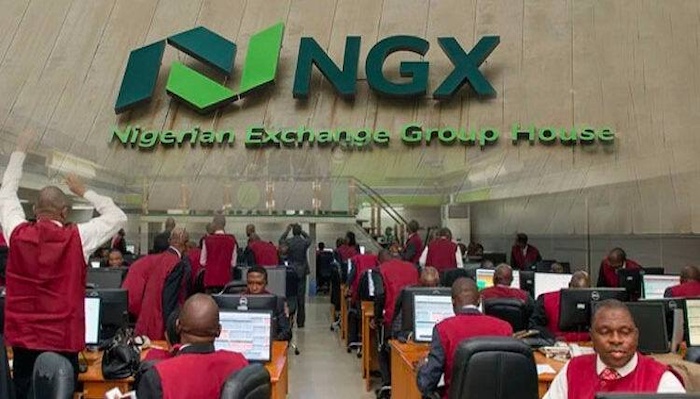
The stock market segment of the Nigerian Exchange Limited (NGX) has continued to shrug off mounting geopolitical tensions, delivering a stunning N16.13 trillion appreciation since the beginning of this month amid impressive 2025 financial year corporate earnings by listed companies, and FTSE Russell Reclassification of Nigeria from unclassified to Frontier Market status. The rally underscores renewed investor confidence and positions the market as a surprising bright spot amid global uncertainty.
This comes as Nigeria’s new Minister of Finance, Mr. Taiwo Oyedele expressed commitment to sustaining ongoing policy reforms, as he formally assumed office following the completion of the handover process by the former Minister, Mr. Wale Edun.
In line with its 2026 fiscal strategy, the federal government is set to introduce a new tax of between two and four per cent and on high-engine vehicles under items it classified as Green Tax Surcharge effective July 1.
Data obtained by THISDAY from NGX revealed that the market capitalisation of listed companies opened for trading in April 2026 at N129.21 trillion, gained N16.13 trillion or 12.5 per cent to close Friday at N145.335 trillion.
On the other hand, the NGX All-Share Index gained 12.14 per cent to close Friday at 225,722.49 basis points, compared with the 201,287.78 basis points the stock market closed for trading March 31, 2026.
The month of April 2026 witnessed the market capitalisation making history by crossing the N140 trillion mark over surge in demand for fundamental stocks.
When Nigeria’s reclassification by the FTSE Russell was announced, the market capitalisation of the Exchange crossed the N130 trillion mark amid renewed confidence by foreign investors.
However, in its Year-till-Date (YtD) performance, the market capitalisation has appreciated by N45.96 trillion or 46.25 per cent, from N99.376 trillion it closed for trading in 2025.
Also, the NGX All-Share Index increased by 70,109.46 basis points or 45.05 per cent to 225,722.49 basis points from 155,613.03 basis points when the market closed for trading last year.
As global investors increasingly prioritise markets with strong infrastructure, transparency, and accessibility, Nigeria’s re-entry into the FTSE Frontier Market universe underscores the critical role of market infrastructure in enabling capital formation and connecting local opportunities to global capital.
A group of analysts at Cordros Research, in a report stated that Nigeria’s return to Frontier Market status was expected to improve market flow dynamics, with inflows projected in the range of $840.00 million to $1.04 billion (N1.15 trillion to N1.42 trillion), underpinned by benchmark-driven rebalancing and incremental discretionary allocations.
Despite persistent geopolitical uncertainties, the sustained rally in the Nigerian equities market highlights a growing resilience underpinned by improving macroeconomic reforms, strong corporate earnings, and renewed foreign investor interest.
Meanwhile, Oyedele, the new Finance Minister, has expressed commitment to the sustain ongoing policy reforms.
In a statement, the Head, Information and P.R Unit in the Ministry of Finance, Efe Ovuakporie, quoted Oyedele in his handover remarks to have commended the former minister for his service and contributions to the ongoing reform efforts in the economy.
Oyedele reaffirmed his readiness to work closely with the leadership and staff of the ministry in order to deliver concrete outcomes that align with the government’s economic priorities.
He emphasised the need to build on existing reforms while focusing on measurable impact across key sectors of the economy.
The minister expressed appreciation to President Bola Tinubu for the confidence reposed in him to serve in his new capacity.
Edun’s period in office was marked by the advancement of key fiscal and economic reforms aimed at stabilising the macroeconomic environment and repositioning the economy for sustainable growth.
These included efforts to strengthen revenue performance, improve fiscal coordination, and support broader structural reforms under the administration’s economic agenda.
Welcoming the new minister to the ministry in his new capacity, the Permanent Secretary, Finance, Mr. Raymond Omachi and Permanent Secretary Special Duties, Mohammed Sanusi Danjuma pledged the full support and loyalty of the Management and staff of the Ministry in advancing minister’s mandates.
In the meantime, the federal government is set to introduce a new tax of between two and four per cent on high-engine vehicles under items it classified as Green Tax Surcharge, effective
July 1.
The surcharge applies to cars with engine capacity of above 2,000cc, according to a circular approved by President Tinubu dated April 1, 2026, which was seen by THISDAY.
Although the Federal Ministry of Finance, which oversees the nation’s fiscal policies is yet to officially announce the impending tax, it is part of the 2026 fiscal policy measures (FPM), and the adoption of the ECOWAS common tariff, which includes significant import tariffs and excise duty amendments.
The circular revealed that the vehicle levy initiative seeks to align Nigeria’s tax framework with environmental objectives while enhancing revenue generation.
It targets vehicles based on engine capacity, with exemptions introduced to protect specific categories and encourage cleaner alternatives.
According to the circular, the green tax is part of a wider strategy to reform fiscal policies and introduce environmentally conscious taxation.
The categories of vehicles involved are those with engine sizes of 2,000cc (2-liter) to 3,999cc at a rate of 2 per cent, while those with engines of 4,000cc and above will face a 4 per cent charge.
However, vehicles with engines below 2,000cc, mass transit buses, electric vehicles and locally manufactured vehicles heading 87.06, 87.07, 87.08, 87.10, 87.11, 87.12, 87.13 are exempt.
THISDAY recently reported that the federal government approved the implementation of 2026 fiscal policy measures (FPM), including significant tariff adjustments.
In a circular dated April 1, 2026, and signed by Edun, the government announced that the new measures supersede the 2023 FPM.
The policy encompasses a national list of 127 tariff lines with reduced import duty rates designed to “promote and stimulate growth in critical sectors of the economy”.
For instance, the import adjustment tax (IAT) on items like crude palm oil has now been set at a total effective rate of 28.75 per cent, down from previous high-tariff regimes.
Ndubuisi Francis and Kayode Tokede
Follow us on: