4 min readUpdated: Apr 19, 2026 02:12 PM IST
A US and Iranian delegation is set to hold peace talks on Monday to end the 50-day long war. As of now, the US has not confirmed the schedule of the talks.
The US President Donald Trump said that he may not extend the two-week ceasefire deal with Iran if talks fail. He also warned that the US would secure Iran’s nuclear material by ‘an unfriendly manner’ if no deal is reached for peaceful transfer of highly enriched Uranium, reports CNN.
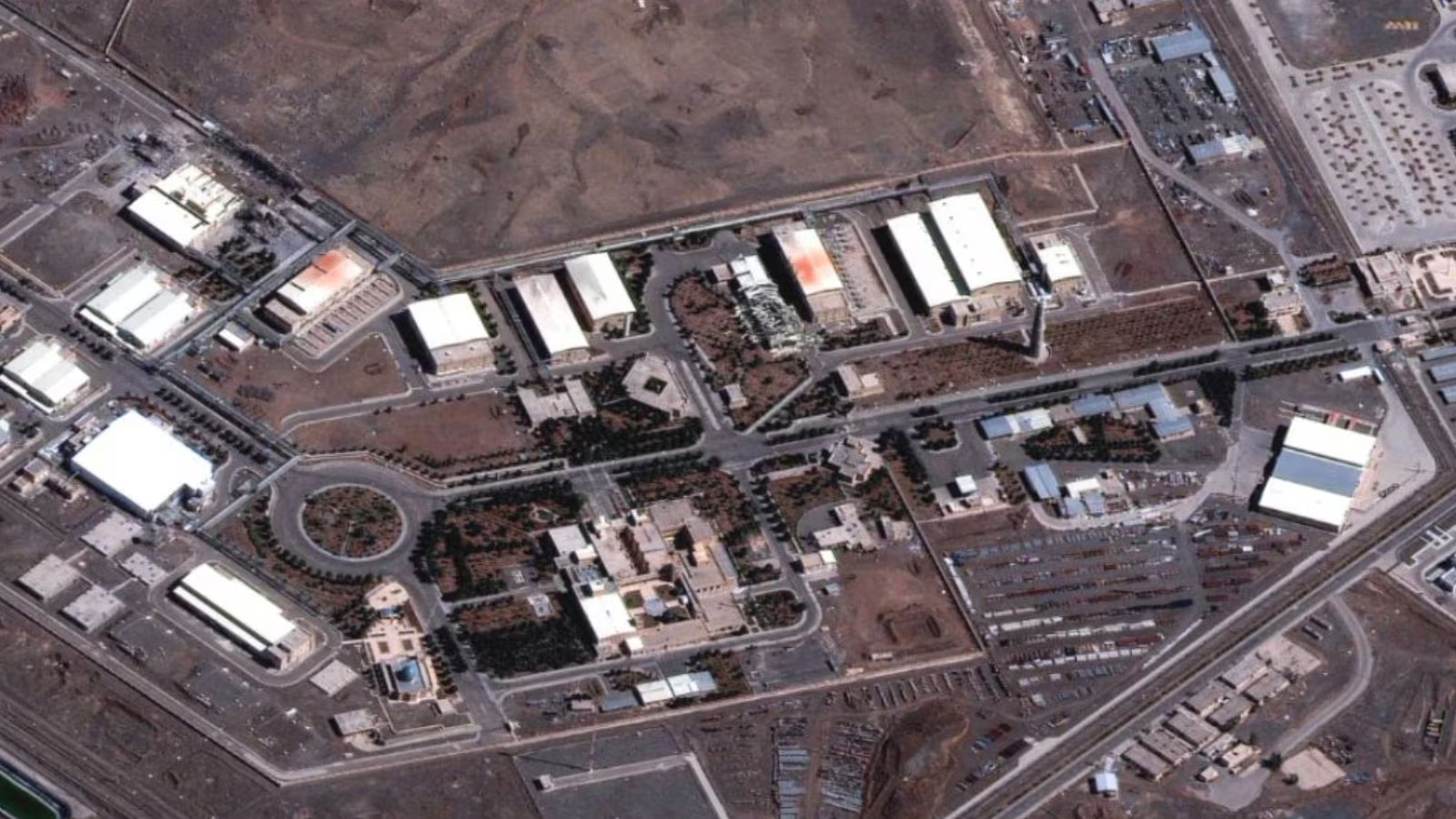
Over the past years, US airstrikes have crippled Iran’s nuclear programme. However, after multiple US attacks, including the one in June 2025, and the five-week long war since February, one suspected nuclear site remains untouched, as per a report by the New York Times.
Experts say Iran could use Pickaxe Mountain for its nuclear programme
Experts say that the underground rubble of ‘nuclear dust’, known as the Pickaxe Mountain, is buried so deep that it may remain beyond the reach of the most powerful bunker-buster bombs with the United States.
As per the report by the New York Times, experts believe that the nuclear rubble does not cause any immediate threat and a nuclear facility is yet to be completed. But in the future, the Pickaxe Mountain could provide Iran with a venue to facilitate its nuclear venture.
Little is known about Pickaxe Mountain, locally referred to as Kuh-e Kolang Gaz La. Iran has been fortifying an underground complex near one of its nuclear facilities, according to new satellite images released in February 2026. The photos, first analysed by the Institute for Science and International Security (ISIS), a US-based think tank, show tunnel entrances being strengthened at Mount Kolang Gaz La – also known as Pickaxe Mountain, as per a report by the BBC.
‘Pickaxe Mountain is deeper and bigger and more fortified than Fordo’
In June 2025, US President Trump ordered strikes on three underground nuclear facilities in Iran where centrifuges were being used to produce highly enriched uranium.
Story continues below this ad
During the 50-days long war between the US and Iran, allies of the White House suggested US President Trump send troops on ground and rain down the entire facility with explosives or dismantle it with chemical contaminants, reports the New York Times.
One of the sites targeted by Operation Midnight Hammer in June was Iran’s mountainside uranium enrichment facility at Fordo, which the United States struck with 30,000-pound bombs known as Massive Ordnance Penetrators designed specifically for that mission.
According to the Institute for Science and International Security, specially-designed bombs known as Massive Ordnance Penetrators might not be able to reach Pickaxe Mountain’s interior chambers, which are buried about 2,000 feet deeper under granite than Fordo, states the NYT.
“Pickaxe Mountain is deeper and bigger and more fortified than Fordo,” said Blaise Misztal, the vice president for policy at the Jewish Institute for National Security of America, or JINSA, a Washington research organization. “That may be a place where they are planning to sprint to weapons-grade enrichment.”
Story continues below this ad
Iran says its nuclear programme is peaceful
When construction began in 2020, Iran said the site would be used to build centrifuges, which spin uranium at high speeds to make it more pure, replacing a facility believed to have been destroyed by Israeli sabotage.
However, Iran has not allowed the International Atomic Energy Agency to inspect the site, leading experts to suspect it could be used to enrich uranium to weapons-grade levels for nuclear bombs, states the New York Times.
Iran insists that its nuclear programme is peaceful and is designed to fulfill energy needs. The Republic has been denying allegations of using highly enriched uranium to produce nuclear weapons.
Some experts fear that Iran may already have stashed some of its stockpile of 970 pounds of highly enriched uranium at Pickaxe Mountain.
Stay updated with the latest – Click here to follow us on Instagram
© IE Online Media Services Pvt Ltd