Abuja residents say they are forced to pay money to get their homes connected to the electricity grid via prepaid meters.
For three months, Felix Dauda* struggled to get his home connected to the electricity grid and obtain a prepaid meter. What was supposed to be a simple process became complex when officials of the Abuja Electricity Distribution Company (AEDC) attempted to extort him.
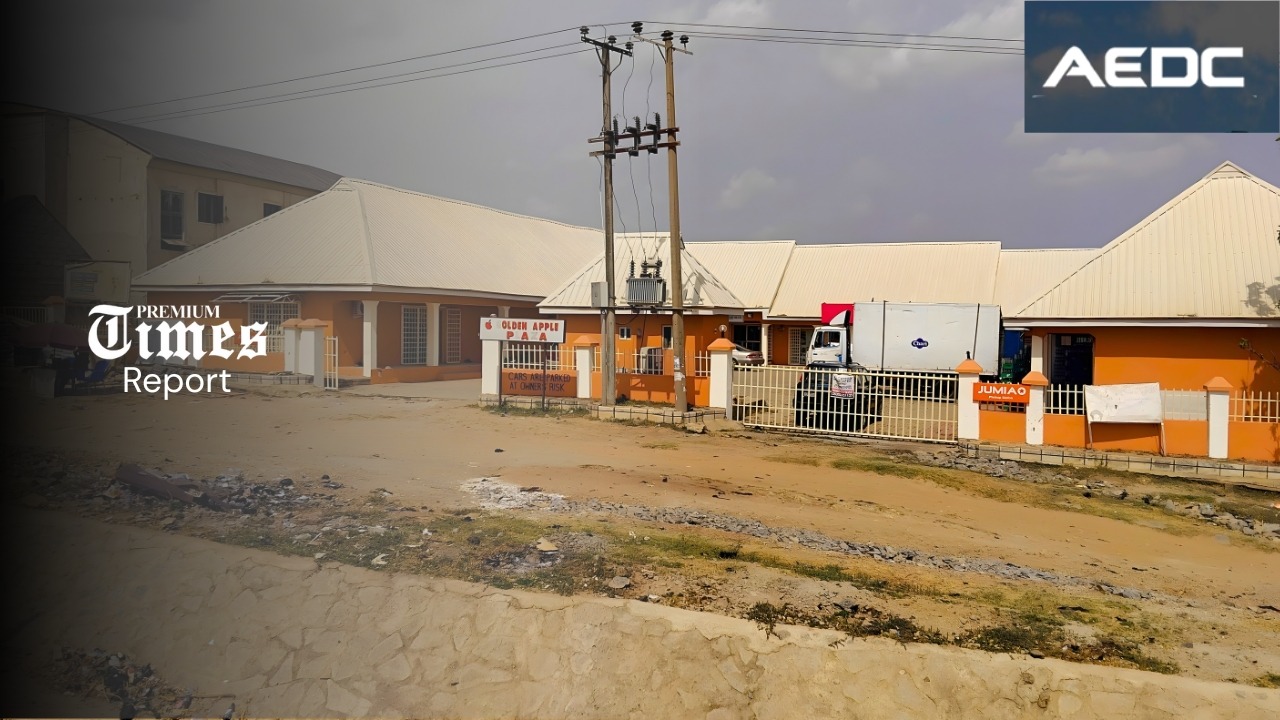
When he visited the AEDC office in Orozo, a community in the Abuja Municipal Area Council of the Federal Capital Territory (FCT), the officials requested a N25,000 fee for a single-page form he would fill out to make the request. They told him it would cost N25,000 in Orozo and N20,000 at the Area office in Jikwoyi, another community a short distance away.
“That is where I started to feel uneasy,” Mr Dauda told PREMIUM TIMES, wondering why there was a difference in cost for the same product. “When I probed further why the form costs that much, they said the company doesn’t supply them with printing machines or the paper necessary for it.”
The 40-year-old would later discover that the single-page form is part of a nine-page document available for free on the company’s website.
When he printed the form from the website, filled it out and visited the AEDC office again in August, the officials maintained he had to pay the N25,000, this time under a different title.
“They told me it covers their transport, and to settle their accountant and the manager who would sign the form after filling,” he said.
Mr Dauda’s experience reflects a troubling pattern identified by PREMIUM TIMES through interviews with several victims. Those who spoke to our reporter shared stories of extortion, sowing frustration and distrust in a system meant to provide an essential service.
According to the AEDC, the process of getting a new home connected to the electricity grid includes completing a free Supply and Agreement form, available on the company’s website.
This form, which the AEDC said can also be obtained free of charge at any of its offices, was what the AEDC officials at Orozo asked Mr Dauda to pay N25,000 for.
After filling out the form, AEDC officials would conduct a site verification of the house and generate a contract number and payment notification for the purchase of a meter. After payment is made, a meter is assigned to the home and installed.
The meter is purchased under the Nigerian government’s Meter Asset Provider (MAP) initiative. Through the MAP initiative, the government engaged third-party vendors to provide meters to electricity consumers at a cost that will be refunded over time.
However, this process appears alien to most of the residents interviewed by this newspaper.
Apart from the initial fee for the forms, which was supposed to be free, residents interviewed in the Orozo, Kubwa, and Katampe areas of the FCT said they were also made to pay a Licensed Electrical Contractors Association of Nigeria (LECAN) registration fee.
Tunde Seilman and Ruth Ajuwon in Katampe said they paid N10,000 each for the LECAN fee, while Mr Dauda paid N5,000.
LENCAN is a group of professional electricians. For membership, electricians are encouraged to obtain a certificate from the Nigerian Electricity Management Services Agency (NEMSA), which comes at a cost.
According to its website, the LECAN fee is not required to apply for a meter or the NEMSA certificate.
Meanwhile, the AEDC said it doesn’t charge customers for LECAN fees.
The company’s spokesperson, Kenechukwu Ofili, told PREMIUM TIMES that although the company recognises the association, it has nothing to do with it and does not request payment for it.
“The customer is supposed to do that themselves, not AEDC. They are not to pay the money to anybody,” Mr Ofili said in a phone interview.
Mr Ofili also stressed that the requirements for customers getting connected, including the forms and their processing, are free.
“If you go to our website, you will see that our form clearly states that the form is not for sale, and, two, the process of that form is free, and that is the official position,” he added.
Mr Dauda said he also attempted to speak with one of the company’s representatives on WhatsApp concerning the LECAN, but the official did not provide a specific registration fee for LECAN, indicating that prices vary without a clear explanation.
“The person just told me the price varies, and didn’t provide any amount, even as I pressured,” he said.
One Thursday morning in August, our reporter visited the AEDC Orozo office alongside Mr Dauda. What unfolded was a brazen attempt at extortion by AEDC officials.
Even after completing the application, one of the staff members who attended to us insisted that we pay LECAN N5,000 and another N20,000, which she said would cover her transport and also settle her boss and the people who would sign and generate the account.
“The money is compulsory. They said it is free (referring to the company policy), but if you don’t do their thing here, the people at Jikwoyi will just drop your file. And if you keep going, they tell you it is network issue, you should come back. They will never do it,” the staff member, who declined to provide her name, told our reporter.
After some negotiation, she agreed to collect a total of N20,000 instead of N25,000. She said the N20,000 would cover LECAN and the settlement.
(The conversation)
Dauda’s ordeal is not an isolated case.
For Mr Seilman, a homeowner at Katampe, getting connected and obtaining meters took two years of extortion and frustration.