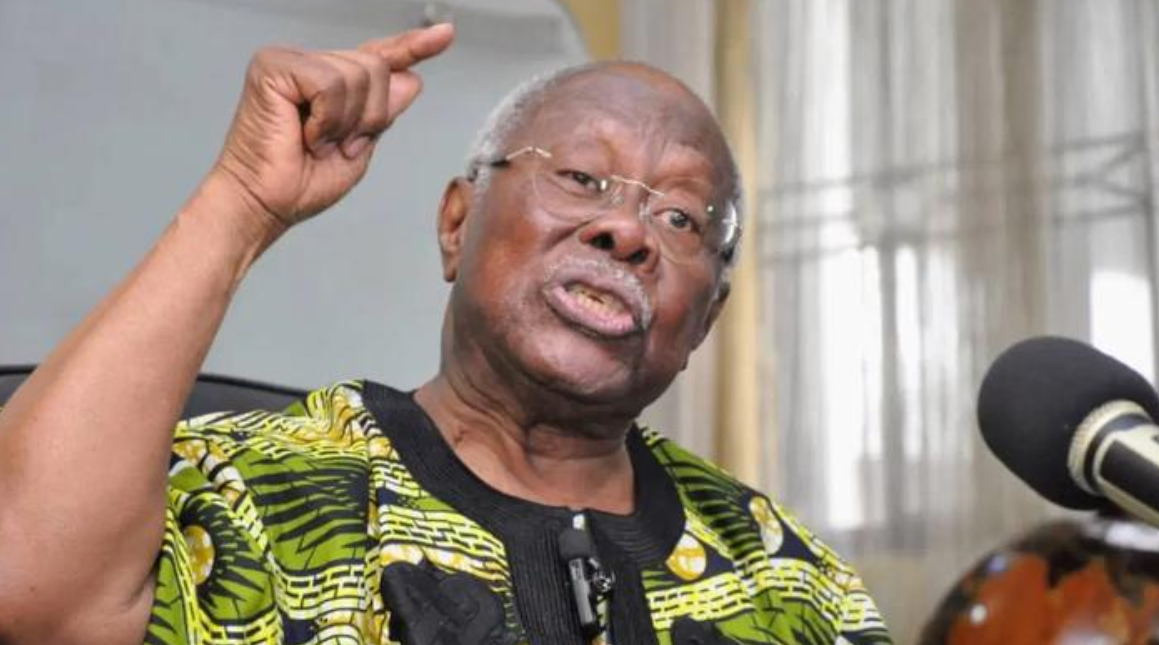
He urged the country to re-embrace the core principles of governance, particularly the rule of law, as a foundation for sustaining democracy. Chief Olabode George made his position known in a statement titled “Wither Nigeria? A Reflection for Our Democracy,” where he referenced the historic Magna Carta of 1215 to emphasize his point........…
According to him, the principle that “No authority is above the law” remains a fundamental requirement for any system that seeks to uphold democratic .... governance and accountability.
The former military governor cautioned that the essential pillars that support a functioning democracy are gradually being undermined.
He identified these pillars as the rule of law ...., the freedom of opposition, and the independence of institutions.
He stressed that when any of these elements are weakened, the stability and integrity of democracy become endangered.
On the importance of opposition in a democratic setting, Chief Olabode George stated that the role of dissenting voices is not optional but a constitutional requirement.
He explained that the ability of opposition groups to organise, speak freely, and contest for political power is not a favour granted by those in authority.
He maintained that any attempt to suppress dissent or weaken opposition structures amounts to a gradual erosion of the framework that gives legitimacy to governance.
He further emphasized that in a properly structured democratic system, even the highest office in the land is bound by constitutional limits.
According to him, no modern president, .... regardless of influence or authority, is permitted to operate outside the boundaries of the law or the constitutional order.
He drew historical reference to the English monarchy, which he noted was compelled over 800 years ago to accept restrictions on its powers as part of the evolution of governance and accountability.
Chief Olabode George also observed that the suppression of opposition voices has wider consequences for governance.
He stated that when dissent is silenced, the level of accountability within government structures declines, the effectiveness of governance is reduced, and the trust of the public in the system gradually diminishes.
He said. “No authority is above the law,” he said. “the right of opposition voices to organise, to speak, and to contest power is not a privilege granted by those in authority, it is a constitutional necessity and to suppress dissent or undermine opposition structures is to erode the very framework that legitimises governance.”…READ / MORE…