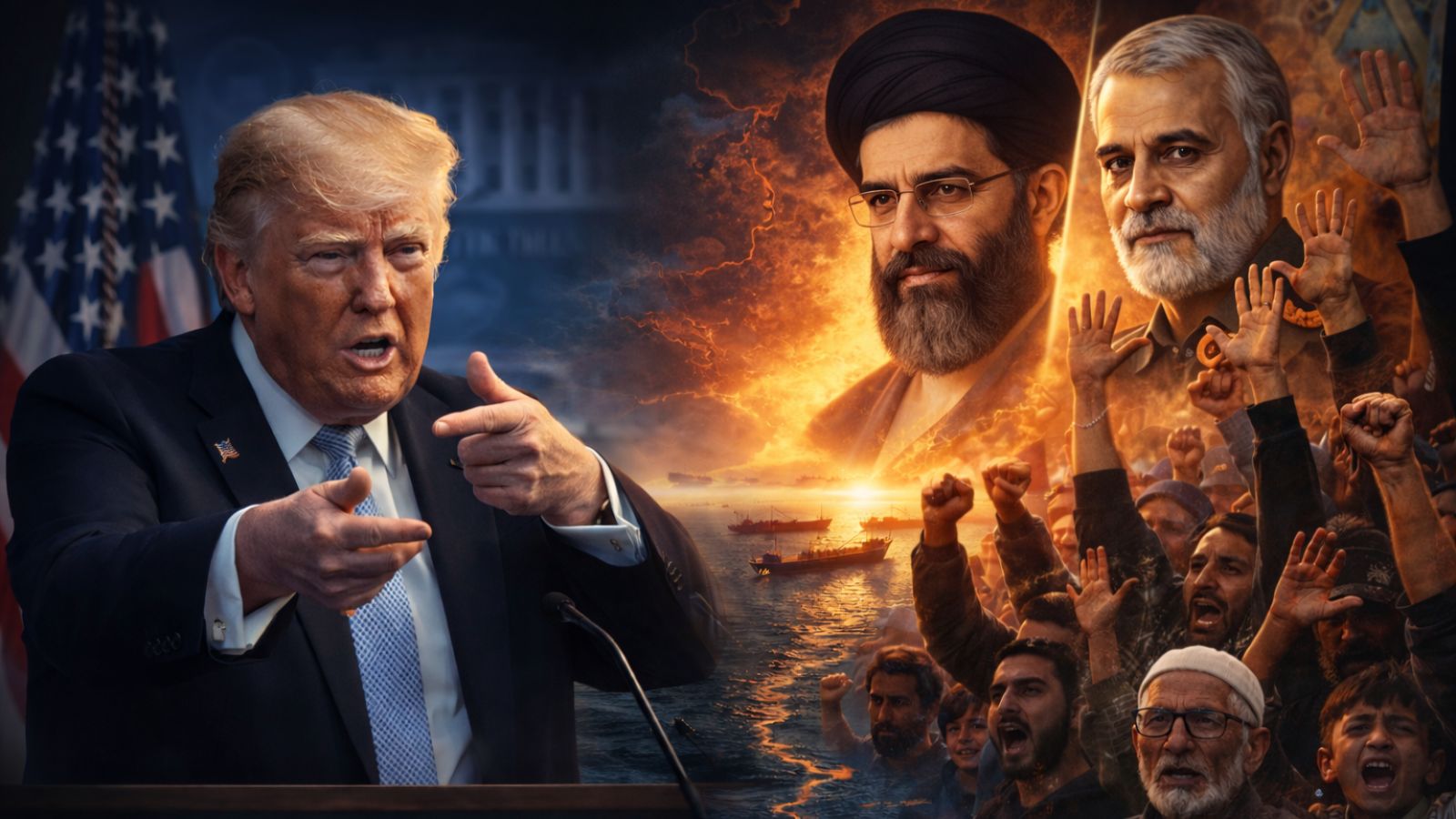
The world stepped back from the impending end of a civilisation this week after 39 days of war, as Iran and the United States (US) agreed to a ceasefire. Trump had warned a “civilisation will die tonight” if Iran failed to re-open the Strait of Hormuz before his self-imposed deadline of Tuesday 8 PM (US time). But minutes before the clock ran out, the two sides chose to pause hostilities for two weeks, bringing some relief to oil markets and beyond, and raising hopes for the broader global economy.
Brent crude, which oils the global economy, initially cracked 15 per cent to just under $92, before paring some of those gains. Global stock markets also rejoiced with the US S&P 500 index ending the day up 2.5 per cent. The Dow Jones and tech-heavy Nasdaq, too, closed 2.8 per cent higher.
Now for the tough question: Tehran and Washington also vowed to negotiate a plan for lasting peace but can the two countries move beyond the immediate past?
How Iran war started?
The current conflict began when the US and Israel struck Iran in coordinated strikes on February 28, killing Supreme Leader Ayatollah Ali Khamenei. It only became worse from then on with rounds of US and Israeli decapitation strikes against Iran followed by Tehran’s counterstrikes on regional military and economic infrastructure. Also in the crosshairs were the neighbouring Gulf countries, with their airports facing the onslaught of drone swarms and oil pipelines and data centres racking up hits from missile attacks.
Tehran exported the economic pain beyond the immediate geography by blocking critical maritime chokepoint of the Strait of Hormuz, through which a fifth of the global oil flows. Countries across the globe slapped restrictions to conserve fuel and drew up lists of alternatives. India also faced the brunt as it depends on the Strait of Hormuz for 90 per cent of its LPG imports.
What after Iran ceasefire?
The US and Iran are set to hold peace talks in Pakistan with President Trump saying proposals presented by Tehran were a “basis” for talks.
Islamabad has managed to increase its stature with some crucial backroom talks as both Washinton and Tehran thanked it for its role in the ceasefire. A Financial Times report claimed that Trump administration had pushed the Shehbaz Sharif government to “broker the ceasefire”. Trump will send Vice-President JD Vance, along with Middle East envoy Steve Witkoff and son-in-law Jared Kushner to Islamabad. Iran’s delegation may be led by Foreign Minister Abbas Araghchi and parliament speaker Mohammad Bagher Ghalibaf, as several of its leaders have been killed in recent weeks in US and Israeli strikes.
Story continues below this ad
The last round of talks were followed by the February 28 attack. The central question is whether Iran can trust the US and more importantly, Israel?
That is why the set of demands put up by both countries show how their interests strakly diverge.
What US and Iran want?
An Iranian delegation is due to arrive in Islamabad for talks based on the 10-point proposal. But it has little in common with the US’ 15-point plan that Washington had previously put forward.
Iran wants US to pull back its troops from all regional military bases. Trump has said that US military will “hang around” and help with the traffic build-up at the Strait of Hormuz
Story continues below this ad
Washington wants Tehran to give up its nuclear ambitions along with its ballistic missile arsenal. Tehran has said its missile arsenal is non-negotiable, which Trump had claimed had been obliterated.
US wants free passage of ships through the Strait of Hormuz. Iran is willing to offer “safe” passage, meaning it keeps control.
Each side is sticking to competing demands for a deal to end the war that could shape West Asia for generations.
One Pakistani official in the region told Reuters that Iran could end up securing many of its demands, such as “reconstruction, reparations and sanctions relief”, but uranium enrichment was likely to end up as the bone of contention.
Inan’s nuclear ambitions
Story continues below this ad
Much of the geopolitical and military maneuvering in the region has revolved around Iran’s reported attempts at uranium enrichment and fears expressed by Israel that Tehran was “weeks away from building a nuclear bomb”.
Some experts argue that those issues have now been overshadowed by the fate of the Strait of Hormuz. Iran’s effective closure of the waterway since it was attacked has rattled the global economy, pushing up oil prices.
Tehran is reportedly considering a Hormuz toll of $1 per barrel of oil that plans to transit the strait, which is just 34 kilometres wide at its narrowest point between Iran and Oman, worrying global economiees, including India, which have called for free passage.
Trump had threatened to bomb Iran “back to the Stone Age” if didn’t agree to a ceasefire deal and to reopen the strait, at one point resorting to an expletive-filled post on his personal social media platform Truth Social.
Story continues below this ad
After agreeing to a ceasefire, with reports that a couple of ships had transited the Strait, Iran closed it again. It blamed Tel Aviv’s attacks on Lebanon that killed hundreds for its decision to choke the waterway, warning there would be no deal as long as Israel was striking Lebanon.
What has Iran said?
Iran’s Supreme National Security Council, the top security and defence body under the Iranian constitution, said in a statement that Washington had agreed to accept Iran’s 10-point plan, adding “the United States has, in principle, committed to”:
* Non-aggression
* Continued Iranian control over the Strait of Hormuz
* Acceptance of enrichment
* Lifting all primary and secondary sanctions
* Termination of all resolutions passed by the UN Security Council and Board of Governors of the International Atomic Energy Agency
* Withdrawal of US combat forces from the region, and
* Cessation of war on all fronts, including against the Islamic resistance in Lebanon
Meanwhile, US demands…
Trump’s 15-point proposal, which was sent to Iran via Pakistan, demanded removal of Iran’s stocks of highly enriched uranium, halting further enrichment, curbing ballistic missile programme, and cutting off funding for regional allies, called “proxies” in western circles, Israeli sources told Reuters.
Ahead of planned negotiations, Trump has promised to retain military assets in West Asia until a peace deal with Iran is reached, vowing a major escalation if Iran failed to comply.
How realistic is a lasting settlement?
Story continues below this ad
Both Tehran and Trump have declared victory, but both have racked up huge losses.
Washington didn’t achieve the aims the US President had announced to justify the war: eliminating Iran’s ability to attack its neighbours, destroy its nuclear programme, and regime change.
Tehran is unlikely to comply with these demands or offer any major concessions, having already showcased its ability to stomach costs while engaging in horizontally disproportionate military and economic responses.
The Strait of Hormuz has emerged its trump card, allowing it economic leverage over enemies that boast superior firepower.
With inputs from Reuters