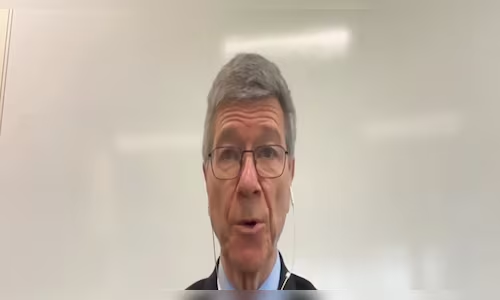
“This is a war that never should have happened… I would call it a war of whim,” Sachs said, addressing an event organised by industry body FICCI on April 29, adding that the conflict was not thought through or supported inside the United States.
He also pointed to how the decision was taken. “We’re in a deinstitutionalised environment… we don’t have rational decision-making.”
The bigger concern, he said, is the potential fallout if tensions continue. Rising oil prices could hurt global growth, and the situation could worsen if military action resumes. “We have a dire crisis… or an outright catastrophe,” Sachs warned, pointing to the risk of prolonged disruption to energy supplies and the broader economy.
He also weighed in on the UAE’s decision to exit OPEC, calling it a “big strategic mistake.” The move comes at a time when global oil markets are already strained by conflict in West Asia and supply disruptions.
Sachs argued that oil-producing countries should manage supply carefully as the world gradually shifts away from fossil fuels. Walking away from coordinated production, he suggested, could hurt producers in the long run even if it offers short-term flexibility.
Against this backdrop, Sachs said, “India should aim for non-alignment.” He stressed that India’s size and position give it the ability to act independently in a multipolar world.
He also cautioned against relying too heavily on the United States for long-term strategy.
Despite the near-term risks, Sachs remained confident about India’s long-term trajectory, noting that the country is on a path to achieve its development goals.
First Published: Apr 30, 2026 4:09 PM IST