Iranian officials have firmly rejected the American president’s threats, vowing to retaliate against any strikes on their country’s infrastructure.
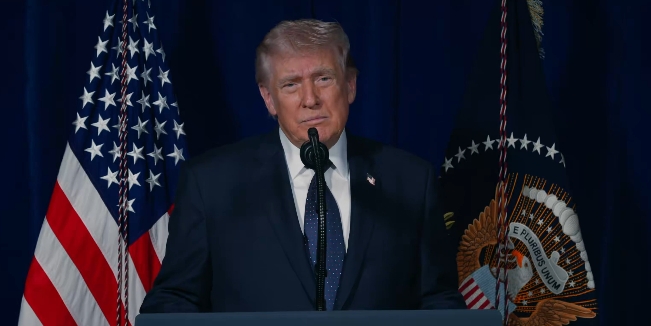
Iran has flatly rejected an American ceasefire proposal and issued its own list of counter-demands, even as US President Donald Trump threatens to unleash devastating strikes on Iranian infrastructure if no agreement is reached by Tuesday evening.
There is no sign of an imminent deal.
Mr Trump himself described Tehran’s response to Washington’s ceasefire offer as “significant” but ultimately “not good enough,” leaving both sides locked in a dangerous standoff with no clear resolution in sight.
The American president has set an 8 pm Eastern Time deadline on Tuesday for Iran to reopen the Strait of Hormuz, though his deadlines have shifted at least three times in the past three weeks.
If no agreement is reached, Mr Trump has threatened the “complete demolition” of Iran’s key infrastructure, warning on Monday that “very little is off-limits.”
“Within four hours, every bridge and power plant in the nation will be decimated,” Mr Trump warned, adding that to avoid such a fate, Iran must make a deal “that’s acceptable to me,” which must include “free traffic of oil” through the Strait of Hormuz.
Iran is demanding the lifting of longstanding American sanctions, a compromise on uranium enrichment, and the establishment of a new order governing the Strait of Hormuz — terms Washington has so far found unacceptable.
Iran’s military has also dismissed Mr Trump’s threats as “delusional,” saying they cannot conceal what it described as American “disgrace and humiliation” in the region, according to Iranian state media.
Iranian officials have also firmly vowed to retaliate against any strikes on the country’s infrastructure, and Tehran has refused to consider even a temporary ceasefire.
Al Jazeera has reported that US-Israeli strikes across Iran have intensified, with universities and oil facilities among the civilian targets hit. Iranian missiles and drones have simultaneously continued to target sites across the Gulf region.
The United States Central Command (CENTCOM), which leads military operations in the Middle East, said its forces have attacked more than 13,000 Iranian targets since the conflict began.
According to a US-based human rights group, more than 3,500 people have been killed in Iran since the start of the US-Israeli offensive, including at least 1,665 civilians. The Human Rights Activists News Agency (HRANA) said Monday recorded the “highest rate of attacks” in 10 days, with 49 civilians killed in a single day.
Iran’s Fars news agency reported that railway services have been cancelled in Mashhad, in the country’s north-east, following a warning from the Israeli military that Iranians should avoid travelling by train as it “endangers your life.”
The governor of Mashhad confirmed that trains would cease operations “until further notice” as a precaution, while authorities said alternative road transport remained available for passengers who could not delay their journeys.
Iran also launched fresh missile salvoes at Israel.
The Israel Defence Forces (IDF) confirmed that its air defence systems were working to intercept the incoming missiles, and subsequently cleared members of the public to leave sheltered spaces after earlier ordering them to take cover.
Emergency services in Israel released footage showing damage caused in central Israel by what was described as an Iranian ballistic missile strike. While it was not immediately confirmed whether anyone was injured in that specific attack, Israel’s Ministry of Health said 133 people had been taken to the hospital in the preceding 24 hours.
The conflict continues to spread deep into the Gulf region.
Saudi Arabia’s Ministry of Defence said it had destroyed 18 Iranian drones fired at the kingdom in the space of a few hours. Riyadh also closed the King Fahd Causeway — the only road linking Saudi Arabia to Bahrain after Iran threatened to strike the Eastern Province, which hosts a US Navy fleet.
Bahraini authorities asked residents to shelter in place overnight as alarm sirens sounded across the country.
The United Arab Emirates said on Tuesday that it was working to intercept both missiles and drones launched from Iran overnight. Its Defence Ministry had reported on Monday that 519 ballistic missiles and 2,210 drones had been fired at the UAE since the war began.
The IDF said it struck a third Iranian petrochemical complex on Monday, a facility in Shiraz, in south-western Iran, which it said produced nitric acid used in ballistic missile manufacturing.
The strike followed two earlier attacks on the same day: one on the South Pars petrochemical plant in Asaluyeh in southern Iran, and another on the Marvdasht Petrochemical Complex in Fars province, according to Al Jazeera.
Amid the turmoil, a third Turkish-owned vessel passed through the war-torn Strait of Hormuz, Turkey’s Transport Minister Abdulkadir Uraloglu confirmed — a sign that some commercial navigation through the critical waterway continues despite the conflict.