He added that the itinerary of the visit was currently being agreed upon.
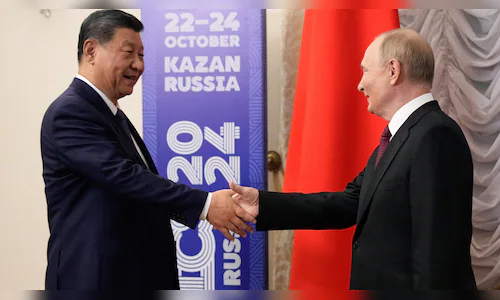
China and Russia must trust and support each other, deepen cooperation and defend each other’s interests, President Xi Jinping said on Wednesday, assuring Moscow of friendship even as the world’s No.2 economy expands ties with other neighbours and nations.
In a meeting with Foreign Minister Sergei Lavrov at the Great Hall of the People, Xi said the “stability” and “certainty” of China-Russia relations were particularly valuable as he told the Russian envoy to convey his sincere regards to President Vladimir Putin, according to the official Xinhua news agency.
A handful of Western leaders have paid visits to Beijing this year, including the prime ministers of Spain, Britain and Canada, seeking to elevate ties with China. On Wednesday, Vietnam’s top leader To Lam met Xi in Beijing to cement relations at a time when both work to fend off trade tariff pressure from the United States.
Putin and Xi are expected to hold a summit sometime this year to affirm Sino-Russian partnership and cooperation as the two neighbours observe anniversaries of their ties, including the 2001 Sino-Russia Treaty of Friendship.
Also Read: Two key reasons prompt Jefferies to downgrade this stock with a 30% target cut
“In the face of a once-in-a-century change, China and Russia must, through closer and more robust strategic cooperation, resolutely defend the legitimate interests of both countries, uphold the unity of the Global South, and demonstrate the sense of responsibility expected of major powers and permanent members of the United Nations Security Council,” Xi told Lavrov.
In recent years, China has pushed for the building of what it says should be an equal and orderly multipolar world where every country has a say and major powers shoulder more responsibilities, an alternative to what Beijing describes as US hegemony.