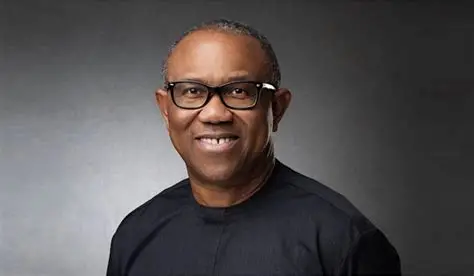
Former presidential candidate Peter Obi has outlined his vision for Nigeria ahead of the 2027 general election, promising sweeping reforms in security, healthcare, education, agriculture, power supply, job creation and governance if elected president.
Speaking after emerging as the presidential candidate of the National Democratic Congress (NDC) for the 2027 election, Obi said his ambition is driven by a desire to rebuild the country and restore hope to millions of Nigerians.
He thanked the leadership of the party, supporters and Nigerians across the country for their confidence in his candidacy, stressing that the movement for a “New Nigeria” is bigger than any individual.
According to him, Nigeria is at a critical stage where insecurity, economic hardship, unemployment and declining public trust in government have combined to create uncertainty for many citizens. Despite the challenges, Obi expressed confidence that the country can recover through responsible leadership and strategic investments.
National Unity
Obi said national unity would be a major priority of his administration, arguing that Nigeria cannot make meaningful progress while divided along ethnic, religious and regional lines.
He noted that the country’s diversity should be a source of strength rather than conflict, adding that his government would focus on building trust, promoting inclusion and fostering a common national purpose.
Tackling Insecurity
The former Anambra State governor described insecurity as one of the greatest threats facing Nigeria, citing the country’s rising ranking among nations affected by terrorism.
He pledged to implement an intelligence-driven and technology-based security strategy while strengthening security agencies and improving coordination among institutions responsible for protecting lives and property.
Obi also promised to address the root causes of insecurity, including poverty, unemployment and social exclusion, to create a safer environment for citizens, businesses and investors.
Healthcare Reform
On healthcare, Obi lamented the poor state of medical services in the country, particularly the limited functionality of primary healthcare centres and low health insurance coverage.
He pledged to increase health insurance coverage from the current level to more than 20 percent within four years and raise healthcare spending to at least 10 percent of Nigeria’s Gross Domestic Product.
According to him, his administration would invest heavily in training healthcare professionals, upgrading facilities and ensuring that every ward in the country has access to a functional primary healthcare centre.
He further promised that at least half of Nigeria’s estimated 30,000 primary healthcare centres would become fully operational by the end of his first term.
Education and Human Capital Development
Obi said education would remain central to his development agenda, describing it as the foundation of national progress.
He pledged increased investment in schools, teachers, digital learning and vocational education to equip young Nigerians with practical skills for employment and entrepreneurship.
The NDC candidate said transforming the education sector would help move the country from widespread poverty to sustainable prosperity driven by innovation and productivity.
Agriculture and Food Security
Addressing the issue of hunger, Obi expressed concern over Nigeria’s worsening food security situation despite its vast agricultural potential.
He argued that Nigeria has enough arable land to feed itself and become a major food-producing nation, but poor investment and low productivity have hindered growth.
According to him, his administration would prioritise agriculture through large-scale investments aimed at increasing food production, reducing hunger and creating jobs.
He maintained that unlocking the agricultural potential of northern Nigeria and other farming regions would significantly boost economic growth and national prosperity.
Power Sector Development
Obi identified inadequate electricity supply as one of the major obstacles to industrialisation and economic growth.
He noted that Nigeria currently generates and distributes far less electricity than countries with smaller populations and pledged to increase power generation and distribution by at least 10,000 megawatts within four years.
He said improved electricity supply would support businesses, encourage investment and stimulate economic activities across the country.
Job Creation and Economic Growth
The presidential candidate promised aggressive support for micro, small and medium-sized enterprises (MSMEs), describing them as key drivers of economic growth and employment.
He proposed targeted tax incentives, affordable financing and special support programmes for sectors such as agriculture, manufacturing, entertainment, sports and distribution.
Obi argued that empowering businesses would help reduce unemployment and underemployment, particularly among young people.
Fight Against Corruption
He also pledged to reduce corruption and cut the cost of governance through greater transparency, accountability and prudent management of public resources.
According to him, government spending under his administration would be closely monitored to ensure that every naira delivers measurable benefits to citizens.
Rule of Law and Democratic Governance
Obi assured Nigerians that his government would uphold the rule of law and respect constitutional principles.
He further promised to strengthen democratic institutions and ensure that opposition parties operate freely without intimidation or interference from the ruling government.
The NDC flagbearer said his administration would promote fairness, transparency and inclusiveness in governance while working to rebuild public confidence in democratic institutions.
He concluded by reaffirming his belief that Nigeria can overcome its challenges and achieve sustainable development through competent leadership, national unity and strategic investments in critical sectors.