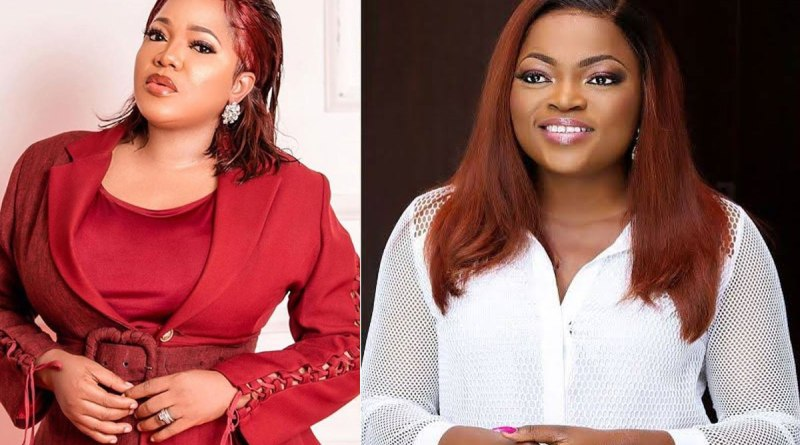
The Yoruba sector of Nollywood has produced some of the most influential and commercially successful actresses in African cinema.
While many of these women seamlessly cross over into English-speaking blockbusters, their foundational legacy remains deeply rooted in indigenous Yoruba filmmaking. Over the years, certain films have played a defining role in shaping their careers, turning talented performers into household names across Nigeria and beyond.
Below is an expanded look at seven prominent Nollywood Yoruba actresses and the five standout movies that helped cement their popularity.
1. Funke Akindele
Funke Akindele is one of the most dominant forces in Nigerian entertainment, known for her versatility as an actress, writer, and producer.
Her rise began with Jenifa, where she introduced the iconic character that became a cultural phenomenon and later expanded into a long-running franchise.
She further proved her dramatic strength in Maami, a deeply emotional film that showed her ability to carry serious storytelling.
In Omo Ghetto, she embraced a streetwise persona that resonated strongly with audiences, eventually evolving it into Omo Ghetto: The Saga, a record-breaking cinema hit. Her box office dominance was further solidified with A Tribe Called Judah, a film that reinforced her status as Nigeria’s most commercially successful filmmaker.
2. Toyin Abraham
Toyin Abraham has built her career on emotional depth, strong comedic timing, and fearless character interpretation.
She rose to fame through Alakada, where her humorous portrayal of a social climber became a franchise success.
In Ghost and the Tout, she blended spirituality and comedy in a way that appealed widely to audiences. Her performance in Prophetess showcased her eccentric acting range, while Ijakumo revealed a darker, more intense side of her craft.
She also delivered a strong cultural performance in King of Thieves, proving her adaptability in epic storytelling.
3. Sola Sobowale
Veteran actress Sola Sobowale is widely respected for her commanding screen presence and emotional intensity.
Her early recognition came from Superstory: Oh Father, Oh Daughter, where she became a national favourite through her unforgettable role.
She demonstrated strong dramatic depth in Madam Dearest, while Oleku positioned her as a respected figure in Yoruba cinema.
Her role in The Wedding Party introduced her to a new generation of viewers, and her legendary performance in King of Boys cemented her place as one of Africa’s most powerful screen icons.
4. Mercy Aigbe
Mercy Aigbe is known for her elegance, fashion influence, and strong performances in modern Yoruba films.
She gained early attention with Ara, which introduced her to mainstream audiences. In Osas (Omoge Benin), she delivered a culturally rich performance that showcased her versatility. 77 Bullets allowed her to explore action-driven storytelling, while Beast of Two Worlds (Ajakaju) highlighted her involvement in epic productions. She also featured in Ada Omo Daddy, a family-driven film that demonstrated her continued relevance in contemporary cinema.
5. Iyabo Ojo
Iyabo Ojo has remained one of the most expressive and dynamic actresses in Yoruba Nollywood.
Her early success was shaped by Baba Darijiwon, which introduced her as a promising talent. She later gained more recognition through Bofeboko, where her strong emotional delivery stood out.
In Silence, she took on a more serious role as producer and actress, addressing social issues like trauma and abuse. Beyond Disability further showcased her commitment to meaningful storytelling, while Soole displayed her ability to thrive in high-intensity ensemble films.
6. Faithia Williams
Faithia Williams is a veteran actress who dominated the Yoruba home-video era with her calm yet powerful performances.
She rose to prominence with Benbe Luku, a film that established her as a household name. In Oluwerimagboojo, she took on a strong traditional role that highlighted her cultural depth. Makomi showcased her emotional versatility, while Jagun Jagun introduced her to a new digital audience. She also impressed in Eku Ida, reinforcing her reputation as a strong dramatic performer.
7. Bimbo Ademoye
Bimbo Ademoye represents the new generation of Nollywood talent bridging Yoruba and English cinema.
She gained recognition with Backdrop, where her emotional and comedic balance stood out. In Sugar Rush, she became a fan favourite in a mainstream blockbuster.
Her breakthrough in Anikulapo earned her critical acclaim for her role as Queen Arolake. She continued the story in Anikulapo: Rise of the Spectre, strengthening her position as a rising force. Her appearance in Jagun Jagun further proved her ability to perform alongside veteran actors in epic storytelling.
The careers of Funke Akindele, Toyin Abraham, Sola Sobowale, Mercy Aigbe, Iyabo Ojo, Faithia Williams, and Bimbo Ademoye highlight the transformation of Yoruba Nollywood from local home videos into globally recognised cinematic productions.
These actresses have not only entertained audiences but also helped redefine what indigenous storytelling means in modern African cinema.
Their journeys reflect resilience, adaptability, and creative growth. From comedy-driven characters to deeply emotional and historical roles, they have consistently expanded the boundaries of performance.
Today, Yoruba cinema stands as one of the strongest pillars of Nollywood, powered significantly by these remarkable women who continue to shape the industry’s future.
#NollywoodTimes
#Nollywood