A devastating Ebola outbreak has claimed the lives of two infants at a church-run orphanage in eastern Congo, highlighting the severe challenges faced by vulnerable children in the Democratic Republic of Congo’s Ituri province.
The tragedy began when baby Buswaza, brought to the orphanage after her mother’s death in late May, developed a fever and subsequently died from the deadly virus.
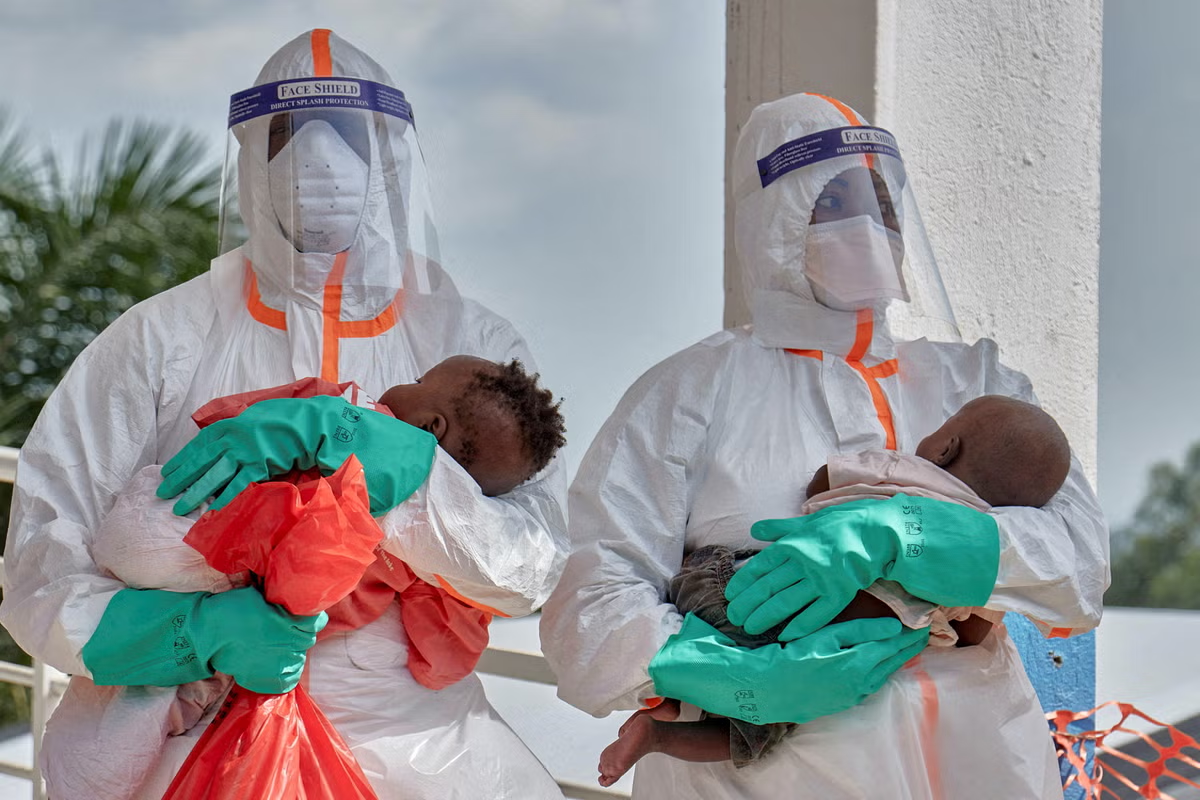
Following Buswaza’s death, six other babies at the Bunia orphanage, home to 69 children, were identified as suspected Ebola cases. They were swiftly transferred to the Evangelical Medical Centre (CME) for urgent care and isolation.
In a moment of relief, five of these infants later tested negative for Ebola and were discharged on Tuesday.
Medics in full protective suits returned the babies to smiling nuns, with Sister Clarisse expressing her gratitude: “We thank the hospital staff, we are very grateful.”
However, the joy was short-lived. Another infant, an orphan triplet girl affectionately known as “Cherie,” who was less than a year old, tragically succumbed to confirmed Ebola on Wednesday.
Dr. Freddy Kibwana, head of the CME, confirmed the heartbreaking news, stating simply: “The child has left us.”
Children and babies can easily become vectors for the disease through bodily fluids like vomit, faeces and saliva which are highly infectious when people have Ebola.
Three of the deceased babies’ carers including a nun have tested positive for Ebola, aid workers and medics said.
The sisters at the orphanage, established by Belgian nuns in the colonial era, are praying for them.
“We are nuns but we are also humans and it has been very emotional,” one sister told Reuters, asking for anonymity for fear of being associated with Ebola and stigmatised.
Buswaza, who lived less than two weeks, is one of the youngest victims of the epidemic that has so far infected nearly 600 people and killed at least 115 people across Congo.
As well as fluids like blood and saliva, Ebola has been detected in amniotic fluid and the placenta, the World Health Organization said, so it is possible her mother transmitted the virus to her in the womb or during childbirth.
If the mother caught the virus after giving birth, she may also have transmitted it to her child through breastmilk where the virus has also been detected.
So far, children account for nearly a fifth or around 17% of the confirmed Ebola cases in the current outbreak, according to the U.N. children’s charity (UNICEF) based on preliminary data, which the U.S. Centers for Disease Control and Prevention warns could surpass the 2014-2016 West Africa outbreak. It is unknown how many have died.
While young children represent a smaller portion than other age groups, the World Health Organization said they may be at increased risk of severe outcomes and death.
But little data is available on this rare strain of the virus, Bundibugyo, and its impact on children, it said.
UNICEF says it is concerned that children’s chances of survival might be impacted by pre-existing health conditions in an area characterised by high malnutrition levels and patchy vaccination rates.
A 2023 survey in Ituri found a chronic global malnutrition rate of 52.1% for children under five. Many of the children at the orphanage are survivors of armed conflict across eastern Congo.
“In this fragile context, children could deteriorate more quickly if they become infected,” said UNICEF’s Douglas Noble, who leads on health emergencies and visited Bunia last month.
Buswaza was buried in late May in a sealed, waterproof body bag to prevent the spread of the disease.
The International Federation of Red Cross and Red Crescent Societies said it has stocks of child-sized body bags to conduct safe and dignified burials for children in the area.
Health teams now visit the orphanage daily to check the children and staff.
“This epidemic has hit an area already in humanitarian crisis,” said Babou Rukengeza, a senior health adviser with Save the Children aid group. “This place is the only refuge for these children.”