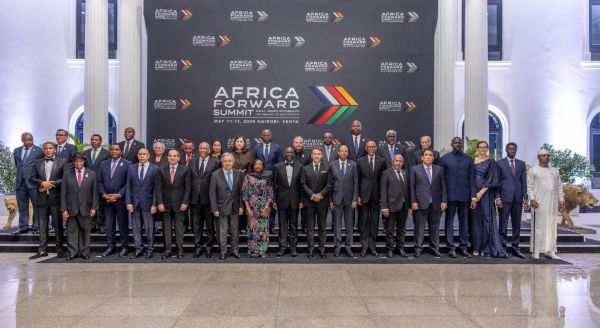
Something shifted in Nairobi last week. It was not the numbers, though the numbers were striking. It was not the speeches, though some were worth hearing. What shifted was the room’s geography — and the logic behind the conversation. For the first time, France and an African country co-chaired an Africa-France summit on African soil, with President Macron and President Ruto standing side by side as equals, not host and supplicant.
For decades, Africa’s engagements with major global powers have followed an almost predictable script. African leaders are invited to Paris, Washington, Beijing, Moscow, Brussels, or New Delhi. Red carpets are rolled out. Grand declarations about “strategic partnership” are made.
Communiqués are signed. Photographs are taken. Then everyone flies home, while very little changes for ordinary Africans. The imbalance was often visible even in the choreography of these summits. Africa appeared less like an equal negotiating bloc and more like a guest invited to seek assistance, security guarantees, investment, or development aid.
The Africa Forward Summit, held in Nairobi on May 11 and 12, broke that script in key important ways. Nairobi appeared different in tone, structure, and ambition. For once, the summit was held on African soil, not in Europe. For once, the conversation shifted from aid to investment, from dependency to co-production, and from diplomatic rhetoric to commercial engagement. That distinction matters greatly, inspiring confidence in the possibility of meaningful progress.
Over two days, €24 billion in commitments were announced: €15 billion from French sources and €9 billion from African investors, with a focus on real projects that can inspire trust and motivate further action. According to figures announced at the summit, investment and financing commitments were unveiled across sectors, including energy transition, digital infrastructure, artificial intelligence, agriculture, healthcare, maritime development, industrialisation, sports, and logistics.
More importantly, the summit focused less on political symbolism and more on practical business partnerships.
French and European companies openly discussed co-investing and co-producing with African firms inside Africa itself. Still, the true measure of success will depend on the accountability and follow-through of these commitments. If implemented seriously, that could become the summit’s most consequential outcome.
Africa does not lack resources. Africa does not lack markets. Africa does not lack entrepreneurial energy or youthful talent. What the continent has historically lacked is equitable access to capital, technology transfer, industrial partnerships, and financing systems that support value addition and manufacturing. The summit’s emphasis on co-production rather than extraction is therefore significant.
Again, it is worth noting that Africa’s resource wealth and youthful ambition are evident. Still, the true test of the summit’s success lies in measurable outcomes-such as increased local industrial capacity, technology transfer, and fair financing structures-that can demonstrate real progress and build trust in future initiatives.
Nigeria has already emerged with one practical example. French hospitality giant Accor and Shoreline Group signed a Letter of Intent to develop Nigeria’s first national hotel platform, with a planned $300 million investment targeting 10 hotels across eight Nigerian cities by 2030. The initiative will also establish a hospitality training academy to support skills development and job creation. That is the kind of partnership Africa should encourage: investment tied to infrastructure, skills transfer, employment, and long-term economic activity rather than mere extraction of profit.
The summit also launched the Africa-France Impact Coalition, a business platform bringing together major African and French companies with combined operations worth over €100 billion and employing hundreds of thousands across the continent. Discussions covered artificial intelligence, renewable energy, healthcare manufacturing, agriculture, digital connectivity, and infrastructure.
If this approach survives beyond speeches and summit declarations, it is crucial to establish clear monitoring and evaluation mechanisms to ensure commitments lead to real change. This could signal the beginning of something Africa urgently needs: a genuine scramble for African industrial development rather than another scramble for African raw materials. Still, Africans should approach this new enthusiasm with cautious optimism rather than emotional excitement. While history advises caution, the progress made in Nairobi offers a foundation for genuine change, encouraging a hopeful outlook for Africa’s future.
France carries a uniquely complicated relationship with Africa, especially in Francophone West and Central Africa.
The issue is no longer colonialism in its formal sense — that chapter is closed. The deeper issue is that the post-colonial relationship never fully evolved into genuine equality. Some African governments outsourced large parts of their security architecture and strategic decision-making to Paris. Paris, in turn, became deeply embedded politically and militarily in several former colonies. Both sides participated in that arrangement and paid a price for it.
Mali illustrates the contradiction vividly. In 2013, when jihadist forces threatened Bamako, France intervened militarily and was initially celebrated as a saviour. A decade later, those same French forces became the primary targets of nationalist fury, accused by military juntas of exploitation and neo-colonial manipulation. Wagner arrived. The French departed. It was a melodrama, and like most melodramas, it contained real grievances buried beneath the theatre.
The lesson is not that France is good or bad. The lesson is that framing any external partner in those terms is a strategic error. External powers-whether the US or China, East or West, EU, France or Russia-are neither saviours nor permanent enemies. They are here to advance their strategic interests. Africa’s responsibility is therefore not emotional attachment or ideological hostility — it is strategic negotiation, empowering Africa to shape the terms of its own development.
To this end, Africa can no longer afford military protectorates disguised as partnerships. Neither can it afford exploitative mercenary arrangements or forms of economic engagement that quietly transfer strategic infrastructure, ports, airports, logistics corridors, and mineral assets into foreign control without strengthening domestic productive capacity. The continent needs partnerships rooted in mutual benefit, commercial realism, and respect for sovereignty.
Accordingly, this is why France’s apparent recalibration matters. France’s evolving role as a gateway to facilitating mutually beneficial partnerships can empower Africa, emphasising that this is a strategic opportunity rather than charity. If Paris is genuinely shifting away from paternalistic diplomacy toward facilitating business partnerships, industrial co-investment, and private-sector collaboration, that is potentially good news not only for Africa and France but for Europe more broadly. Europe needs markets, growth opportunities, energy partnerships, and supply chain diversification. Africa needs investment, industrialisation, infrastructure, technology, and jobs. The interests are complementary.
But Africans have heard promises before. This is why the true judgment of the Africa Forward Summit will not be made through speeches, declarations, or summit communiqués. It will be made through implementations and answering these questions. Will the announced projects materialise? Will African firms genuinely become co-producers rather than junior subcontractors? Will financing become fairer and more accessible? Will technology actually transfer? Will industrial jobs be created on African soil? Will Africa’s AI, healthcare, logistics, agriculture, and manufacturing sectors truly advance? Like Saint Thomas, Africans should believe not merely what they hear, but what they eventually see.
Still, Nairobi may have offered an important glimpse into what a healthier Africa-Europe relationship could look like: less aid dependency, less geopolitical theatre, less paternalism, and far more equal partnership, investment, production, and shared prosperity. If that shift proves genuine, then the Africa Forward Summit may eventually be remembered not as another diplomatic gathering, but as the moment Africa stopped showing up as a guest and started negotiating as an equal partner.
We will be watching. The continent will be watching whether, five years from now, there are factories, hotels, data centres, and solar plants on African soil, built with African hands, owned in African names. That is the only summit result that matters.
Iroegbu is a journalist and a geopolitics, security, and public affairs analyst.