Deji Elumoye in Abuja
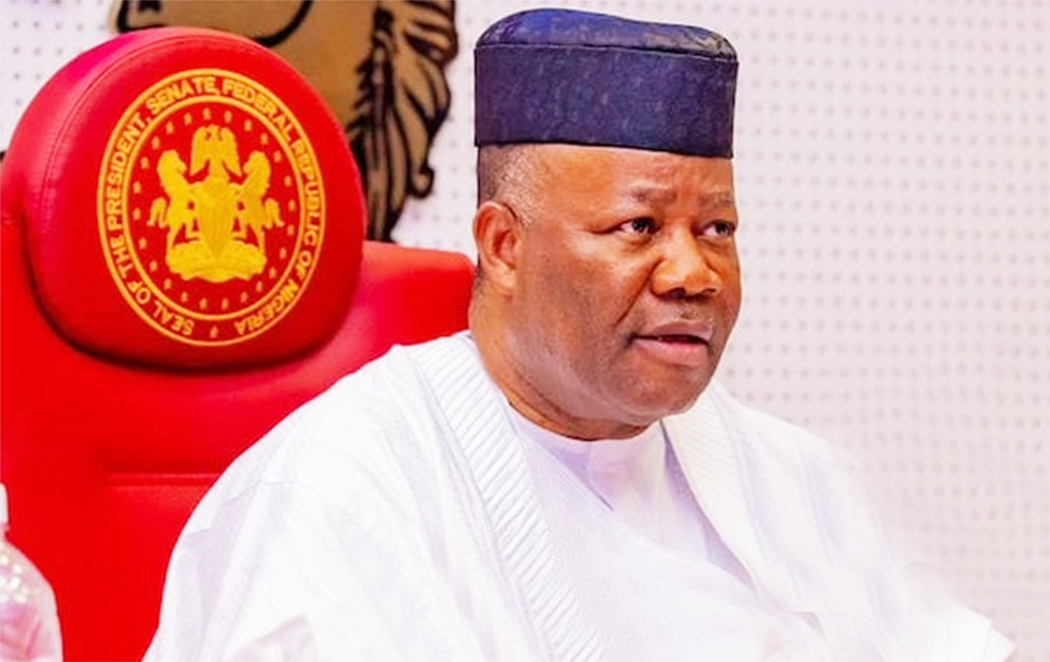
The presidency and the National Assembly are currently working on a constitutional template to hasten the establishment of state police in the country. President of the Senate, Senator Godswill Akpabio, disclosed this on Thursday.
Akpabio said both the legislative and executive arms were considering a constitutional framework for the establishment of state police to strengthen Nigeria’s security architecture and enhance protection of life and property nationwide.
The senate president spoke with newsmen after leading Principal Officers of the red chamber on a Sallah homage to President Bola Tinubu at his Ikoyi, Lagos residence.
He said the proposed framework for state policing would ensure effective participation of states in securing life and property, while maintaining national standards through a central regulatory mechanism.
According to him, “We can’t do it alone. National Assembly will assist him to ensure that we improve on the area of security. But it has actually improved.
“Except guerrilla warfare here and there. Attacks here and there. Because in reality, what we see now are insurgents going to areas of soft targets.
“Imagine schools. Going to churches. Going to mosques. And those areas that nobody would think, you know, security agents would not be there. But he has done very well. There is no part of Nigeria today that you have the flag of any insurgents, whether Boko Haram, being hoisted. And then all those organised bomb blasts everywhere have been brought to an end.
“So the security services have done so well. But a lot still needs to be done. Because you know how it is. Nigeria is very vast. So with a population of over 240 million, whenever something happens, outsiders do not know.”
Akpabio disclosed that federal lawmakers were considering a structure that would establish a national state police commission to regulate recruitment, promotion, training and operational conduct of state police formations across the country.
He stated that although the country’s security situation had improved significantly under Tinubu, more collaborative efforts were required to tackle emerging threats, especially attacks on soft targets, such as schools, churches and mosques.
Akpabio emphasised that insurgent activities had been largely curtailed, stressing that no part of Nigeria was currently under the control of terrorist groups.
He said, “But we believe that working with him, the National Assembly can come up with a solution, a framework that will enable the states to also partake in securing the life and property of the citizens and that is in the area of the state police and we are looking at ways of creating a positive and not a negative state police and something that can have a national state police commission that will regulate the conduct of state policing and also promotion, training and all.
“So we will do our best to assist in that direction and sensitisation, also. The citizens also need to know that they have to watch out for bad acts in their society because they all know it’s a very unfortunate situation but we do know that the president is poised and the security services are poised so that area will need serious improvement with all of us working together.”
He explained that the National Assembly would continue to support the president in strengthening the country’s security architecture, including plans to increase funding for policing infrastructure and equipment.
The senate president revealed that the legislature was considering raising allocations to the Police Trust Fund from 0.5 per cent to one per cent of revenue from the federation’s production account, with additional contributions expected from state governments.
He stated, “Police in the country itself is a major issue that the National Assembly is looking at. You are actually looking at from 0.5 per cent to one per cent of revenue from the production account going into the police trust fund.”
Commenting on the economy, Akpabio applauded the president’s reforms, including the removal of fuel subsidy, harmonisation of exchange rates, and tax reforms, describing them as difficult but necessary measures that had repositioned the economy for sustainable growth.
He said the administration had also ended the era of indiscriminate monetary expansion through Ways and Means financing and addressed longstanding distortions in the foreign exchange market.
Akpabio stated, “We also appreciated Mr. President for his reforms, which have done a lot to reposition Nigeria on the trajectory of growth, constrain the kind of economy that we met when he came on board in 2023.
“It’s very difficult to grow a non-oil economy because what we met on ground, we had what they call future sales and we’re not making money on the crude oil that we produce because of future sales. And then we also had a situation of continuous expenses in the country as a result of what they call ways and means, which in a layman’s language was expending money and printing money without earning income.
“He has stopped all that. We met multiple exchange rates. He has stopped all that. We met a situation of fuel subsidies. He has stopped all that. We also appreciate the fact that in the last three years, he has brought the very long queues that people used to experience in filling stations to an end. And tangible things that people may not see.
“And the harmonisation of taxes in Nigeria. Something that even taxes that some were as far back as 1939. You know, so for me, I think he has done excellently well. But we are saying that a lot still needs to be done.”
On infrastructure, the senate president cited the ongoing coastal highway project and the Lagos-Badagry-Sokoto corridor as transformative initiatives capable of stimulating economic growth and agricultural expansion.
He added that the 74 dams along the Lagos-Badagry-Sokoto route would significantly boost agricultural productivity and support food security objectives.
Akpabio called for increased crude oil production to strengthen foreign exchange earnings, especially with the growing operations of the Dangote Refinery and the policy of crude sales in naira.
He said, “And then the area of infrastructure is already ongoing and then, of course, we need to ramp up our crude oil production. Now that we have started selling crude in Naira and Dangote refinery is doing well and it’s taking a lot so we need to improve on production to enable us also export to earn foreign exchange to put in other sectors of the economy. So we are still looking forward to foreign direct investments.”