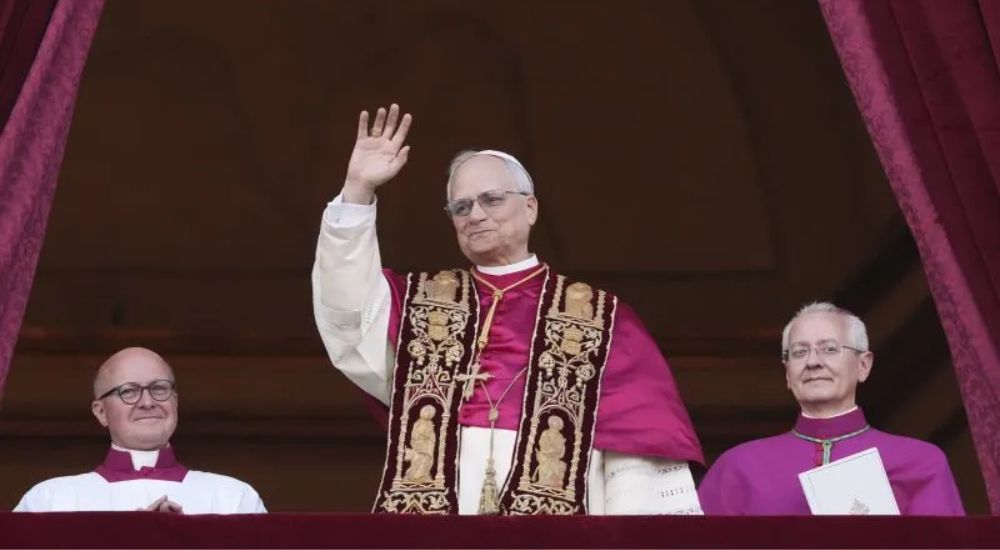
Pope Leo XIV on Monday issued a historic apology for the Catholic Church’s centuries-long delay in condemning slavery.
The Pope acknowledged that the Holy See itself gave European rulers explicit authority to subjugate and enslave people, calling the Vatican’s record a wound in Christian memory.
The apology was contained in the Pope’s first encyclical, titled “Magnifica Humanitas” (Magnificent Humanity), released on Monday.
It also addresses the protection of human dignity in an age of increasing reliance on artificial intelligence.
“Already in the early modern period, the Apostolic See of Rome, responding to the requests of sovereigns, intervened several times in order to regulate and legitimize forms of subjugation, and, in certain cases, including the enslavement of ‘infidels,’” the Pope wrote, while acknowledging that past decisions could not be judged purely by modern standards but insisting the Church’s record could not be minimised either.
“Yet neither can we deny or diminish the delay with which both society and the church came to denounce the scourge of slavery,” he said, adding that the Church had long affirmed the dignity of every human being as the basis of its doctrine, “even if it took eighteen centuries for its full incompatibility with slavery to be explicitly recognised.”
Previous popes had apologised for Christians’ involvement in the transatlantic slave trade but no pope had ever publicly acknowledged the role that past popes themselves played in giving European sovereigns authority to enslave people.
Leo recalled in the encyclical that his namesake, Pope Leo XIII, was the first pope to explicitly condemn slavery in 1888, long after many countries had already abolished it, and that before that, even Church institutions had held slaves.