Twelve years after Kabiru Umar, alias Kabiru Sokoto, was convicted over the 2011 bombing of St. Theresa Catholic Church in Madalla near Abuja, the suspected Boko Haram member has filed an appeal challenging the life imprisonment sentence imposed on him.
Twelve years after Kabiru Umar, alias Kabiru Sokoto, was convicted over the 2011 bombing of St. Theresa Catholic Church in Madalla near Abuja, the suspected Boko Haram member has filed an appeal challenging the life imprisonment sentence imposed on him.
The appellant argued that circumstances beyond his control prevented him from filing the appeal within the prescribed time.
The appeal documents obtained by this newspaper state that Sokoto’s delayed application was due to “circumstances beyond” his control, including the deaths of his two previous lawyers. He said he also experienced “repeated custodial transfers” that isolated him, and his family’s severe “financial constraints.”
The 25 December 2011 bombing, which was claimed by Boko Haram, killed about 35 worshippers and left many others injured.
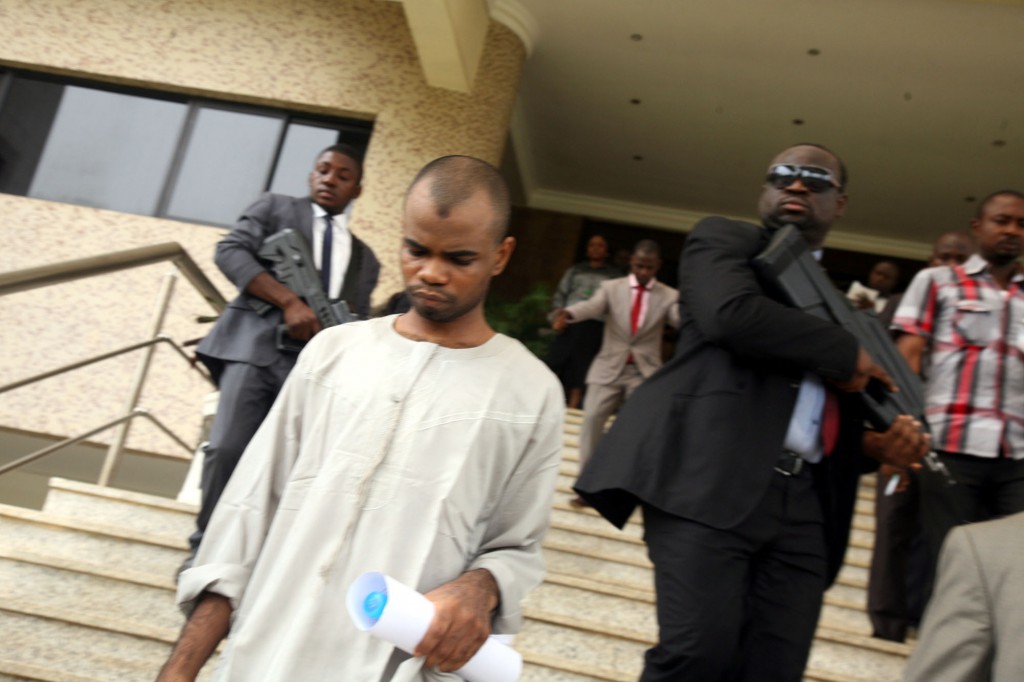
PREMIUM TIMES reports that Mr Sokoto was initially arrested on 14 January 2012 at the Borno State Governor’s Lodge in Asokoro, Abuja, alongside a serving military officer. He was then taken to Abaji (also in Abuja) by police officers investigating the case to search a house believed to be owned by him.
He escaped from police custody, leading to the suspension and house arrest of Zakari Biu, then-head of the Zone 7 Police Command in Abuja, overseeing Boko Haram investigations at the Criminal Investigation Department. Before the incident, Mr Biu supervised the team that lost Mr Sokoto and was detained at an undisclosed location, alongside other junior police officers involved in the case.
The escape also prompted then-President Goodluck Jonathan to issue a 24-hour ultimatum to the then-Inspector General of Police (IGP) Hafiz Ringim, to produce the Boko Haram suspect. Mr Ringim failed to do so and was later retired.
The State Security Services (SSS) said Kabiru Sokoto was re-arrested in February 2012, following what it described as a gunfight between its operatives and members of his gang in Taraba Satet.
He was subsequently sentenced by the Federal High Court in Abuja on 20 December 2013. The suspected terror kingpin was sentenced on two terrorism charges, including one punishable with life imprisonment under Section 15(2) of the Economic and Financial Crimes Commission Act 2004. The second charge attracted 10 years’ imprisonment under Section 7(1) under Terrorism Act, 2011.
Sokoto filed the appeal through his legal counsel, Don Akaegbu & Company.
In the application dated 13 May and filed before the Abuja Judicial Division of the Court of Appeal, Mr Umar asked the court to extend the time within which he could seek leave to appeal his conviction.
Kabiru Sokoto presented four prayers in his appeal processes: an extension of time to seek leave to appeal, leave to challenge the judgment, extension of time to file a notice of appeal, and an order deeming the notice of appeal already filed as properly filed and served.
His legal team outlined 12 grounds for the appeal, first arguing that their client suffered a “wrongful conviction under an inapplicable statute” because he was convicted of a terrorism offense under the Economic and Financial Crimes Commission (EFCC) Act of 2004 rather than the legally appropriate Terrorism (Prevention) Act of 2011.
Ground two: Kabiru Sokoto’s legal team said the prosecution “demonstrably failed to prove the essential ingredients” of the charges due to a lack of “credible and direct evidence.”
Ground three: The appeal asserts that the trial court erroneously relied upon a confessional statement of “dubious voluntariness” that was drafted by police in a “question-and-answer format” instead of a “free narration.”
Ground four: The appellant said the judge allegedly violated fundamental rules by relying on a witness statement that was “never tendered as an exhibit or formally admitted in evidence.”
Ground five: The appellant argued that the prosecution’s failure to call a “vital witness” and produce a “mandatory video recording” should have triggered a “conclusive presumption against the prosecution.”
Ground six: The appeallant contended that the court engaged in a “wrongful dismissal of no-case submission” because the prosecution’s “largely hearsay” evidence failed to establish a “prima facie case.”
Ground seven: Kabiru Sokoto’s lawyers argued that the judge imported “emotive and prejudicial considerations” by subjectively labeling the appellant a “pathological liar with no respect for the truth.”
Ground eight: The trial court was accused of unlawfully “reversing the constitutional and statutory burden of proof” by expecting the appellant to explain the prosecution’s missing evidence.
Ground nine: The appeal maintains that the failure-to-disclose-information charge was unsupported because there was no proof the appellant possessed “actionable intelligence before the bombing.”
Ground ten: The appellant argued the court was also accused of improperly finding material facts on “unsworn, untested, hearsay evidence” from an arrested suspect who never testified.
Ground eleven: The appellant argued that the life imprisonment mandate constitutes an “unlawful sentence arising from a wrongful statutory basis” because it relied on financial crimes legislation rather than terrorism laws.
Ground twelve: The judgement was described as being “against the weight of evidence” because the prosecution allegedly provided “no physical exhibit” and “no eyewitness,” which the appeal said fell far short of the standard required for a life conviction.
Since he was convicted, there have been no details about where Sokoto was serving his life sentence. However, an affidavit deposed to by his nephew, Lawal Suleiman, stated that he was traced to Kirikiri prison in Lagos in March.