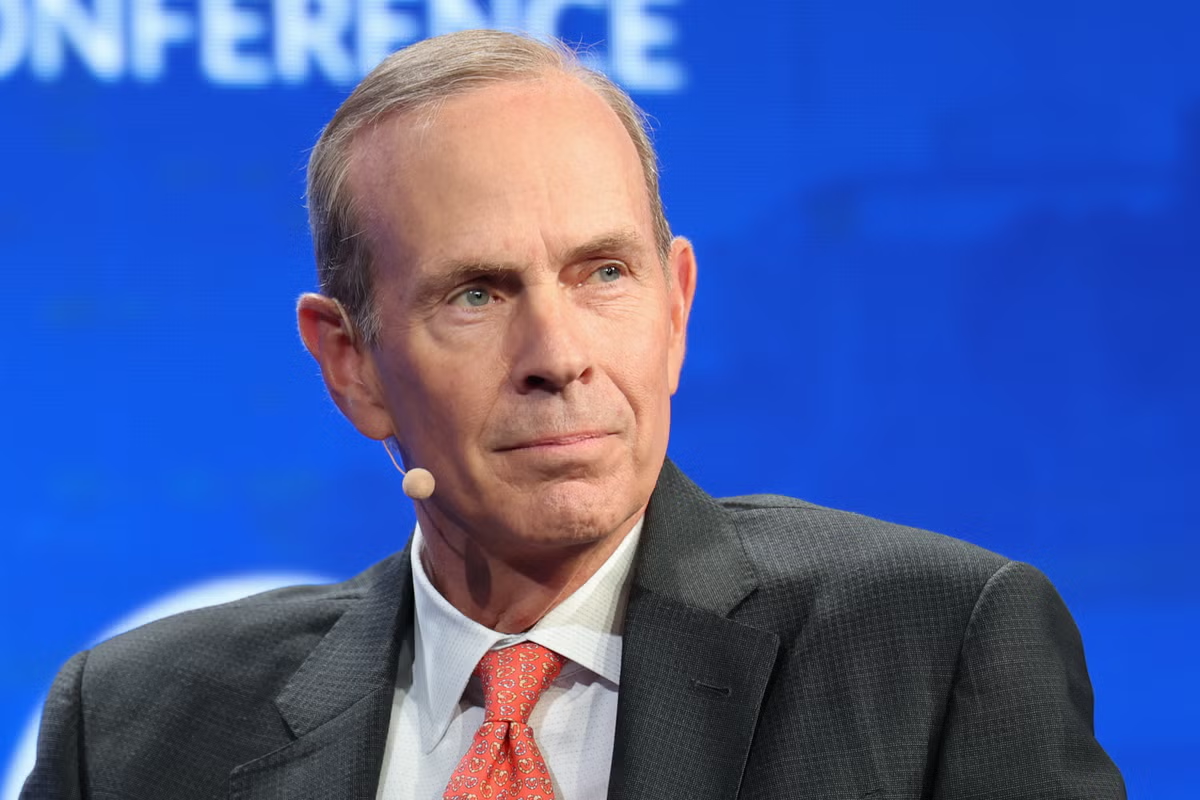
Oil and gas giant Chevron has said it will not pay a transit toll for its vessels transiting the Strait of Hormuz, according to CEO Mike Wirth. Speaking to Bloomberg TV on Friday, Wirth highlighted that several ships navigating the crucial waterway have recently come under attack, describing “multiple incidents,” though not necessarily daily occurrences.
Chevron currently has six vessels operating under charter in the Strait, all of which belong to third-party owners.
Wirth clarified that the decision to traverse the strait ultimately rests with these ship owners.
He emphasized that both owners and insurers would need to regain confidence to move oil through the Strait again, and their willingness to send ships back into the area is crucial for trade to normalize, though not all vessels may return.
The announcement comes as global markets react to ongoing developments in the region. World stocks saw modest gains on Friday, while oil prices slid, heading for a weekly decline, as traders awaited clarity on efforts to reopen the Strait of Hormuz and extend a ceasefire between the United States and Iran.
Sources indicated to Reuters that the U.S. and Iran had agreed to extend their ceasefire and lift shipping restrictions.
President Donald Trump has yet to approve the deal, and Iranian state media reported that it had not been finalized. Oil futures fell approximately 2%, putting them on track for their steepest weekly drop since early April.
Meanwhile, MSCI’s world stocks index rose 0.4% to a record high. This surge was primarily driven by chipmakers, following upgraded forecasts from Dell that boosted AI sentiment and propelled benchmarks in Tokyo and Seoul up by 2.5% and 3.5%, respectively.
“You’re getting these multiple confirmation points, and that’s just going to extend the rally for anything AI-related,” commented Jason da Silva, director of global investment strategy at Arbuthnot Latham.
Gains elsewhere were more subdued, with Wall Street futures largely flat and European stocks rising 0.5%. The S&P 500 had closed at a record 7,563.63 on Thursday. The dollar was set for a small weekly decline, reflecting lower Treasury yields.
Analysts, however, cautioned that any yield drop might be limited, as a potential U.S.-Iran deal is unlikely to swiftly reverse inflationary pressures stemming from elevated fuel prices. “The market’s already taking the view that a deal’s going to be done and the Strait is going to be open,” said Jason Wong, senior market strategist at BNZ in Wellington. He added, “The main point is it removes a tail risk of a really, really bad outcome. I don’t think it’s a green light to take oil down $20, or Treasuries down 20 points.”