China has imposed new export controls on three precursor chemicals, restricting their shipment to Canada, Mexico, and the United States.
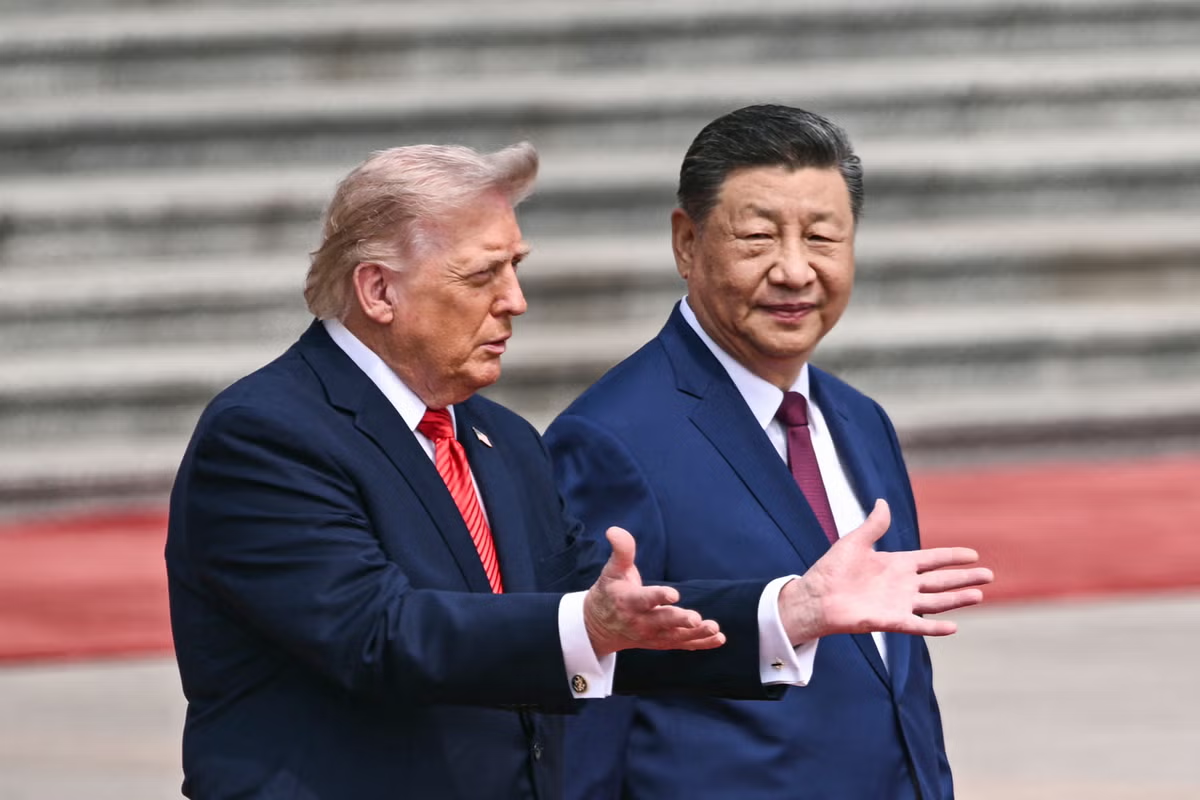
The move, announced Friday, follows a summit between US and Chinese leaders in Beijing just a week prior.
The National Narcotics Control Commission simultaneously warned about eight other chemicals usable in synthetic drug production, mandating strict compliance with laws for businesses involved in their trade.
These measures echo Beijing’s anti-narcotics curbs from November, which followed a meeting between Donald Trump and Chinese counterpart Xi Jinping in South Korea.
During those earlier discussions, the US had agreed to reduce tariffs on China in exchange for Beijing’s crackdown on illicit fentanyl.
Washington had frequently accused Beijing of failing to control the flow of fentanyl precursors, leading Trump to impose related tariffs in early 2025, later struck down by the U.S. Supreme Court in February.
China consistently dismissed these accusations, asserting the opioid crisis was a U.S. domestic problem.
However, Chinese and U.S. anti-narcotics authorities recently collaborated, arresting five suspects and seizing drugs this month in a joint investigation into a smuggling and trafficking case, state media reported.
During an event in the Oval Office on Thursday, Trump referenced U.S. attempts to edge China for supremacy in AI technology.
Trump said he was postponing the Oval Office event with tech industry executives because he did not like what he saw in the order’s text. “We’re leading China, we’re leading everybody, and I don’t want to do anything that’s going to get in the way of that lead,” Trump told reporters.
The order would have established a framework for the government to assess the national security risks of the most advanced AI systems before their public release, according to a person familiar with the White House’s deliberations with the tech industry but not authorized to speak publicly.
The directive was being characterized as a voluntary collaboration with participating U.S.-based tech companies, including Anthropic, OpenAI and Google, the person said.