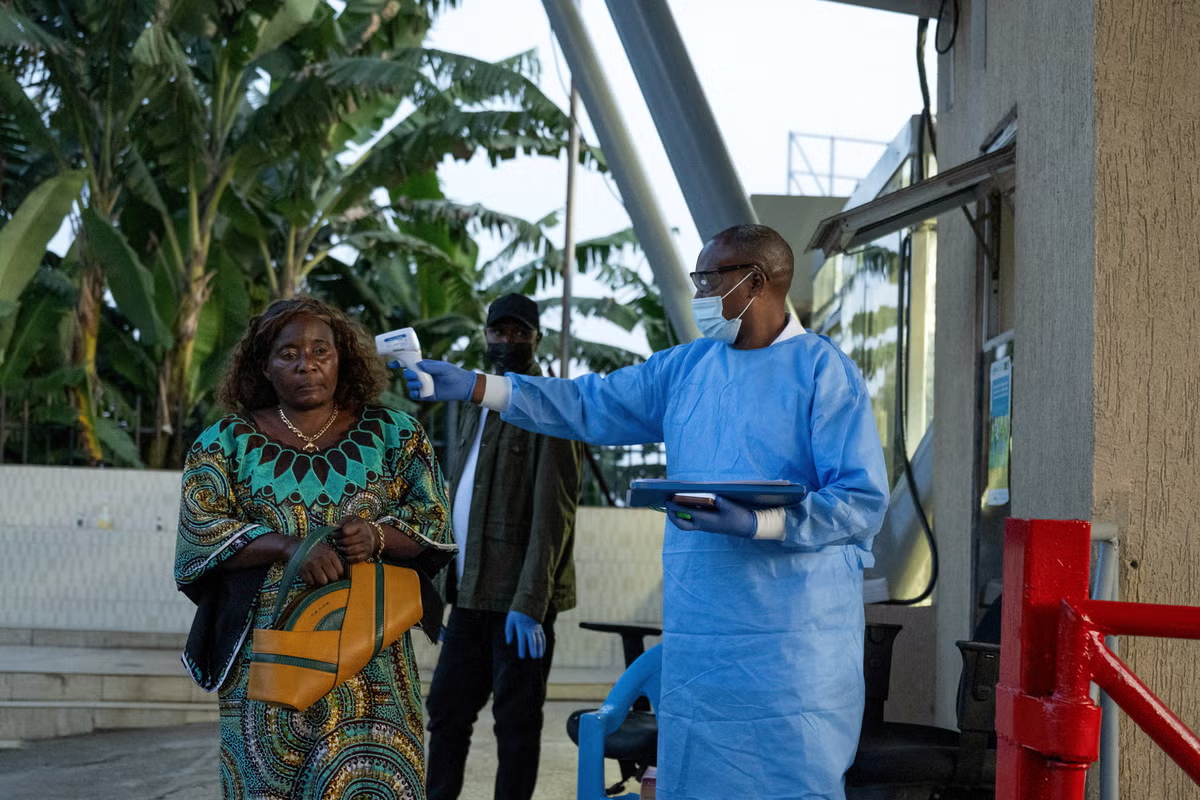
Twenty-six more suspected Ebola deaths have been recorded in eastern Democratic Republic of Congo within 24 hours, authorities confirmed on Tuesday.
It comes as the World Health Organization’s chief has expressed deep concern over the outbreak’s escalating spread.
The latest deaths bring the total fatalities linked to the eastern DRC outbreak to 131.
Health authorities have now reported 516 suspected and 33 confirmed cases in Congo, with two further confirmed cases in neighbouring Uganda.
The rare Bundibugyo strain prompted WHO Director-General Dr Tedros Adhanom Ghebreyesus to declare the outbreak a public health emergency of international concern on Saturday.
Butembo, a city of hundreds of thousands in Congo’s North Kivu province, recorded its first two confirmed cases on Monday, Jean-Jacques Muyembe, director of Congo’s National Institute for Biomedical Research (INRB), said.
Ebola spreads through direct contact with bodily fluids from infected people or animals and causes symptoms that can include high fever, vomiting and internal and external bleeding.
According to the WHO, the average fatality rate from Ebola is around 50 per cent, varying from 25 per cent to 90 per cent in past outbreaks.
“I’m deeply concerned about the scale and speed of the epidemic,” Dr Tedros told members of the World Health Assembly in Geneva on Tuesday, citing the number of cases being reported in urban areas and among healthcare workers.
One American tested positive for Ebola as part of their work in Congo, the US Centers for Disease Control and Prevention said on Monday.
The patient, identified as Dr Peter Stafford by his Christian mission organisation, and six other Americans who were exposed to the virus are being moved to Germany for care and monitoring, the CDC said.
The US State Department said that it had mobilised an initial $13 million in foreign assistance for immediate response efforts to the outbreak.
Unlike with the more common Zaire strain of Ebola, there is no approved virus-specific therapeutics or vaccine for the Bundibugyo strain.
The US is working to develop a monoclonal antibody therapy as a potential treatment, CDC said on Monday.
A panel of experts led by the WHO will also meet on Tuesday to discuss if there are any vaccine options to help tackle the outbreak.
The US officially left the WHO in January in a move that President Donald Trump said was motivated by the organisation’s poor management of the COVID-19 pandemic.
An outbreak of the Zaire strain from 2018-2020 in Ituri and North Kivu provinces was the second deadliest on record, killing nearly 2,300 people. The international response then was complicated by widespread armed violence in eastern Congo that continues today.
One Ebola case has been confirmed in North Kivu province’s capital, Goma, which was seized by M23 rebels in 2025.