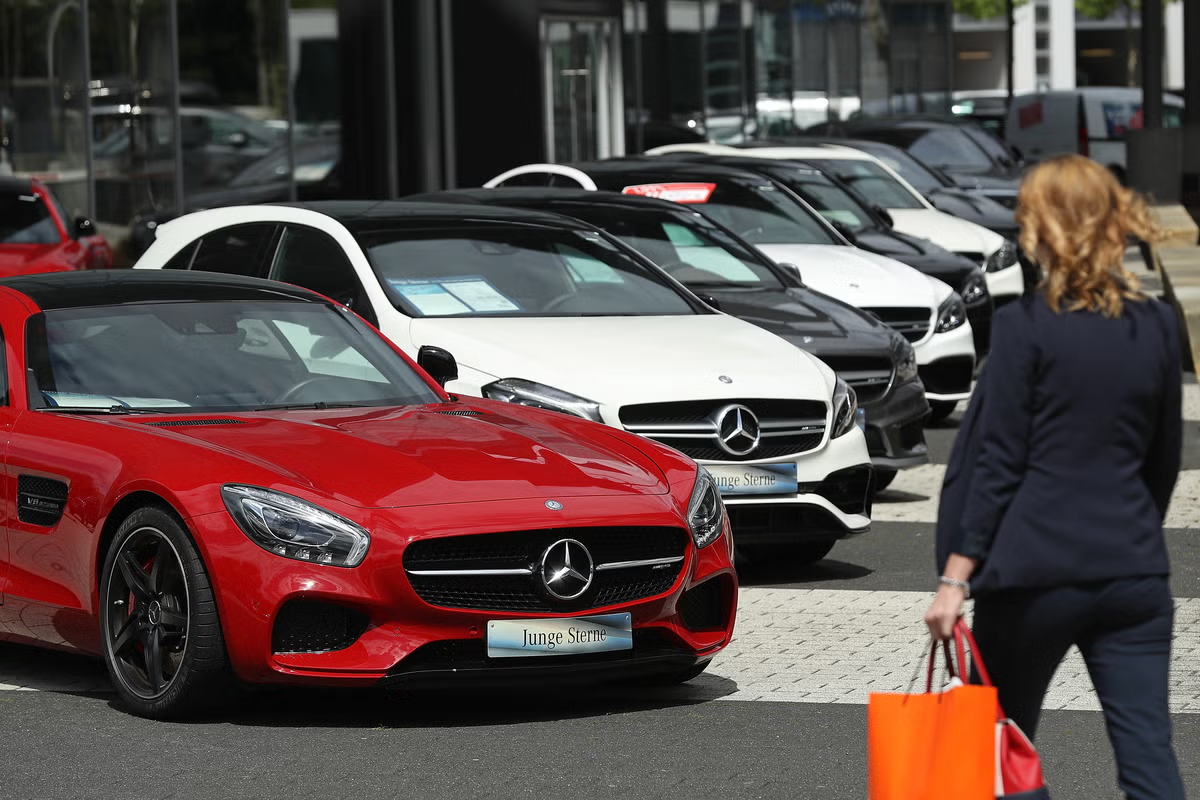
A new bipartisan bill in Congress aimed at limiting Chinese influence in the U.S. auto industry could end up banning new Mercedes-Benz vehicles in the United States.
The Motor Vehicle Modernization Act of 2026, led in the House by Rep. Brett Guthrie (R-KY), would block automakers from making, selling, or importing vehicles in the U.S. for five years if they have direct or indirect ownership ties to governments labeled as U.S. adversaries, including China, Russia and North Korea.
Under proposed U.S. legislation, even automakers already manufacturing in the United States could lose exemptions if they exceed certain foreign government ownership thresholds.
However, people familiar with the bill say its language could unintentionally capture Mercedes-Benz because its largest shareholder is BAIC, a Chinese state-owned automaker, CNBC reports. Therefore, Mercedes-Benz could potentially fall under the rules unless lawmakers revise the proposal or the ownership stakes are reduced or sold.
Sources told CNBC that the wording is not completely clear, which leaves room for different interpretations about how it would be enforced. Depending on how regulators apply it, Mercedes-Benz could be affected even if it is based in Germany. Two of them said they believe the current language is strong enough that, if passed as written, it would effectively prevent the company from operating in the U.S. market.
“The language is unambiguous,” a former automotive policy advisor and lobbyist who was consulted about the bill, told CNBC.
The bill has not yet advanced to the Senate and remains under consideration in the House. It includes a 15 percent ownership threshold in defining potential foreign government influence, though exemptions and enforcement details have not been finalized.
Stephen Ezell of the Information Technology and Innovation Foundation told the outlet that Mercedes-Benz presents a lower national security risk than automakers directly controlled by the Chinese government.
“If Mercedes were to be included in the bill, I think it would be an unintended consequence that could result in the loss of jobs and profits,” Ezell said.
A similar Senate proposal would also restrict companies with foreign ownership ties, though its exemption framework has not been finalized. If adopted broadly, such measures could potentially affect other automakers with Chinese investment, including Volvo, Lotus, Karma Automotive and Faraday Future.
Daniel Kelly, spokesperson for the House Energy and Commerce Committee, confirmed the legislation’s details to CNBC but did not address how it might affect specific companies, including Mercedes-Benz.
A Mercedes-Benz spokesperson declined to comment on the legislation when contacted by CNBC, but noted that the company operates two major assembly plants in the U.S. and employs more than 10,000 workers nationwide.
The Independent has contacted the House Energy and Commerce Committee and Mercedes-Benz for comment.