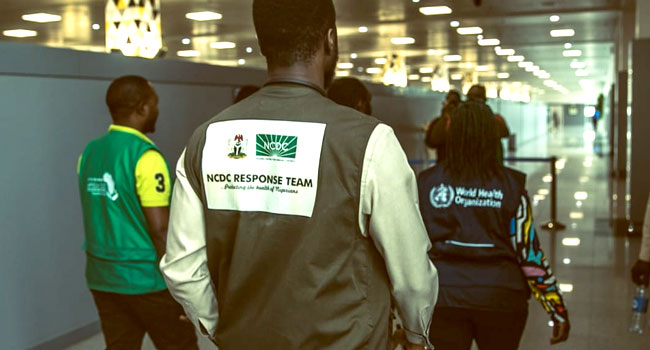
The Nigeria Centre for Disease Control (NCDC), has assured Nigerians that there is no need to panic over the Ebola virus, saying the country has the capacity to combat the virus.
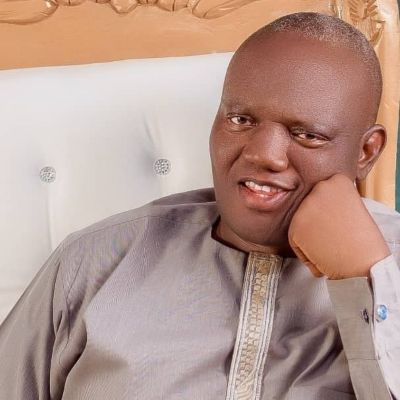
Head of Health Emergency Preparedness at the NCDC, ODr Biodun Ogunniyi, said this during an interview on Channels Television’s The Morning Brief on Thursday, saying that “fear kills”.
“There is no need to panic because fear kills more than death itself, because this is not the first time Nigeria is getting prepared for this kind of outbreak. We had a bit of a scare last year, used that opportunity to test our system, and we are comfortable to an extent.
“Let’s not forget Nigeria has been tested before with Ebola in 2014…, and we know that in less than 70 days, the country was able to wipe this virus out, which received global commendation that made us support other countries in Africa,” he noted.
He said Nigeria has a better health system to combat the virus, compared to the outbreak in 2014.
READ ALSO: Ebola: FAAN Assures Of Enhanced Preparedness At Airports
According to him, Nigeria has the in-country capacity to contain the virus.
“The Bundibugyo Ebola Virus, the first time was in 2007, and if something is not new to you, you are relatively more prepared because it is not new, so for us, we have the system in place as a country and as an agency to be able to quickly coordinate ourselves through our Public Health Emergency Operation Centre.
“We have our laboratory capacity, unlike in 2014 when we first had this Ebola outbreak. Now we have the capacity in the country to detect the Ebola virus. There is a network of laboratories across the country, and we have our national reference laboratories both in Abuja and also in Lagos to ensure we can have prompt detection when it happens,” the doctor stated.
His remark follows the new strain of Ebola virus (Bundibugyo) that hit the Democratic Republic of Congo with 513 cases reported and 131 deaths recorded.
The government, however, has assured that preparedness and precaution measures are being taken to prevent the virus from entering the country.
READ ALSO: Why New Ebola Strain Is Of Concern — Consultant Physician
Risk Assessment
Speaking further, Ogunniyi said Nigeria had assessed the risk, noting that while the risk is high considering the influx of flights into Nigeria, through Lagos and Abuja, the government was up to the task.
“We have issued advisories on what we need to do so from our own side, as government, we have a system coordinating with all our partners, who are the major stakeholders in the public health security space.
“We are meeting periodically to assess the risk of these diseases being transmitted into Nigeria. We know that the risk is high considering the travels. We are a very highly mobile population,” he said.
Border Surveillance
On surveillance at Nigeria’s borders, Ogunniyi said, health officials are all over the 774 local government areas.
“Across the country in all our 774 local government areas we have those officers that we call the disease surveillance and notification officers who work with the public health system . In all the local government areas they have their surveillance focal persons in health facilities in the country.
“Additionally to that, we have the health promotion officers who also are saddled with working with the community informant. We have this structure in place that could help us in case we have anyone presenting with symptoms in any of the communities across this country”.
The NCDC officer also noted that there are protocols in place to prevent the spread of the virus in Nigeria.
“If anyone is entering Nigeria from DRC or Uganda, the protocol is in place at the airport to ensure that they are put aside to fill out the health declaration form.
“There is no travel restriction for now globally for this particular disease and it will be unfair and it will be going against the policy to detain somebody who does not have symptoms of the disease but at that point the best we do is to ensure we get the right information about them to know where they will be in the country where they are visiting and ensure we are able to follow up,” Ogunniyi stated.