….Police, Military Operations Linked To Wave Of Controversial Killings
…Civil Society Calls For Urgent Institutional Reforms
Daud Olatunji
Fresh concerns have been raised over Nigeria’s human rights record as civil society organisations and rights monitors allege that about 3,000 Nigerians have been killed in suspected extrajudicial circumstances between 2020 and 2026.
The figure, drawn from combined reports by human rights organisations, sharply contrasts with conservative estimates of about 900 deaths within the same period, underscoring what activists describe as a “deepening crisis of unlawful killings and institutional impunity.”
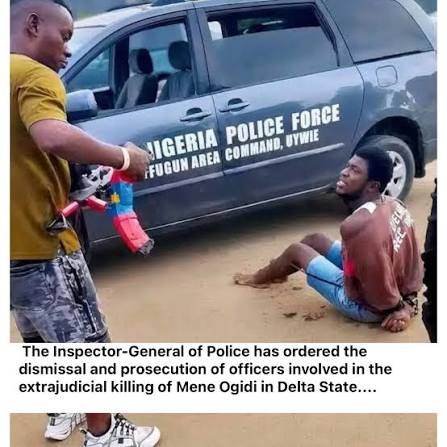
The latest outrage follows the viral killing of 28-year-old Mene Ogidi in Effurun, Delta State, where a police officer identified as ASP Usman Nuhu was seen in a widely circulated video shooting a restrained suspect at close range.
The officer has since been arrested, with the authorities promising prosecution. But rights advocates say the incident is only one in a long list of unlawful killings that rarely receive sustained national attention unless captured on video.
For many Nigerians, the footage revived memories of the #EndSARS protests and renewed questions about police use of force, accountability, and oversight.
Rising toll across states
Investigations and compiled reports indicate that hundreds of deaths have been recorded annually in alleged extrajudicial circumstances, including 271 cases in 2020 and 253 in 2022, according to data attributed to an international rights monitoring group, Global Rights.
A Voice of Nigeria-linked report in 2023 also cited over 800 such cases within a three-and-a-half-year span, including 127 cases recorded in the first half of 2023 alone.
Beyond police operations, similar allegations have trailed military interventions, protest crackdowns, and enforcement exercises across the country.
In Abuja, a corps member, Abdulsamad Jamiu, was reportedly killed in April 2026 during a military response to an alleged robbery incident in Dei-Dei. The Guards Brigade said he was caught in crossfire, a claim his family has disputed.
In Ogun State, a labourer, Oluwaseyi Adeoye, was allegedly shot dead during a demolition exercise involving state officials and security operatives.
In Akwa Ibom, a 13-year-old boy, Timothy Daniel, was allegedly killed by a soldier following a confrontation linked to alleged harassment of his sister.
Similar cases have been reported in Lagos, Sokoto, Anambra, Adamawa, and other states, including the widely condemned killing of pregnant lawyer Bolanle Raheem in 2022, for which a police officer was convicted and sentenced to death.
‘Systemic failure driving impunity’
Rights organisations including Amnesty International and Rule of Law and Accountability Advocacy Centre (RULAAC) have repeatedly warned that Nigeria’s accountability system remains weak, with most cases either poorly investigated or stalled in court.
A civil society organisation, RULAAC, described several detention facilities as “torture hubs,” alleging repeated cases of custodial deaths, including in Imo State where the controversial Tiger Base police unit has faced scrutiny over allegations of abuse.
A senior official of the organisation, Okechukwu Nwaguma, said the persistence of extrajudicial killings reflects “systemic failure, weak oversight, and entrenched institutional impunity.”