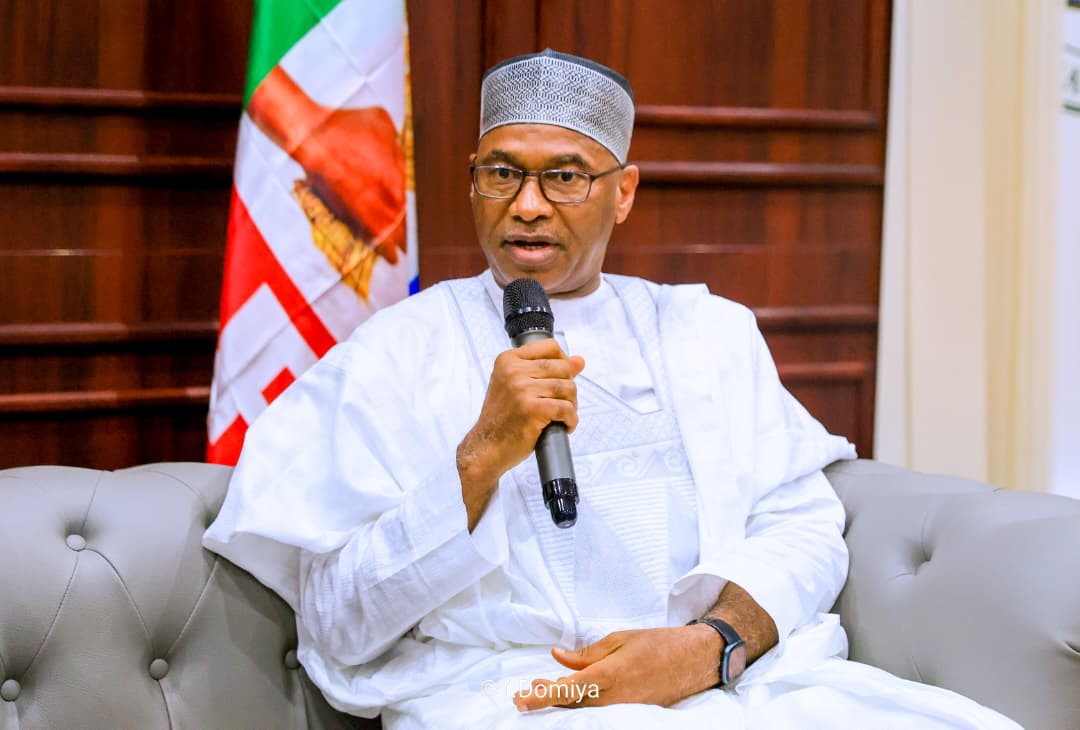
The Federal Government has clarified that Nigeria’s fiscal year is defined by law rather than the conventional January to December calendar, explaining recent delays in the publication of Quarterly Budget Implementation Reports. In a State House statement issued on Sunday, the Director-General of the Budget Office of the Federation, Tanimu……
The Federal Government has clarified that Nigeria’s fiscal year is defined by law rather than the conventional January to December calendar, explaining recent delays in the publication of Quarterly Budget Implementation Reports.
In a State House statement issued on Sunday, the Director-General of the Budget Office of the Federation, Tanimu Yakubu, said public concerns over the reporting timeline were being addressed within the constitutional and fiscal framework guiding public finance administration.
Yakubu noted that while the calendar year follows a fixed twelve-month structure, the fiscal year is a legislative construct whose duration and validity are determined by the prevailing appropriation laws enacted by the National Assembly of Nigeria.
He explained that where an Appropriation Act permits spending beyond a standard twelve-month cycle, the fiscal year is correspondingly extended in line with that legal authorisation.
According to the statement, the delay in publishing the reports arose from the repeal and re-enactment of the 2025 Appropriation Act in December 2025, as well as the extension of the budget’s implementation period to June 2026.
“These adjustments effectively prolonged the operational lifespan of the 2025 budget beyond the conventional calendar framework,” Yakubu said.
He added that Nigeria’s fiscal practice is consistent with global standards, citing examples such as the United States, where the fiscal year runs from October to September, and India, which operates an April to March cycle.
The statement further referenced Sections 80 and 81 of the Constitution of the Federal Republic of Nigeria 1999, noting that they do not prescribe a rigid fiscal year but instead require that public expenditure be authorised by law.
Yakubu also cited judicial precedents, including the Supreme Court case of Attorney-General of Bendel State v. Attorney-General of the Federation, to underscore the primacy of legislative control over public funds.
He said the Budget Office is currently finalising outstanding reports following extensive reconciliation processes covering revenue, expenditure, debt and inter-agency data alignment.
The reports, he added, will be released in phases over the coming weeks.
The Federal Government reaffirmed its commitment to transparency, fiscal discipline and accountable public financial management, while also pledging improvements in digital reporting systems to enhance timeliness and accuracy.