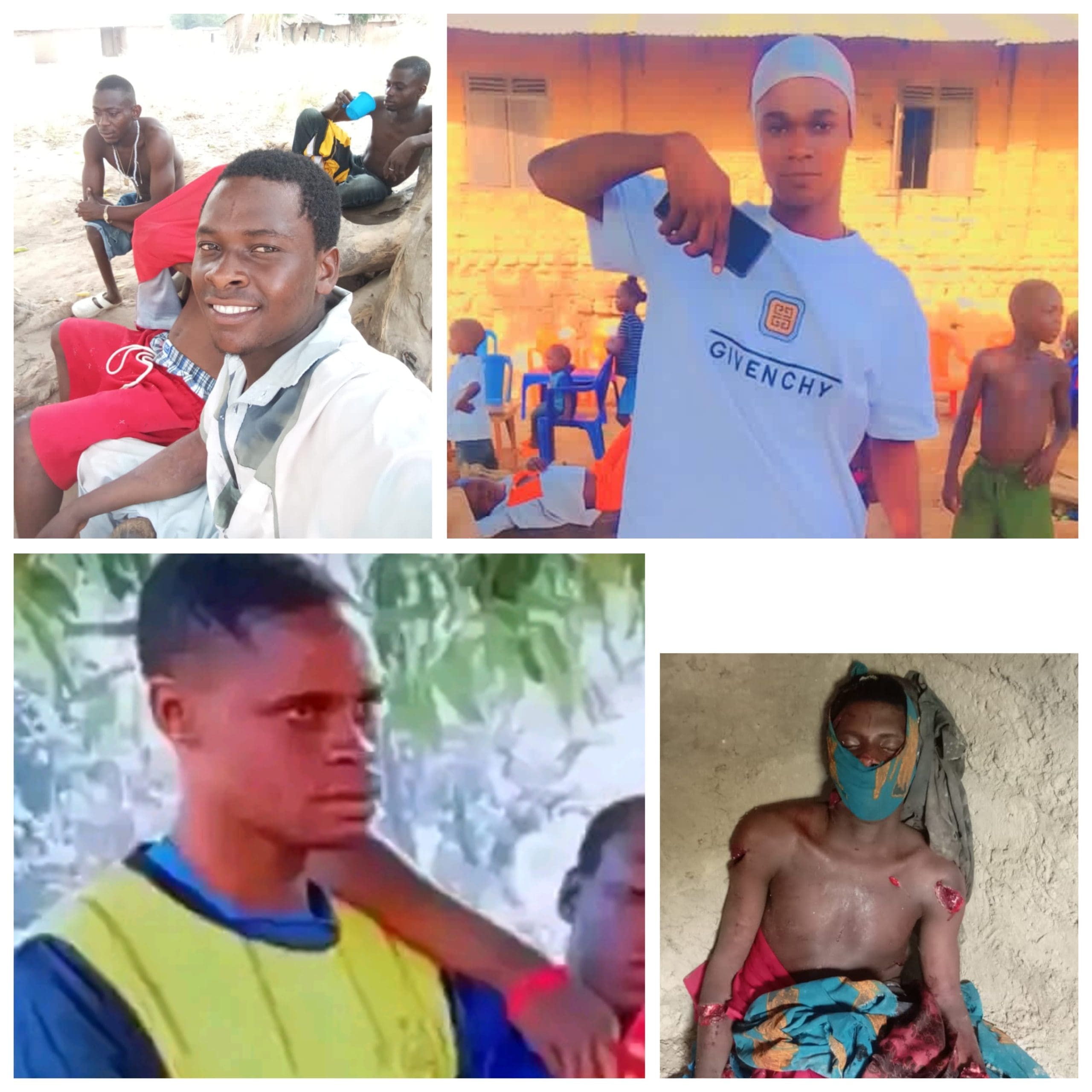
Authorities Withhold Attribution as Witnesses Blame Armed Fulani Militias in Two Separate Sunday Attacks.
Sunday’s Killings Add to a Growing Toll in a Region Plagued by Repeated Assaults on Christian Communities.
By Ekani Olikita
Residents of Central Nigeria Benue State are again in mourning ambushes killed at least five Christian residents on Sunday, May 3, 2026.
The violence occurred across Agatu and Gwer West Counties (local government areas), underscoring a worsening cycle of rural insecurity in the country’s Middle Belt.
According to local authorities and witnesses, four young men were ambushed and killed around 7:30 a.m. along the Odugbeho–Aila road in Agatu County.
The victims, identified as Ochefije Elijah Ojema, Igojuju Husaini, Odiya Ochowehi and Ochoyoda Adejo, were reportedly traveling to a nearby market when they were attacked by armed assailants.
The incident is part of a broader pattern of terrorist takeover in Benue State, a largely agrarian and predominantly Christian region that has experienced recurring attacks involving heavily armed Muslim Fulani Ethnic Militia and predominantly Christian local farmers.
In a separate attack later the same day, another group of five heavily-armed Fulani terrorists, set up a roadblock at Nyitse junction along the Makurdi–Naka highway in neighboring Gwer West County.
A middle-aged man, identified as Shien-iv Azemba, was killed while traveling on a motorcycle with his wife, who survived the ambush.
Local residents in an interview with TruthNigeria, described both attacks as sudden and premeditated, meaning they were not the result of tribal clashes, as often claimed by government spokesmen President Bola Tinubu himself.
The Agatu Killings
Dr. Isaac Uloko, a resident of Aila community, said the victims in Agatu were caught off guard.
“They were simply on their way to the market when they were ambushed. The attackers appeared organized and heavily armed, suggesting prior planning”, Uloko told TruthNigeria.
Another resident, Alfred Edoh of Odugbeho, said one of the victims was shot before being attacked further.
“One of the victims, Ochowechi Odiya, killed by Fulani terrorists on Sunday, came from our village. He was first shot on the head, followed by macheting of his body by the killers while “Allahu Akbar” slogan took over the air.
Agatu County Chairman Confirms Attack
Local government officials confirmed the incidents and said security forces had been deployed to the affected areas.
Melvin James Ejeh, chairman of Agatu County in an interview with TruthNigeria on Monday, described the killings as a targeted assault on civilians, carried out by armed Fulani Ethnic Militia.
“These were innocent people going about their daily lives only to be decimated by armed Fulani terrorists,”
“Security personnel have been mobilized, and operations are ongoing to dislodge the terrorists from all our forests, restore calm and prevent further attacks”, Melvin told TruthNigeria.
The violence follows a series of recent deadly incidents in the region.
In late April, a traditional ruler in a nearby community, Chief Momo Alexander Awodi, was reportedly killed alongside members of his family in an overnight raid.
Weeks earlier, five farmers were also killed in a separate attack on Mbapa community in Gwer-West County.
Security analysts say the repeated violence reflects a pattern.
“The Benue region has become a flashpoint for overlapping conflicts involving Fulani Ethnic militias and other criminal networks against Christian farmers,” said Capt. Ochoche Eche (rtd), a Nigeria-based security analyst and a native of Benue State, in an interview with TruthNigeria.
“What we are seeing is not isolated violence, but a sustained pattern driven by governance gaps and the proliferation of small arms. Without consistent security presence and accountability, these attacks are likely to persist”, said Eche.
Whereas some local sources attributed the attacks to armed Fulani militias, such claims remain difficult to independently verify and are often contested. The broader conflict in the region has historically involved multiple actors and grievances, making attribution complex.
Benue State lies in Nigeria’s Middle Belt, a region that divides the predominantly Muslim north from the largely Christian south and has come under relentless attacks by armed Muslim Fulani Ethnic Militia since 2013.
Data from the Observatory for Religious Freedom in Africa indicates that armed Fulani ethnic militia groups have been responsible for thousands of civilian deaths in recent years, a trend analysts say reflects both the scale of the crisis and the failure to contain.
For residents, however, the immediate concern is safety. Many communities have reported repeated attacks on farms, roads, and villages, forcing families to flee and disrupting livelihoods.
“We live in constant fear,” said one resident of Gwer West, who asked not to be named for security reasons. “People can’t go to their farms or even travel short distances without worrying about being attacked.”
Nigerian security forces have increased patrols in parts of Benue in recent months, but residents say the response is often reactive rather than preventive.
As investigations continue, community leaders are calling for stronger federal intervention, improved intelligence gathering, and long-term solutions to address the root causes of the violence.
For now, families in Agatu and Gwer West are left grieving, adding to the growing toll of lives lost in one of Nigeria’s most persistent conflict zones.
Ekani Olikita is a conflict reporter for TruthNigeria.