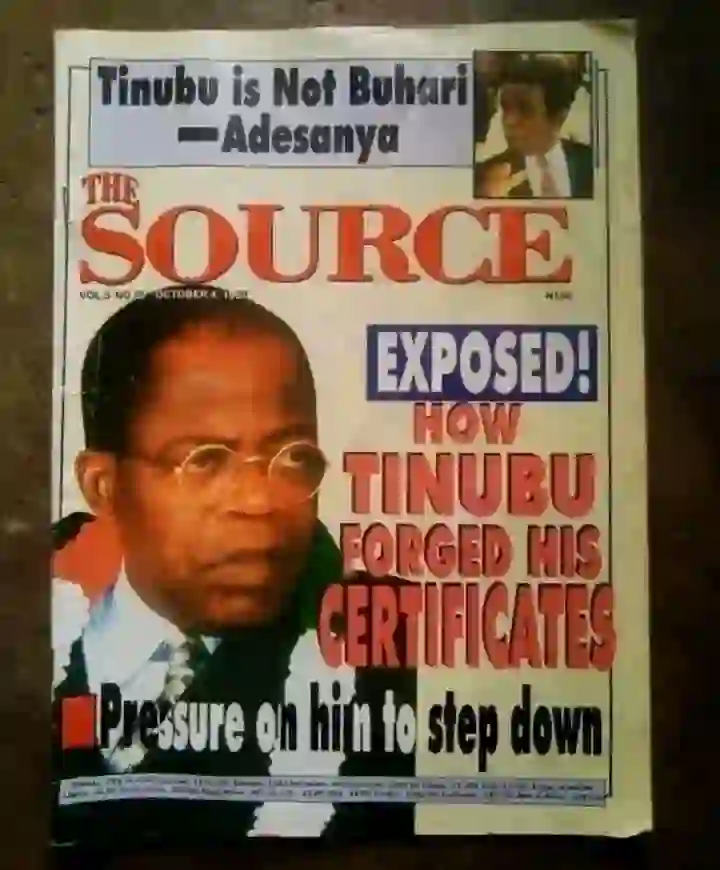
In 2006, Nigeria witnessed a defining anti-corruption moment when the then Chairman of the Economic and Financial Crimes Commission, Nuhu Ribadu, appeared before the Senate and named several sitting governors in what was widely reported as a list of the country’s most corruption-tainted leaders.
The names he mentioned at the time included prominent political figures such as Orji Uzor Kalu, Bola Ahmed Tinubu, Ahmed Sani Yerima, Godswill Akpabio, George Akume, and Chimaroke Nnamani.
At the time, the allegations sparked intense public debate, raised expectations of accountability, and reinforced the EFCC’s image as a fearless anti-corruption body.
Twenty years later, the political landscape tells a striking story.
Many of those once publicly accused have not only remained relevant but have risen to occupy some of the highest offices in the land:
Orji Uzor Kalu is now a Senator.
Bola Ahmed Tinubu serves as Nigeria’s President.
Ahmed Sani Yerima remains a political force and former Senator.
George Akume now holds the influential office of Secretary to the Government of the Federation (SGF).
Godswill Akpabio presides as Senate President.
Chimaroke Nnamani has also served in the Senate.
Perhaps even more symbolic is the trajectory of Nuhu Ribadu himself, who today serves as Nigeria’s National Security Adviser under President Tinubu.
This evolution has reignited conversations about Nigeria’s political system, accountability mechanisms, and the durability of elite networks. Critics argue that it reflects a pattern where allegations rarely translate into lasting political consequences, while supporters of the individuals involved often point to the absence of definitive convictions in many cases as justification for their continued rise.
The development also underscores a broader national debate: whether Nigeria’s democratic institutions have strengthened or weakened in enforcing accountability over the past two decades.
For many young Nigerians, the situation feeds into a recurring sentiment about delayed generational transition in leadership. The phrase “leaders of tomorrow” continues to echo, even as familiar names dominate the political space decades later.
The 2006 EFCC moment remains one of Nigeria’s most referenced anti-corruption episodes. But twenty years on, its long-term impact appears complex—raising enduring questions about justice, political resilience, and the nature of power in Africa’s most populous nation.