Germany is poised to inject an additional €10 billion (£8.5 billion) into its civil defence capabilities, a move designed to bolster domestic preparedness against emergencies and potential attacks.
This significant investment comes as part of a broader military spending drive, initiated in response to Russia’s full-scale invasion of Ukraine in 2022.
Cabinet ministers are scheduled to vote on specific measures this Wednesday, which were initially earmarked last year.
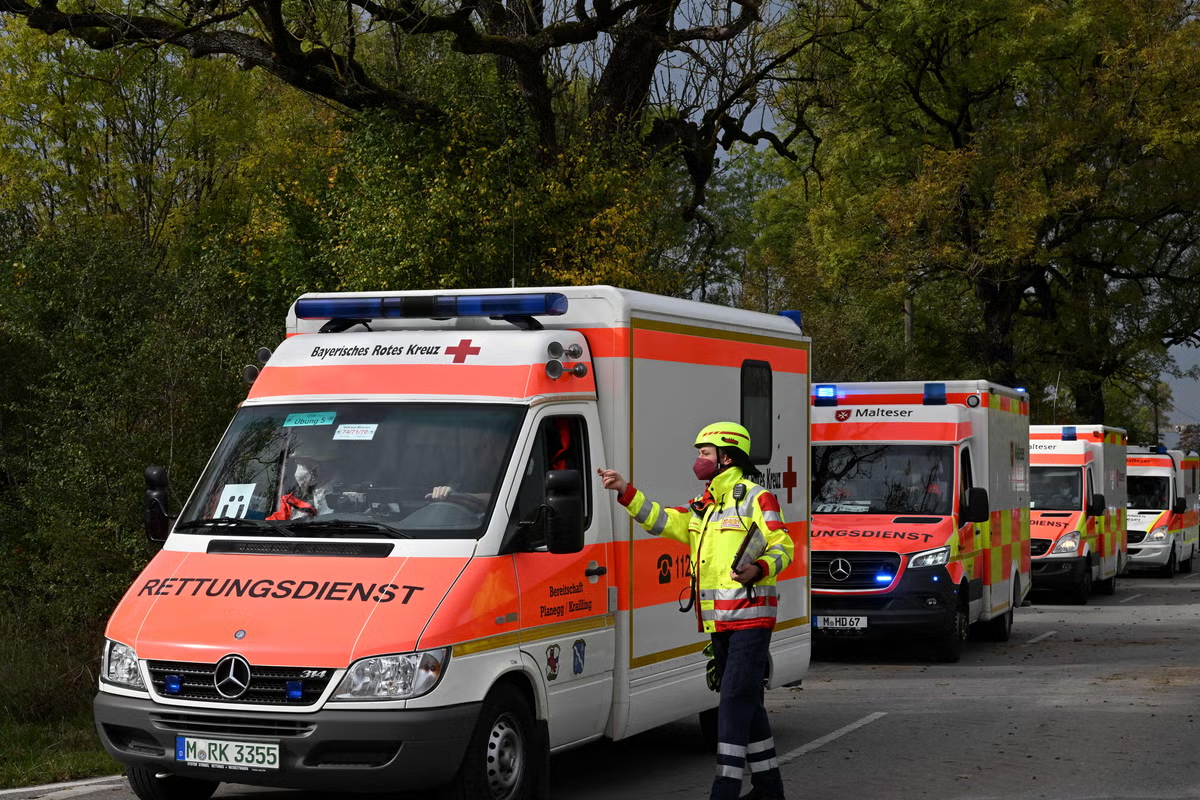
The comprehensive plan includes an upgraded medical infrastructure to manage mass casualties, approximately 1,000 specialised vehicles, 110,000 portable cots, alongside improvements to shelters and mass alerting networks.
These funds, committed until 2029, will benefit from a rule passed last year that exempts military spending from Germany’s stringent state borrowing limits.
Defence Minister Boris Pistorius stressed the necessity of this dual approach on Monday, stating: “We cannot talk about defence capabilities and invest in them without also giving civil defence the support it needs.”
Interior Minister Alexander Dobrindt had previously confirmed the €10 billion allocation for civil defence in an interview with Bild newspaper published on Sunday.
Germany is also responding to threats of extremism and so-called hybrid warfare, which might include attacks on the electricity grid and disinformation campaigns.
After Russia’s full-scale invasion of Ukraine in 2022, the German government moved to upgrade its public shelter system. Germany has 579 shelters for around 480,000 people, many of which have not been in use since the Cold War.
Meanwhile, Germany’s armed forces will support Turkey’s air defence capacities within NATO by deploying a Patriot air and missile defence task force to the country from the end of next month, the defence ministry said.
The Bundeswehr deployment, currently planned until September 2026, includes one Patriot battery and around 150 German soldiers, who are set to relieve a US unit, the statement said.
“Germany is taking on more responsibility within NATO,” Defence Minister Boris Pistorius said. “The fact that our soldiers are coordinating very closely with our Turkish and U.S. partners demonstrates just how reliably our cooperation with our allies works,” he added.