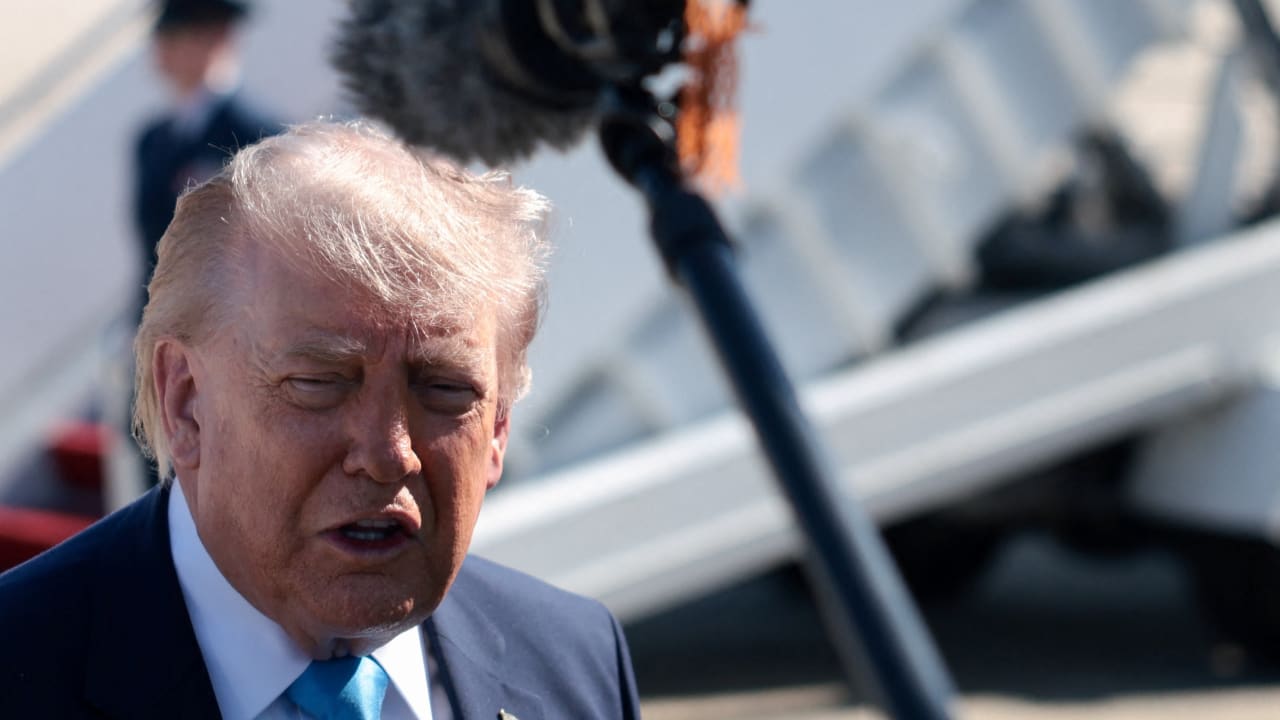
US President Donald Trump said he would speak to Taiwan’s President Lai Ching-te, an unprecedented departure from diplomatic norms.
In Thursday comments to reporters at Joint Base Andrews in Maryland, Trump said he would “work on that Taiwan problem.”
“I speak to everybody. We have that situation very well in hand,” he said, adding, “I’ll speak to him.”
Later, Taiwanese President Lai Ching-te would be happy to speak with Trump, Taiwan’s foreign ministry said on Thursday.
“In addition to being committed to maintaining the stable status quo in the Taiwan Strait, President Lai is also happy to discuss these matters with President Trump,” the ministry added, without elaborating.
Trump says he will call Taiwan’s Lai
At this time, it’s unclear if the US administration has moved forward with plans for a call between the two leaders.
Trump’s comments come after he visited China last week. During the state visit, Chinese President Xi Jinping warned Trump directly that Taiwan would be a “very dangerous situation” if not handled correctly, and urged him to handle it with “extreme caution.”
Notably, China has repeatedly laid claim to Taiwan and has pressed to “reunify” the island with mainland China.
The US acknowledges China’s claims that Taiwan is part of China, but never officially recognized the Chinese Communist Party’s claims to the island.
During the meeting, Trump and Xi discussed a $14 billion arms sales deal for Taiwan, which the US Congress approved earlier this year.
The United States is bound by the 1979 Taiwan Relations Act to provide Taiwan with the means to defend itself, despite a lack of formal diplomatic ties. The two maintain robust informal ties, however.
Additionally, CNN reported that a 1982 reassurance states that the US does not consult with Beijing on arms sales.
On Thursday, a spokesperson for China’s foreign ministry said the government’s opposition to US arms sales and official exchanges between the United States and Taiwan remained consistent, clear, and firm.
China urged the United States to “handle the Taiwan issue with extreme caution and stop sending wrong signals to the separatist forces of Taiwan independence,” a spokesperson told reporters.
Taiwan’s government rejects Beijing’s sovereignty claims.