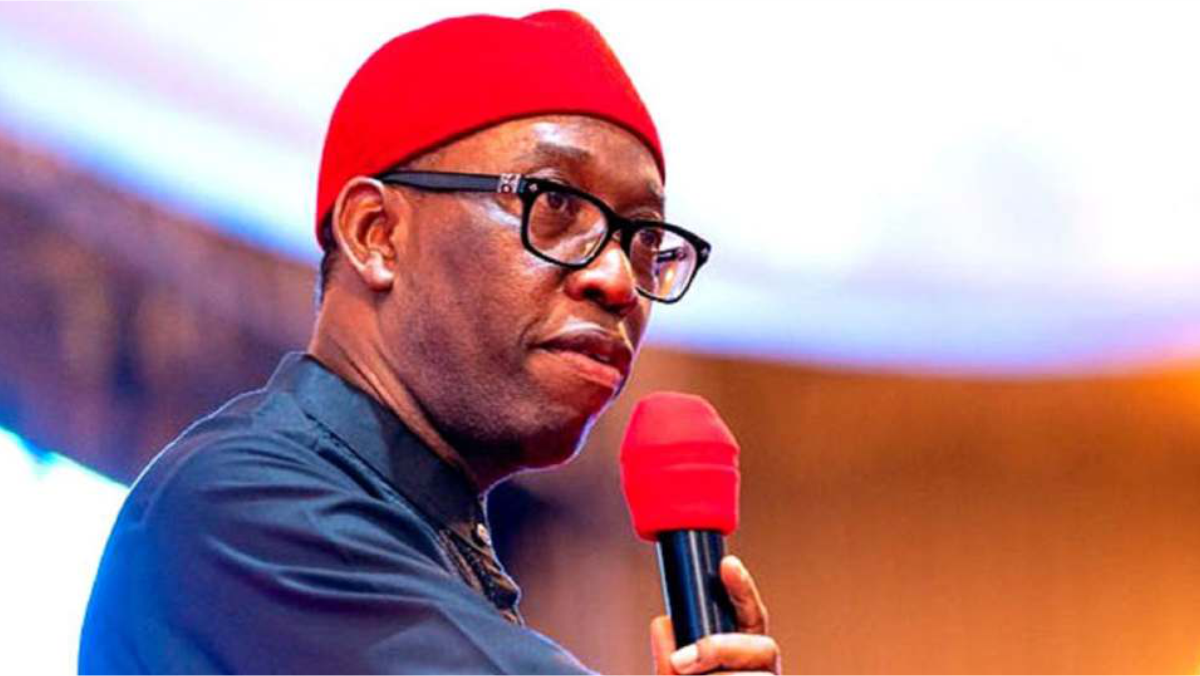
Ms Olalere speaks about the vision behind the project, the role of private investors in sports development, the challenges facing gymnastics in Nigeria and other issues
As Nigeria continues to grapple with inadequate sports infrastructure and poor athlete welfare systems, business executive and sports administrator Omowumi Olalere believes the newly launched Olympic City Project could mark a turning point for the country’s sporting future.
Ms Olalere, the chief executive officer of Numero Global Resources Ltd and a board member of the Gymnastics Federation of Nigeria, is serving as the lead projects coordinator of the ambitious mixed-use development being driven in partnership with the Nigeria Olympic Committee (NOC).
In this interview with PREMIUM TIMES, she speaks about the vision behind the project, the role of private investors in sports development, the challenges facing gymnastics in Nigeria, and why more women and young professionals must actively participate in sports administration.
Ms Olalere: The Olympic City Project is a flagship initiative recently launched on land allocated to the Nigeria Olympic Committee (NOC) about 30 years ago for sports development and related activities. Recently, the NOC, in partnership with OlympAfrica, decided to put facilities in place for community use, including tennis courts, a football pitch and volleyball courts.
The remaining part of the land is being developed into a residential project, making it a mixed-use development. We are constructing two-bedroom, three-bedroom and four-bedroom apartments on about four hectares of land, which represents roughly 40 per cent of the entire Olympic City project in Lagos.
What excites us about this project is that it combines sports infrastructure with residential development. It addresses housing deficits in Lagos while also creating a lifestyle environment where sports and community living coexist. It is one of the first projects of its kind in Nigeria.
Ms Olalere: I have been involved in sports for a long time because I genuinely love sports. Back in the days of street soccer initiatives, I partnered with some of the promoters. I have also supported para table tennis competitions over the years as a sponsor.
As a former South-west chairman in gymnastics, I hosted the first chairmen’s gymnastics competition. Presently, I am also involved with the Gymnastics Federation of Nigeria and am interested in contributing more to the development of the sport.
My passion for gymnastics became stronger because my children participate in gymnastics at school. Through that exposure, I realised the sport is suffering in Nigeria despite the enormous talent available. We have many gifted young athletes who remain undiscovered because there are not enough structures and support systems in place.
I believe gymnastics in Nigeria has the potential to achieve global recognition if the right resources and leadership are provided.
Ms Olalere: The development of gymnastics in Nigeria must be holistic. We have children who are interested in the sport, but we do not have enough coaches, judges and technical personnel to support them.
The first thing we need to do is build capacity. We can engage physical education teachers in schools and expose them to Fédération Internationale de Gymnastique (FIG) training programmes and certifications. Many of them already understand the basics, so converting them into professional gymnastics coaches would not be difficult.
There is also a misconception that gymnastics is not popular in Nigeria. That is not true. Many private schools already teach gymnastics. If we approached schools today and asked for the number of students participating in gymnastics, the figures would be impressive.
That means the foundation already exists. We’re missing structure, continuity, and professional development pathways to help those children become elite athletes.
Ms Olalere: The impact will be significant. One of the biggest challenges Nigerian athletes face is the lack of stable, purpose-built training and accommodation facilities. Before competitions, athletes are often camped in hotels or temporary venues.
With the Olympic City Project, there will be a dedicated environment that combines accommodation and sports infrastructure. That consistency is very important for athlete preparation and performance.
This is where private partnerships become very important. The NOC cannot shoulder the burden alone. Real estate development requires huge capital investment, so private companies like ours are partnering with the committee to make it happen.
Part of the project will be reserved for athlete accommodation, while the remainder will be sold commercially to help offset costs and address housing demand in Lagos. It is a partnership model that benefits both sports development and investors.
Ms Olalere: Yes, we are targeting completion within 24 months. We have already moved to the site and commenced preliminary activities.
Our goal is to ensure all contractors and necessary structures are in place quickly so we can work efficiently and deliver on schedule.
Ms Olalere: The major challenge is the road network leading to the site. The Alakoso Road and the road leading into Olympic City are currently in poor condition.
That affects the movement of construction materials and even inspections by prospective stakeholders. As we approach the rainy season, it becomes even more difficult.
Aside from that, the project itself is within our area of expertise, so we understand how to navigate the technical aspects. We would appreciate government intervention regarding the road infrastructure because it would significantly improve access to the site.
Ms Olalere: Absolutely. If any federation approaches us for similar collaborations in sports-related real estate development, we are open to it.
Real estate is my area of speciality, and I have handled several projects over the years. Sports infrastructure is an area Nigeria still needs to improve greatly, so partnerships between private developers and sports institutions are important.
For this particular project, some people initially doubted whether I could handle it, but this is what I have been doing professionally for years. Once I commit myself to a project, I ensure it is delivered.
Ms Olalere: I believe it comes down to administration and structure. I don’t run a single business, so I have learned that you cannot do everything alone.
The purpose of building a business is not to work in isolation. It is to create opportunities for other people to grow with you. Once structures are in place and you have competent managers and teams, it becomes easier to oversee multiple responsibilities.
Of course, managing people can be difficult, especially when you have the wrong personnel, but understanding human relationships, professionalism and leadership helps a lot.
Sports administration itself is also very complex. It is intellectually demanding. You must understand people, politics, strategy and relationships. It is not an environment for weak-minded individuals because you constantly have to think ahead and navigate difficult situations.