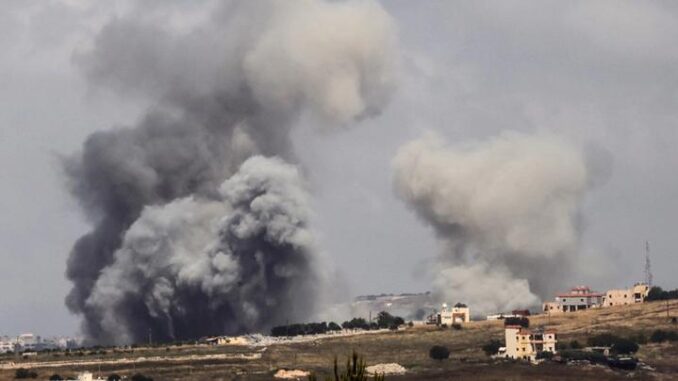
According to a report by Kyiv Post on Saturday, May 30, 2026, an Iranian ballistic missile strike targeted a major United States military installation in Kuwait on Saturday, injuring several personnel and causing significant damage to military equipment.
Intelligence and military sources cited in the report said Iran launched a Fateh-110 short-range ballistic missile toward Ali Al Salem Air Base, a key US military facility in Kuwait. The Fateh-110 is a solid-fuel missile capable of carrying a high-explosive warhead weighing about 500 kilograms.
Kuwaiti air defence systems reportedly intercepted the missile before it reached its intended target. However, the destruction of the projectile in mid-air caused debris to fall onto sections of the military base.
The resulting debris field injured approximately five individuals, including US service members and civilian contractors working with the American military. Officials said the injuries were minor and those affected are receiving medical treatment.
Although casualties were limited, the falling missile fragments reportedly caused substantial damage to military assets stationed at the base.
One MQ-9 Reaper unmanned aerial vehicle was reportedly destroyed after being struck by debris, while a second aircraft sustained extensive structural and electronic damage from shrapnel.
Bloomberg noted that each MQ-9 Reaper drone is valued at roughly $30 million, placing the estimated damage from the incident at approximately $60 million.
The report added that the latest launch brings the estimated number of Iranian ballistic missiles fired at regional targets since the outbreak of hostilities in late February to more than 1,850.
The attack comes amid ongoing diplomatic efforts aimed at ending the conflict.
Just one day earlier, US President Donald Trump had provided an update on negotiations being conducted through regional intermediaries to secure a broader peace agreement. According to the framework under discussion, a 60-day extension of a ceasefire established on April 7 would provide additional time to address regional security concerns, including maritime navigation and nuclear-related issues.
The conflict, which reportedly began on February 28, has had significant implications for global energy markets, particularly following disruptions to maritime traffic through a key oil transit route.
Among the reported provisions of the proposed agreement are measures for clearing naval mines and addressing nuclear materials located at damaged underground facilities, alongside a phased easing of certain US restrictions.
Prior to the latest strike, US defence officials speaking at the Shangri-La Dialogue in Singapore stressed that Washington remained prepared to respond militarily if diplomatic efforts collapsed…See More