Israel has escalated its attacks in Gaza in the five weeks since halting its joint bombing with the US in Iran, redirecting its fire back on the ruined Palestinian enclave where the military believes Hamas fighters are tightening their grip.
According to the Gaza Health Ministry, 120 Palestinians, including eight women and 13 children, were killed in Gaza since the Iran war was paused on April 8, 20% more than in the five weeks prior, when Israel was flying sorties over Iran.
Conflict monitor ACLED, which tracks Israeli attacks in Gaza, said in a monthly report for April that Israel had carried out 35% more attacks last month than in March.
The increase in Israeli strikes on Gaza is a further sign of stalled progress under US President Donald Trump’s plan to halt the war there and begin reconstruction.
“The war is still ongoing,” said Lafi Al-Najjar, 36, a blind Palestinian, one of whose sons was killed on April 28 in an Israeli attack.
“It stopped in the announcement, but in reality and on the ground, the war has not stopped,” said Najjar, whose family has been living in a tented camp in the ruins of Khan Younis, once Gaza’s second-largest city.
The Israeli military did not immediately provide a comment on the reasons for its stepped-up strikes in Gaza. But four Israeli defence officials have told Reuters that the military had warned Prime Minister Benjamin Netanyahu’s government in recent weeks that Hamas has been tightening its grip, rebuilding its forces and making weapons.
Story continues below this ad
Another Israeli military official, speaking on condition of anonymity, said the Gaza ceasefire allows for Israel to act against imminent threats. The official said the military was prepared for any scenario, including having drawn up wider battle plans for a resumption of fighting in Gaza, though no such order had yet been given.
FALTERING STEPS TOWARDS PEACE
The agreement reached last October halted major fighting in Gaza after two years of war between Israel and Hamas. But steps have faltered to reach a permanent settlement that would withdraw Israeli troops, disarm the militants, and allow the ruined enclave to be rebuilt.
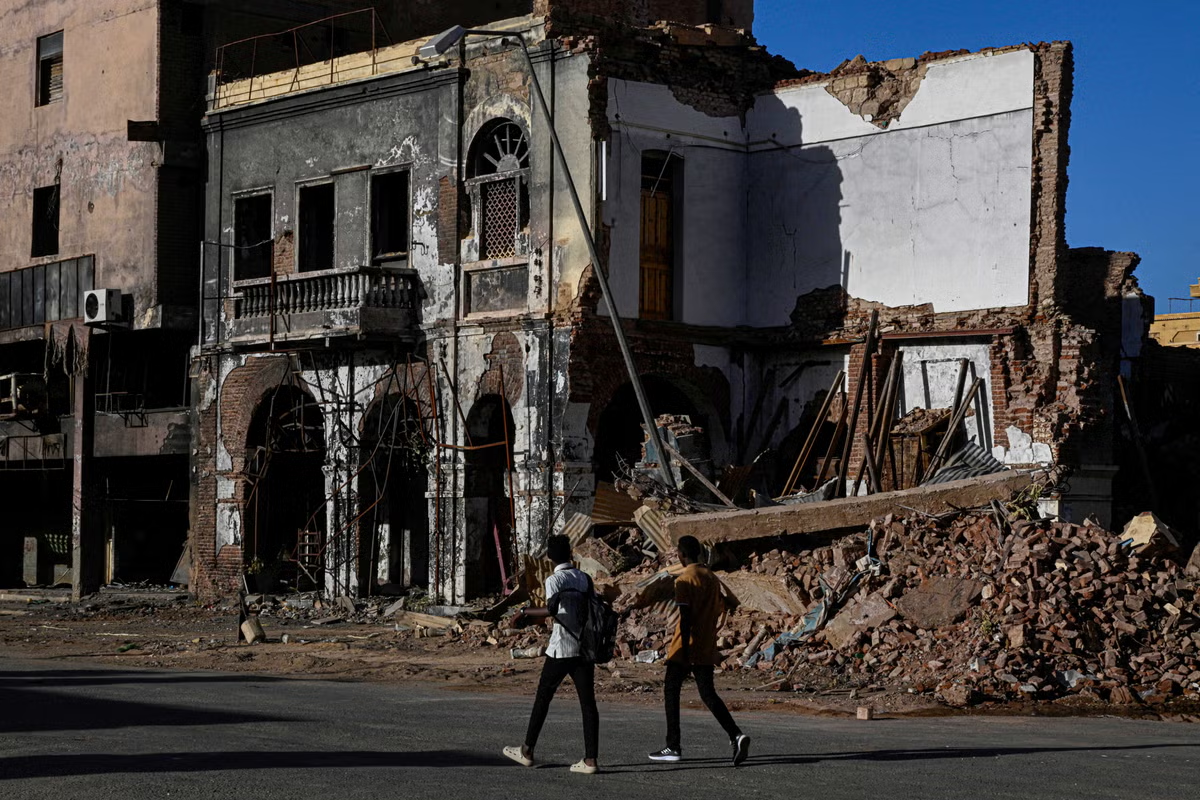
Israeli forces still occupy more than half of Gaza’s territory, where they have demolished most remaining buildings and ordered all residents out.
Story continues below this ad
More than 2 million people now live in a tiny strip of territory along the coast, mainly in damaged structures or makeshift tents, where Hamas fighters have de facto control.
Some 850 Palestinians have been killed in Israeli strikes since the October ceasefire, according to figures that do not distinguish between combatants and civilians. Four Israeli soldiers were killed by militants during the same period. Hamas does not disclose figures for casualties among its fighters.
Since the pause in the war in Iran, several of Israel’s strikes in Gaza have targeted positions held by the Hamas-run police force. At least 14 police officers have been killed since April 14, health and police officials said.
Nasser Khdour, a researcher with ACLED, said that over roughly 30 separate incidents in April, Israel carried out attacks targeting Hamas, other militant groups, police personnel and police stations, and security checkpoints.
Story continues below this ad
Most of those attacks took place in areas under Hamas control, “while shelling, drone strikes, and gunfire continued to take place near the (armistice line), targeting militants and civilians, including women and children, approaching soldiers,” Khdour said.
Since Israel joined the United States in bombing Iran in March, its military has operated at a relentless pace, also launching a ground invasion and air campaign in Lebanon against the Iran-aligned Hezbollah movement. Fighting there has slowed but not halted under a separate US-brokered ceasefire.