The value of exports rose 14.8% in April from a year earlier, while the value of imports gained 9.7%.
Exports remained robust, supported by strong demand for artificial intelligence-related products. Chip exports were up 44%. By country, exports to Europe climbed 26.9%, China advanced 15.5% and those to the US rose 9.5%.
The impact of the war in Iran has been particularly acute in Asian nations like Japan, which is heavily reliant on imported oil from the Middle East. With the Strait of Hormuz — a key route for crude oil shipments — effectively closed, global energy prices and inflation have surged.
Japan brought in less energy as a result, with the volume of crude imports down 64% in April, according to the report. The value of the inbound energy shipments fell by 50%.
Also Read: Anthropic nears first quarterly profit, agrees to pay SpaceX $1.25 billion monthly for computing power
The surplus suggests trade may continue to support the economy after contributing to better-than-expected growth at the start of the year, according to data released Tuesday. The solid expansion gives policymakers scope to argue that the economy is resilient enough to withstand higher borrowing costs. The Bank of Japan’s next policy decision is on June 16, with markets projecting a roughly 81% chance of a hike, according to pricing in the overnight swaps market.
“It’s still hard to fully gauge how much of the Middle East impact is feeding through to the economy in the April data, so I don’t think today’s data necessarily gives policymakers much reassurance,” said Takayasu Kudo, senior Japan economist at Bank of America Securities Japan. “Concerns over downside risks to growth are unlikely to fade, at least through June.”
Japan is not facing an immediate oil shortage, saying it can secure sufficient crude supplies this year by tapping alternative sources outside the strait and drawing on its reserves. Still, there have been disruptions to the distribution of oil-related products.
Earlier this week, Prime Minister Sanae Takaichi said she ordered a supplementary budget to cushion the impact on consumers, adding that she’s planning to reinstate energy subsidies in the coming months. In her meeting with South Korean President Lee Jae Myung the next day, the two leaders vowed to boost cooperation on energy.
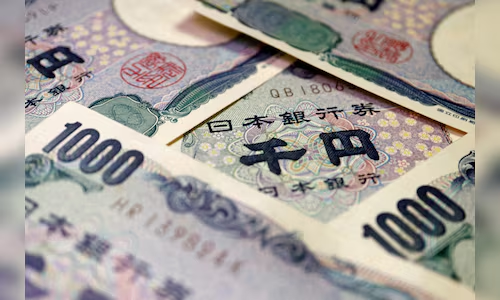
The war in Iran is pressuring bond yields around the world, with Japan leading the selloff. It’s also put additional stress on the yen, prompting intervention by the government in April and a willingness to continue to support the currency as needed, Finance Minister Satsuki Katayama said this week.