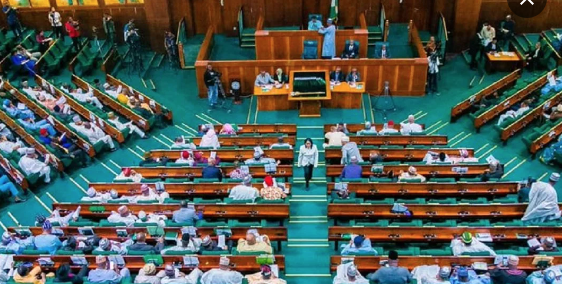
With the re-amendment, the first assignment of senators-elect on inauguration day will be the election of the senate president and the deputy senate president.
The Senate on Thursday rescinded its earlier amendment to the Standing Rules, which mandated that senators-elect must take their oath of office before electing presiding officers on inauguration day.
The upper chamber subsequently re-amended the provision to restore the previous practice, allowing senators-elect to elect the senate president and deputy senate president before taking their oath of office.
The decision means that the first assignment of senators-elect on inauguration day will be the election of the senate president and deputy senate president. The election will be supervised by the Clerk to the National Assembly (CNA). Thereafter, the winner of the election will preside over the administration of the oath of office to other senators.
The decision followed a motion moved during plenary by the Senate Leader, Opeyemi Bamidele.
Mr Bamidele explained that the re-amendment became necessary to avoid constitutional inconsistencies and unintended conflicts with Section 52 of the Constitution.
He added that the decision was in line with the Constitution, established parliamentary conventions, and legislative practice, noting that the Senate has the authority to revisit previously taken decisions in order to preserve the integrity of its legislative framework.
The motion was seconded by Enyinnaya Abaribe before the Deputy Senate President, Barau Jibrin, who presided over the plenary, put it to a voice vote. The majority of senators supported the motion.
In the parliamentary system, a legislative cycle ends before the proclamation of a new assembly, usually by the president of the country. Upon proclamation, lawmakers who are still senators-elect are invited for inauguration into a new legislative session.
At the inauguration, senators-elect will elect the senate president and deputy senate president, who subsequently lead the assembly for that legislative cycle. In Nigeria’s order of precedence, the senate president is regarded as the country’s number three citizen, while the deputy senate president also occupies a high-ranking position.
The procedure for conducting the election was part of the amendments adopted by the Senate on Tuesday. However, greater attention was focused on another provision requiring that only senators who had served at least eight years, equivalent to two consecutive terms, would be eligible to contest for the positions of senate president and deputy senate president. Although, the clause still holds.
Edo North Senator, Adams Oshiomhole, was the only senator who publicly opposed the amendment. He had a heated argument with the Senate President, Godswill Akpabio, during Wednesday’s plenary over the amendment.
At Thursday’s plenary, after the senate leader raised the need for the re-amendment, Mr Oshiomhole reiterated his opposition to the earlier amendment.
He argued that the error resulted from lawmakers pursuing personal interests.
“I believe the average age in this Senate must be over 40 and so we don’t have excuse for youthful exuberant. So, when we’re making a law, we should accommodate divergent views. That way what one person forgot the other person will remember. The way we rush the rules because certain people wanted certain things concluded is what led to this error. Next time we should allow debate,” he said.
More details here...