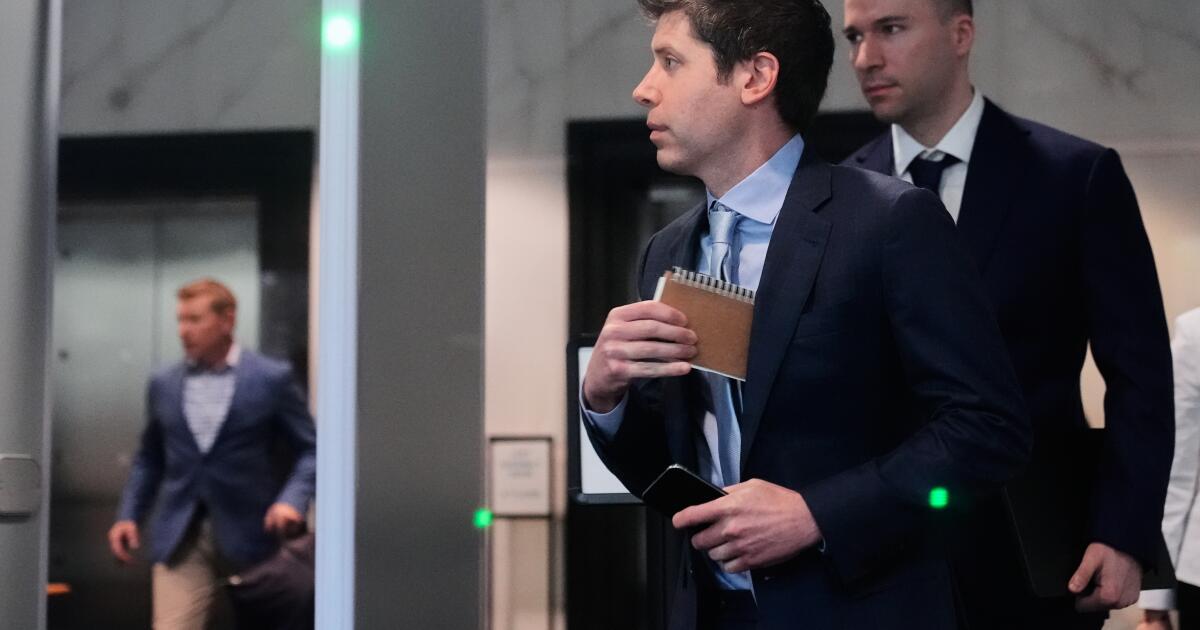
A federal jury has sided with OpenAI and its top executives Monday in a feud with Elon Musk, who accused them of betraying a shared vision for it to guide artificial intelligence’s development as a nonprofit.
The nine-person jury unanimously found that Musk waited too long to file his lawsuit and missed the deadline for the statute of limitations.
Musk, the world’s richest man, was a co-founder of OpenAI, the company that launched in 2015 and went on to create ChatGPT. After investing $38 million in its first years, Musk accused OpenAI CEO Sam Altman and his top deputy of shifting into a moneymaking mode behind his back.
The jury served in an advisory role, but Judge Yvonne Gonzalez Rogers accepted the verdict Monday as the court’s own and dismissed Musk’s claims.
The trial that began April 27 in Oakland, California, shed light on the bitter falling-out between the two Silicon Valley titans and the beginnings of OpenAI, now a company valued at $852 billion and moving toward potentially one of the largest initial public offerings in history.
The high-profile high-stakes showdown between two of the most powerful companies and leaders in technology was billed as a battle that could change the trajectory of AI.
There were two weeks of testimony from the dueling entrepreneurs and other key players in OpenAI’s history, providing a rare inside glimpse into the company, which evolved from a startup to one of the world’s most powerful and valuable AI companies.
Musk had fallen out with his fellow co-founders, then, after OpenAI became arguably the most important company in AI, he decided he was not happy with how the trailblazer was managed after he left.
Musk claimed Altman, the startup’s chief executive officer, and OpenAI President Greg Brockman “stole a charity” by exploiting his early support for an altruistic research project so that they could later get rich by turning into a regular for-profit company.
OpenAI and its leaders said Musk was suing them to gain a competitive advantage for his own startup, xAI.
Musk was seeking more than $100 billion in damages — to be awarded to OpenAI’s nonprofit arm instead of to himself — as well as the removal of Altman and Brockman.
The case was seen as an existential threat to OpenAI. A shakeup that could destabilize as the company tries to ensure the U.S. takes the lead in AI and prepares for a public offering with a valuation approaching $1 trillion.
Associated Press and Bloomberg contributed to this article.