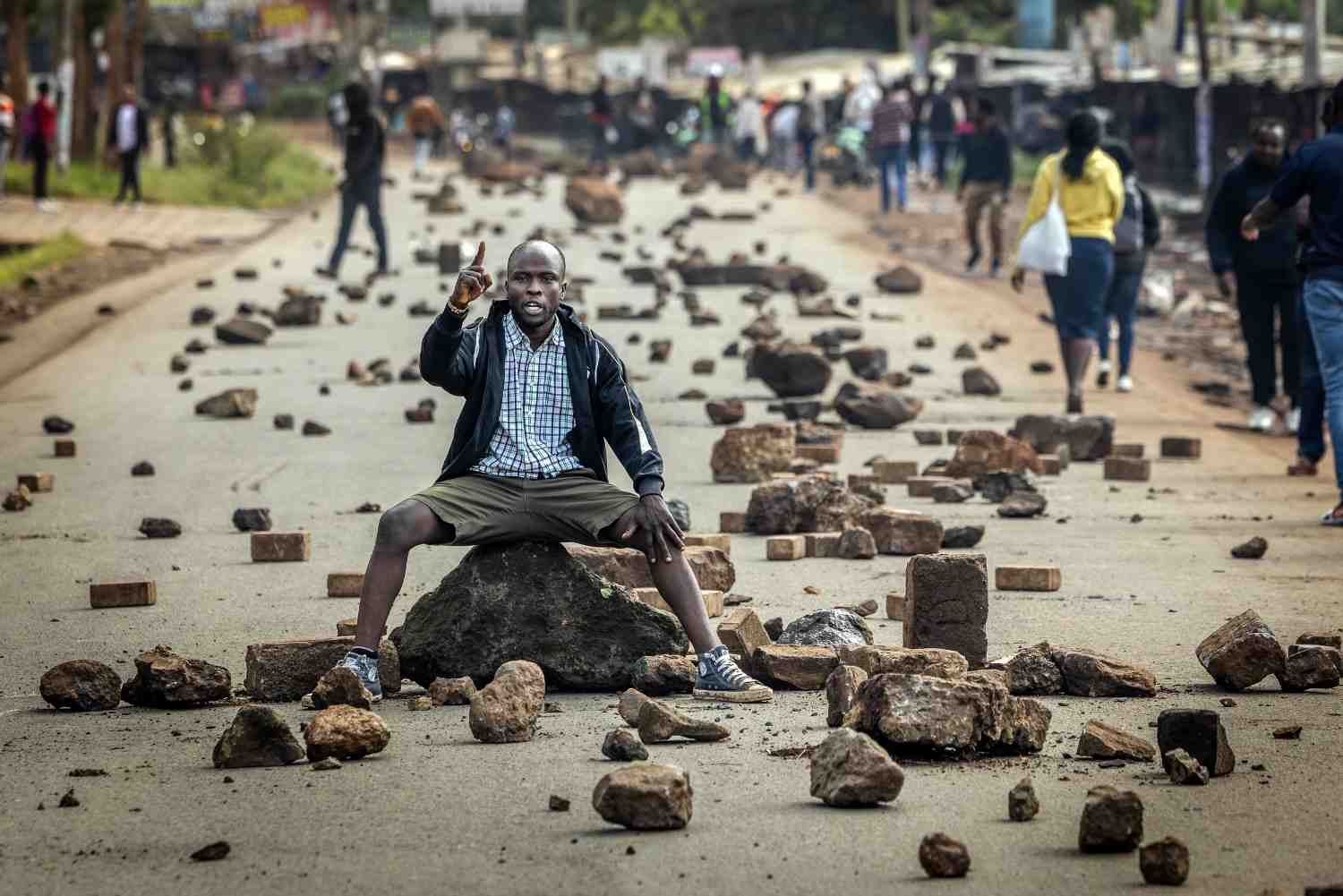
A Kenyan transport strike triggered by rising fuel prices from to the Middle East war was paused on Tuesday after causing four deaths and major economic disruption, raising concerns about potential wider unrest across Africa.
One of many African countries dependent on fuel imports from the Gulf, Kenya has hiked petrol prices by 20 percent and diesel by almost 40 percent since Iran choked off traffic through the Strait of Hormuz, through which a fifth of the world’s oil normally passes.
The transport sector, especially operators of the “matatu” buses that provide most public transport in Kenya, called the strike on Monday after another steep price rise last week.
READ ALSO: Trump Holds Off Attack On Iran After Intervention By Gulf Leaders

“The strike that is going on is suspended for a period of one week to provide an avenue for consultations and negotiations between the government and stakeholders,” interior minister Kipchumba Murkomen told reporters on Tuesday.
Albert Karakacha, the president of Matatu Owners Association, confirmed the suspension — although other representatives warned they would protest again if the negotiations were not serious.
Earlier in the day, while the strike was still on, Cornelius Chepsoi, chairman of the Rig Owners Association, told AFP they would not be satisfied by a political move “lowering the price of diesel by a very tiny margin”.
Analysts warned that soaring oil prices could be sign of more protests across the continent.
Last week, rising fuel prices sparked protests in Comoros, paralysing the Indian Ocean nation, where one person was confirmed dead.

“We think the unrest in Kenya is an early indicator of what could unfold elsewhere across the continent if elevated oil prices persist,” warned political analyst Jervin Naidoo.
“As the conflict in the Middle East enters its third month, the risk of further supply disruptions and sustained price increases remains high.”
In Nairobi’s nearly empty central business district, Faith, a nurse who declined to give her surname, said she spent 24 hours at Poplar Hospital as she was unable to get home.
“I did not expect this… It’s really affecting patient care, big time,” she said, adding that despite the transport shutdown she still supported the strike “because the fuel prices don’t make sense”.
Schools and embassies in the capital Nairobi were also closed.
‘They’re scared’

The government said four people were killed and more than 30 injured nationwide on Monday, while police confirmed on Tuesday that over 700 people had been arrested during the violent protests.
Rights groups denounced lethal violence by police, with Amnesty International urging “maximum restraint”.
Motorbike taxi driver Fred Makarani, 59, told AFP he did not support the strike, saying he had had no customers for two days, and called for a return to work.
“They’re scared of goons,” he said, referring to people paid to violently disrupt political events and protests.

Kenya’s vital trade corridor was also disrupted, with local media reporting that truckers had refused to drive over fears their vehicles would be attacked and torched by demonstrators.
The government’s treasury and economic planning minister, John Mbadi, said the strike was “completely uncalled for”.
“This is a war that we have not caused,” he told the NTV broadcaster on Monday.
Critics argue Kenya has high taxes on fuel that could be reduced, although it is also reliant on them to service mountains of debt and a strained budget.
A day of protests, such as Monday’s, can cost Kenya’s economy around 50 billion shillings ($390 million) a day, economist XN Iraki told AFP.

“This is a massive headache for the government. Fuel taxes are easy to collect and heavily anchor public spending,” economist Kwame Owino posted on X.
The energy regulator said last week that the government had spent $38.5 million to cushion consumers from rising diesel and kerosene prices.
Last month, Kenyan authorities also suspended fuel quality standards to maintain supply in the face of shortages.
While Kenya is among East Africa’s most dynamic economies, around a third of its 50 million citizens still live in poverty, and unemployment remains high.