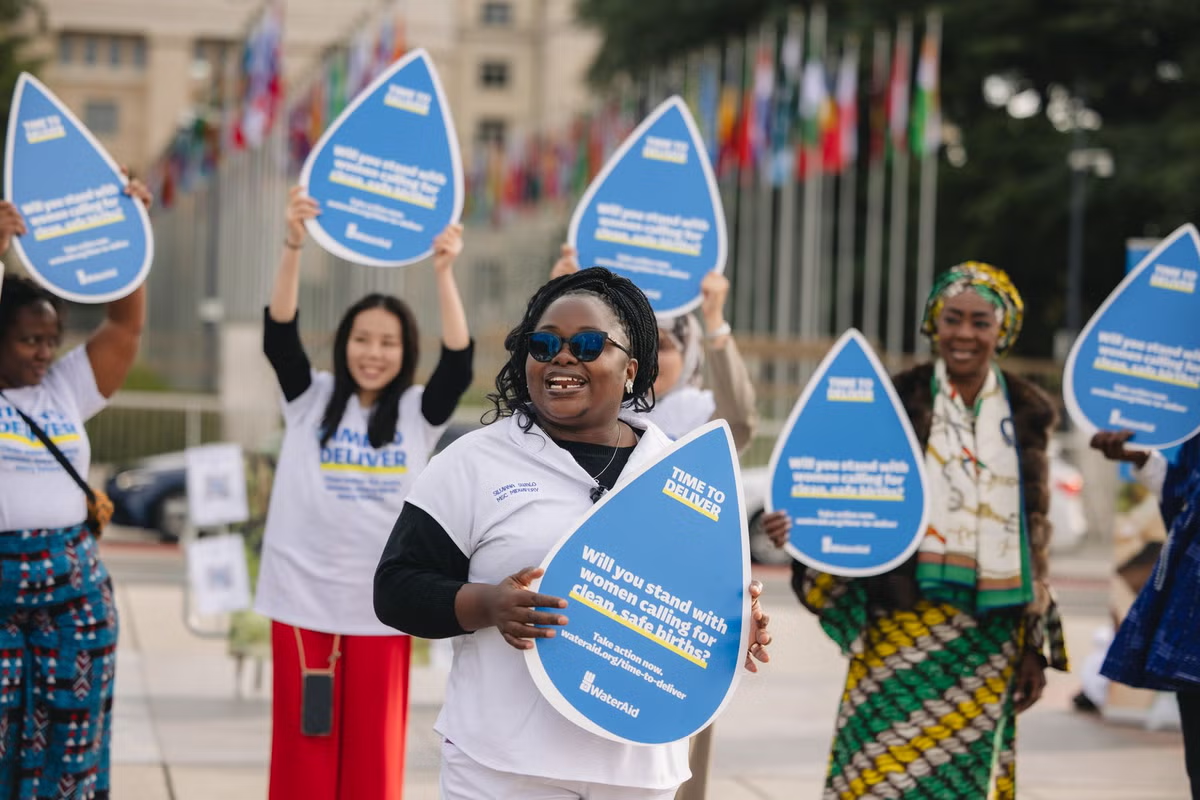
Midwifes, health works and mothers from across Africa and the UK have held a protest outside the World Health Assembly in Geneva to end the scandal of women giving birth in dangerous clinics and maternity wards without clean water.
Frontline health workers and mothers from Tanzania, Nigeria, Morocco, Ghana and the UK beat drums, waved blue fabric and held placards calling on world leaders to take action.
Silviana Swallo, a midwife from Tanzania said: “I can’t speak about midwifery care without adequate water supply. Water is health for mothers, newborns and health care providers.” Her colleague Christina Mhando, WaterAid Tanzania’s head of policy, said: “The solutions exist, they’re simple and cheap. We just need them to listen and act.”
The protest was organised as part of WaterAid’s “Time to Deliver” campaign, which The Independent has worked on, that calls on world leaders to use the upcoming United Nations (UN) Water Conference in December to ensure that every health centre worldwide has clean water, decent sanitation and proper hygiene facilities.
WaterAid research says that a woman gives birth every two seconds without access to clean water, functional toilets, or basic hygiene. That’s more than 16 million women a year. One in five health facilities globally still lacks the basics, meaning midwives cannot wash their hands between patients or reliably sterilise equipment. In Malawi, 20-year-old Rose was told to bring her own razor blade to cut the umbilical cord, her own thread to tie it and her own bucket in case there was no water.
Global health representatives were also in attendance at the protest, including Margaret Montgomery, technical advisor at the World Health Organisation (WHO), members of Operation Smile Sweden and the International Student Surgical Network.
The protest also comes in the wake of the WHO declaring a public health emergency of international concern over an outbreak of Ebola in the Democratic Republic of Congo (DRC), with cases also spreading to Uganda.
WaterAid’s head of health and hygiene policy Helen Hamilton drew the line explicitly to Ebola: “As we know from previous outbreaks, clean water, decent toilets and proper handwashing facilities are essential to preventing the spread of this deadly disease.” Aid cuts, she added, have already weakened the disease surveillance networks that are supposed to catch outbreaks early. “At the same time, aid cuts have weakened disease surveillance and outbreak monitoring, making it harder to stop deadly diseases before they spread,” Ms Hamilton said.
“As health leaders gather in Geneva for the World Health Assembly this week, the message must be clear: we must ensure all healthcare facilities have clean water, decent toilets and the means for good hygiene – this investment will protect the lives of health workers, patients and communities everywhere,” she added.
To sign WaterAid’s Time to Deliver petition click here
This article has been produced as part of The Independent’s Rethinking Global Aid project