Nigeria’s aviation regulator says flight disruptions are inevitable but insists airlines must improve communication and passenger care to reduce frustration.
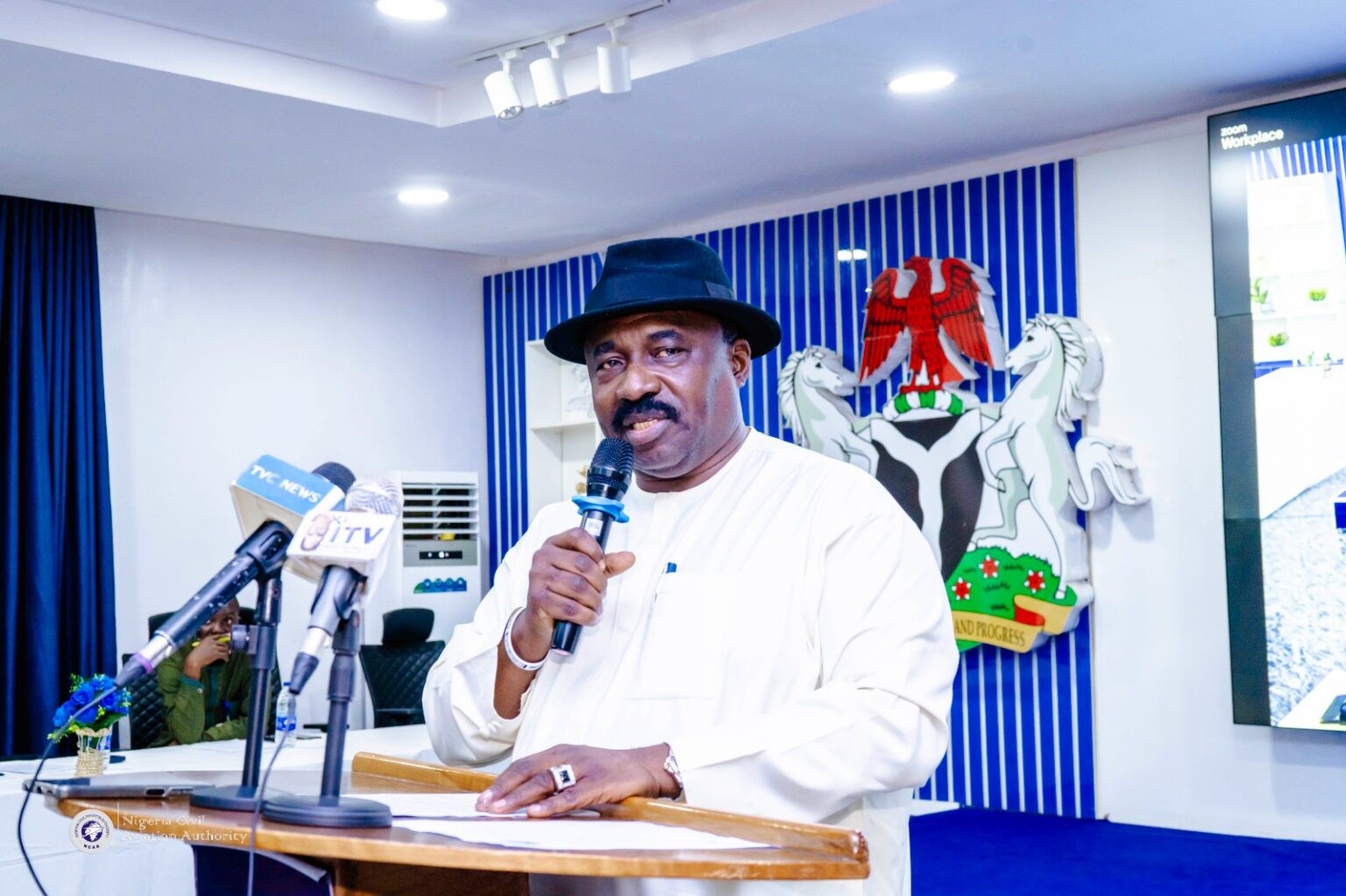
The Director-General of the Nigerian Civil Aviation Authority (NCAA), Chris Najomo, has said flight delays and cancellations will persist in Nigeria’s aviation sector, reflecting a global trend, but stressed that airlines must improve how they manage and communicate disruptions to passengers.
Mr Najomo disclosed this during an interview on Channels Television’s Sunrise programme on Saturday.
“As far as I am concerned… delays, cancellations will continue because it is the same that is done everywhere in the world,” he said.
His comments come amid growing frustration among Nigerian passengers over frequent delays, last-minute rescheduling and inadequate communication by some domestic airlines.
Mr Najomo acknowledged that while disruptions are common globally, the key issue in Nigeria is how airlines handle affected passengers.
“It is how these airlines communicate delays and cancellations to passengers that matters,” he added, noting that regulations require airlines to provide care and compensation depending on the duration of delays.
Under NCAA rules, passengers are entitled to refreshments after two hours of delay and refunds or alternative arrangements for longer disruptions.
He, however, pointed to gaps in communication, especially where passengers book through third-party agents.
“Some passengers don’t buy tickets directly… agents put their own numbers, so information doesn’t get to the passengers. They only find out at the airport,” he explained.
While acknowledging operational realities, the NCAA boss described extended delays as unacceptable.
“It’s not acceptable for a flight scheduled for 9 a.m. to depart in the evening. It’s outrageous,” he noted.
According to him, several factors contribute to disruptions, including weather conditions, technical faults, often referred to as Aircraft on Ground (AOG), and increasing bird-strike incidents.
“We have a lot of bird strike incidents,” he added, noting that the authority is working with the Federal Airports Authority of Nigeria to mitigate such risks.
Mr Najomo said the NCAA has intensified efforts to enforce compliance, including engaging airlines and sanctioning defaulters.
“If it is a continuous thing with the airline, that’s where sanctions will come. We have penalised some airlines… and it continues,” he said.
He added that the regulator is also expanding public awareness campaigns to educate passengers about their rights and responsibilities.
In Nigeria, recent incidents have intensified scrutiny of airline operations.
PREMIUM TIMES earlier reported widespread flight delays and cancellations, including a recent case involving Air Peace Limited, in which passengers were stranded at London’s Gatwick Airport. The airline later attributed the disruption to a bird strike, a recognised aviation safety risk that requires immediate inspection of the aircraft.
The incident, which drew public attention after passenger complaints, including from Nigerian celebrity Funke Akindele, highlighted recurring concerns about communication gaps and passenger welfare during disruptions.
While the NCAA insists it will continue to hold airlines accountable, Mr Najomo maintained that some level of disruption is inevitable in aviation.
“There is nowhere in the world that you don’t have delays and cancellations,” he said.
For many passengers, however, the concern is less about delays and more about how airlines respond, an issue regulators say remains a work in progress.