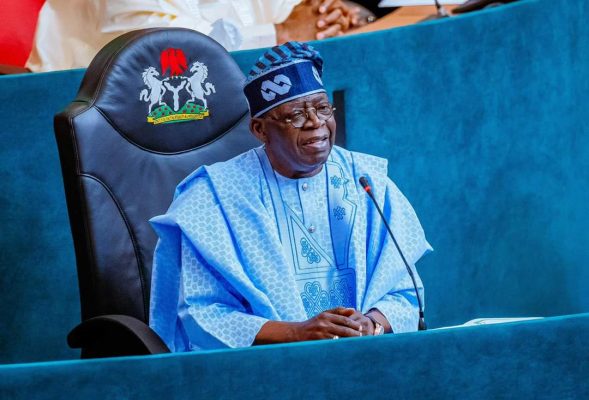
President Bola Ahmed Tinubu on Thursday declared that Nigeria is gradually recovering from years of economic instability, insecurity, and structural challenges, as he addressed the nation to mark the third anniversary of his administration.
In a nationwide statement, Tinubu defended key reforms introduced since taking office in 2023, including the removal of fuel subsidy and the unification of the foreign exchange market, describing them as “difficult but necessary decisions” needed to prevent fiscal collapse.
According to the President, Nigeria was spending up to ₦18.4 billion daily on petrol subsidy payments before his administration ended the regime, while multiple exchange-rate windows encouraged corruption and speculative practices that allegedly cost the country over ₦8 trillion within three years.
“The situation demanded urgent and courageous action,” Tinubu stated. “Together, we chose reform over ruin and decisiveness over hesitation.”
The President acknowledged that the reforms triggered hardship and rising living costs for millions of Nigerians but insisted that the sacrifices were beginning to yield positive results.
He said the Nigerian economy is now more competitive and positioned for long-term growth, citing increased investor confidence, a surge in stock market performance, and improved public finances.
Tinubu also highlighted major infrastructure projects being executed across the country, including the Lagos-Calabar Coastal Highway, Sokoto-Badagry Super Highway, Abuja-Kaduna-Zaria-Kano Road, and the East-West Road.
According to him, over 2,700 kilometres of roads are currently under construction, reconstruction, or rehabilitation nationwide.
On energy and industrial growth, the President said reforms in the oil and gas sector had attracted billions of dollars in investments, while domestic refining capacity was helping Nigeria reduce dependence on imported petroleum products.
He added that the government was expanding transmission infrastructure and investing in renewable energy to improve electricity supply and support industrialisation.
The President further announced that over 1.5 million students had benefited from the Nigerian Education Loan Fund, with more than ₦282 billion disbursed to support access to higher education.
He said the Renewed Hope Housing Programme had delivered over 10,000 housing units across 14 states and the Federal Capital Territory, creating more than 300,000 jobs.
Tinubu also assured Nigerians that his administration remained committed to tackling insecurity, saying security agencies had intensified operations against terrorists, kidnappers, bandits, and oil thieves across the country.
While admitting that many challenges remain unresolved, the President urged Nigerians to remain hopeful and united.
“We have not solved every problem, and we are not yet where we want to be. But the foundation for recovery has been laid,” he said.
Tinubu called on citizens to reject division and pessimism, expressing confidence that Nigeria would emerge stronger, more prosperous, and more united in the years ahead.
More details here...